Thomas R. Bidell – författare
802 kr
Skickas inom 5-8 vardagar
1 933 kr
Läs direkt efter köp
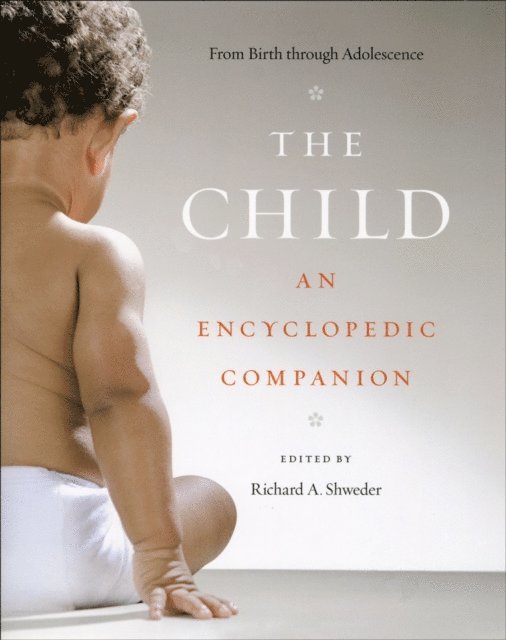
The Child: An Encyclopedic Companion offers both parents and professionals access to the best scholarship from all areas of child studies in a remarkable one-volume reference.
Bringing together contemporary research on children and childhood from pediatrics, child psychology, childhood studies, education, sociology, history, law, anthropology, and other related areas, The Child contains more than 500 articles—all written by experts in their fields and overseen by a panel of distinguished editors led by anthropologist Richard A. Shweder. Each entry provides a concise and accessible synopsis of the topic at hand. For example, the entry “Adoption” begins with a general definition, followed by a detailed look at adoption in different cultures and at different times, a summary of the associated mental and developmental issues that can arise, and an overview of applicable legal and public policy.
While presenting certain universal facts about children’s development from birth through adolescence, the entries also address the many worlds of childhood both within the United States and around the globe. They consider the ways that in which race, ethnicity, gender, socioeconomic status, and cultural traditions of child rearing can affect children’s experiences of physical and mental health, education, and family. Alongside the topical entries, The Child includes more than forty “Imagining Each Other” essays, which focus on the particular experiences of children in different cultures. In “Work before Play for Yucatec Maya Children,” for example, readers learn of the work responsibilities of some modern-day Mexican children, while in “A Hindu Brahman Boy Is Born Again,” they witness a coming-of-age ritual in contemporary India.
Compiled by some of the most distinguished child development researchers in the world, The Child will broaden the current scope of knowledge on children and childhood. It is an unparalleled resource for parents, social workers, researchers, educators, and others who work with children.
1 577 kr
Läs direkt efter köp
Although integrative conceptions of development have been gaining increasing interest, there have been few attempts to bring together the various threads of this emerging trend. The Handbook of Integrative Developmental Science seeks ways to bring together classic and contemporary theory and research in developmental psychology with an eye toward building increasingly integrated theoretical and empirical frameworks. It does so in the form of a festschrift for Kurt Fischer, whose life and work have both inspired and exemplified integrative approaches to development.
Building upon and inspired by the comprehensive scope of Fischer’s Dynamic Skill Theory, this book examines what an integrated theory of psychological development might look like. Bringing together the work of prominent integrative thinkers, the volume begins with an examination of philosophical presuppositions of integrative approaches to development. It then shows how Dynamic Skill Theory provides an example of an integrative model of development. After examining the question of the nature of integrative developmental methodology, the volume examines the nature of developmental change processes as well as pathways and processes in the development of psychological structures both within and between psychological domains. The team of expert contributors cover a range of psychological domains, including the macro- and micro-development of thought, feeling, motivation, self, intersubjectivity, social relations, personality, and other integrative processes. It ends with a set of prescriptions for the further elaboration of integrative developmental theory, and a tribute to Kurt Fischer and his influence on developmental psychology.
This book will be essential reading for graduate students and researchers of developmental psychology and human development, specifically developmental science.
1 634 kr
Läs direkt efter köp
Although integrative conceptions of development have been gaining increasing interest, there have been few attempts to bring together the various threads of this emerging trend. The Handbook of Integrative Developmental Science seeks ways to bring together classic and contemporary theory and research in developmental psychology with an eye toward building increasingly integrated theoretical and empirical frameworks. It does so in the form of a festschrift for Kurt Fischer, whose life and work have both inspired and exemplified integrative approaches to development.
Building upon and inspired by the comprehensive scope of Fischer’s Dynamic Skill Theory, this book examines what an integrated theory of psychological development might look like. Bringing together the work of prominent integrative thinkers, the volume begins with an examination of philosophical presuppositions of integrative approaches to development. It then shows how Dynamic Skill Theory provides an example of an integrative model of development. After examining the question of the nature of integrative developmental methodology, the volume examines the nature of developmental change processes as well as pathways and processes in the development of psychological structures both within and between psychological domains. The team of expert contributors cover a range of psychological domains, including the macro- and micro-development of thought, feeling, motivation, self, intersubjectivity, social relations, personality, and other integrative processes. It ends with a set of prescriptions for the further elaboration of integrative developmental theory, and a tribute to Kurt Fischer and his influence on developmental psychology.
This book will be essential reading for graduate students and researchers of developmental psychology and human development, specifically developmental science.
3 556 kr
Skickas inom 10-15 vardagar
1 426 kr
Skickas inom 10-15 vardagar