Thomas R. Lindlof – författare
Visar alla böcker från författaren Thomas R. Lindlof. Handla med fri frakt och snabb leverans.
4 produkter
4 produkter
Häftad, Engelska, 1996
2 210 kr
Skickas inom 3-6 vardagar
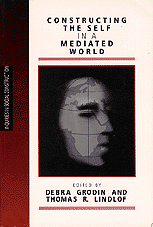
In today's media-saturated world, identities are no longer built solely within the close-knit communities of family, neighborhood, school, and work. Today media are part of our world and therefore play an important role in the formulations of our identities or constructions of self. In a truly postmodern mode, Constructing the Self in a Mediated World not only brings together the usually segregated areas of interpersonal and mass communication but also incorporates works from scholars in sociology, psychology, and women's studies as well. Each essay examines our understanding of self in a different context of mediated culture within a specific framework of interpretive theories such as critical theory, social constructionist theory, and feminism. This volume provides insights into issues of self and identity in contemporary mediated culture. Designed for advanced students and experienced researchers in communication (both media and interpersonal), sociology, psychology, and women's studies. Constructing the Self in a Mediated World raises important questions and contributes greatly to its field.
138 kr
Läs direkt efter köp
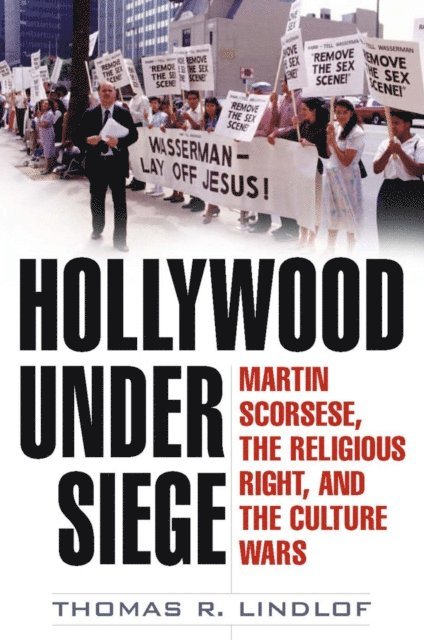
A behind-the-scenes look at the making of The Last Temptation of Christ and the controversy following its release.In 1988, director Martin Scorsese fulfilled his lifelong dream of making a film about Jesus Christ. Rather than celebrating the film as a statement of faith, churches and religious leaders immediately went on the attack, alleging blasphemy. At the height of the controversy, thousands of phone calls a day flooded the Universal switchboard, and before the year was out, more than three million mailings protesting the film fanned out across the country. For the first time in history, a studio took responsibility for protecting theaters and scrambled to recruit a “field crisis team” to guide The Last Temptation of Christ through its contentious American openings. Overseas, the film faced widespread censorship actions, with thirteen countries eventually banning the film. The response in Europe turned violent when opposition groups sacked theaters in France and Greece and caused injuries to dozens of moviegoers.Twenty years later, author Thomas R. Lindlof offers a comprehensive account of how this provocative film came to be made and how Universal Pictures and its parent company MCA became targets of the most intense, unremitting attacks ever mounted against a media company. The film faced early and determined opposition from elements of the religious Right when it was being developed at Paramount during the last year the studio was run by the celebrated troika of Barry Diller, Michael Eisner, and Jeffrey Katzenberg. By the mid-1980s, Scorsese’s film was widely regarded as unmakeable?a political stick of dynamite that no one dared touch. Through the joint efforts of two of the era’s most influential executives, CAA president Michael Ovitz and Universal Pictures chairman Thomas P. Pollock, this improbable project found its way into production. The making of The Last Temptation of Christ caught evangelical Christians at a moment when they were suffering a crisis of confidence in their leadership. The religious right seized on the film as a way to rehabilitate its image and to mobilize ordinary citizens to attack liberalism in art and culture. The ensuing controversy over the film’s alleged blasphemy escalated into a full-scale war fought out very openly in the media. Universal/MCA faced unprecedented calls for boycotts of its business interests, anti-Semitic rhetoric and death threats were directed at MCA chairman Lew Wasserman and other MCA executives, and the industry faced the specter of violence at theaters.Hollywood Under Siege draws upon interviews with many of the key figures?Martin Scorsese, Paul Schrader, Michael Ovitz, Jeffrey Katzenberg, Jack Valenti, Thomas P. Pollock, and Willem Dafoe?to explore the trajectory of the film from its conception to the subsequent epic controversy and beyond. Lindlof offers a fascinating dissection of a critical episode in the embryonic culture wars, illuminating the explosive effects of the clash between the interests of the media industry and the forces of social conservatism.Praise for Hollywood Under Siege“No other book has traced the development of a major motion picture from conception through production to reception with the kind of care and detail that Lindlof does here. Hollywood Under Siege provides valuable insight into the machinery of the film industry, and into the machinations of American culture on a broader front as well.” —Thomas Schatz, author of The Genius of the System: Hollywood Filmmaking in the Studio Era and Executive Director of the University of Texas Film Institute“Riveting and accurate. Even though I thought I knew the events, I found myself captured anew.” —Paul Schrader, screenwriter and director“As a study of a landmark moment in American cinema, Lindlof’s book is both profound and extremely entertaining.” —Los Angeles Times“Lindlof has meticulously researched the history of the film from its initial optioning to its ultimate fate, up to the present time, successfully placing it into cultural context. Although extremely detailed, the book is readable and eminently instructive.” —Library Journal
138 kr
Läs direkt efter köp
A behind-the-scenes look at the making of The Last Temptation of Christ and the controversy following its release.In 1988, director Martin Scorsese fulfilled his lifelong dream of making a film about Jesus Christ. Rather than celebrating the film as a statement of faith, churches and religious leaders immediately went on the attack, alleging blasphemy. At the height of the controversy, thousands of phone calls a day flooded the Universal switchboard, and before the year was out, more than three million mailings protesting the film fanned out across the country. For the first time in history, a studio took responsibility for protecting theaters and scrambled to recruit a “field crisis team” to guide The Last Temptation of Christ through its contentious American openings. Overseas, the film faced widespread censorship actions, with thirteen countries eventually banning the film. The response in Europe turned violent when opposition groups sacked theaters in France and Greece and caused injuries to dozens of moviegoers.Twenty years later, author Thomas R. Lindlof offers a comprehensive account of how this provocative film came to be made and how Universal Pictures and its parent company MCA became targets of the most intense, unremitting attacks ever mounted against a media company. The film faced early and determined opposition from elements of the religious Right when it was being developed at Paramount during the last year the studio was run by the celebrated troika of Barry Diller, Michael Eisner, and Jeffrey Katzenberg. By the mid-1980s, Scorsese’s film was widely regarded as unmakeable?a political stick of dynamite that no one dared touch. Through the joint efforts of two of the era’s most influential executives, CAA president Michael Ovitz and Universal Pictures chairman Thomas P. Pollock, this improbable project found its way into production. The making of The Last Temptation of Christ caught evangelical Christians at a moment when they were suffering a crisis of confidence in their leadership. The religious right seized on the film as a way to rehabilitate its image and to mobilize ordinary citizens to attack liberalism in art and culture. The ensuing controversy over the film’s alleged blasphemy escalated into a full-scale war fought out very openly in the media. Universal/MCA faced unprecedented calls for boycotts of its business interests, anti-Semitic rhetoric and death threats were directed at MCA chairman Lew Wasserman and other MCA executives, and the industry faced the specter of violence at theaters.Hollywood Under Siege draws upon interviews with many of the key figures?Martin Scorsese, Paul Schrader, Michael Ovitz, Jeffrey Katzenberg, Jack Valenti, Thomas P. Pollock, and Willem Dafoe?to explore the trajectory of the film from its conception to the subsequent epic controversy and beyond. Lindlof offers a fascinating dissection of a critical episode in the embryonic culture wars, illuminating the explosive effects of the clash between the interests of the media industry and the forces of social conservatism.Praise for Hollywood Under Siege“No other book has traced the development of a major motion picture from conception through production to reception with the kind of care and detail that Lindlof does here. Hollywood Under Siege provides valuable insight into the machinery of the film industry, and into the machinations of American culture on a broader front as well.” —Thomas Schatz, author of The Genius of the System: Hollywood Filmmaking in the Studio Era and Executive Director of the University of Texas Film Institute“Riveting and accurate. Even though I thought I knew the events, I found myself captured anew.” —Paul Schrader, screenwriter and director“As a study of a landmark moment in American cinema, Lindlof’s book is both profound and extremely entertaining.” —Los Angeles Times“Lindlof has meticulously researched the history of the film from its initial optioning to its ultimate fate, up to the present time, successfully placing it into cultural context. Although extremely detailed, the book is readable and eminently instructive.” —Library Journal
E-bok
Engelska, 20171 237 kr
Läs direkt efter köp
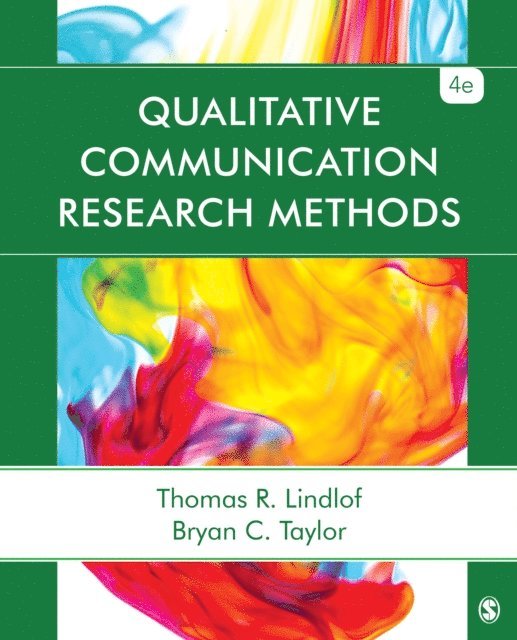
"This is the best qualitative methods book I’ve seen, especially among books aimed at undergraduate audiences." —Michael Irvin Arrington, Indiana State University Qualitative Communication Research Methods, Fourth Edition introduces readers to qualitative research in speech and mass communication. Award-winning scholars and authors Thomas R. Lindlof and Bryan C. Taylor guide readers through every step of the qualitative process, from developing research topics and questions through writing a final report. Readers are given numerous examples of work in the field to illustrate how studies are designed, carried out, written, evaluated, and related to theory. In addition to covering the theories and methods currently used in qualitative communication research, the authors also discuss important trends influencing the future of that research, helping readers make informed judgments about the significance and consequences of recent trends. New to the Fourth Edition: A new chapter titled "The Diversity of Qualitative Research in Communication Subfields" provides readers with a complete guide to the field’s distinctive subfields and enables readers to identify the research agenda that best represents their own interests. Two rising subfields – Political Communication and Communication Activism – were added, resulting in thirteen subfields covered. Two major phases of data analysis have been split into separate chapters, enabling readers to concentrate on the initial steps of analysis before moving on to the interpretation phase of analysis. Discussions of important intellectual and institutional trends currently reshaping the landscape of qualitative research, including Materialist Theory, Big Data, and Open-Access publishing, provide readers with cutting-edge knowledge and skills that affect what they study and how they study it. An analysis of new developments in media and technology shows readers how social media networks and other digital platforms are not only topics of research, but also the means for collecting and analyzing data.