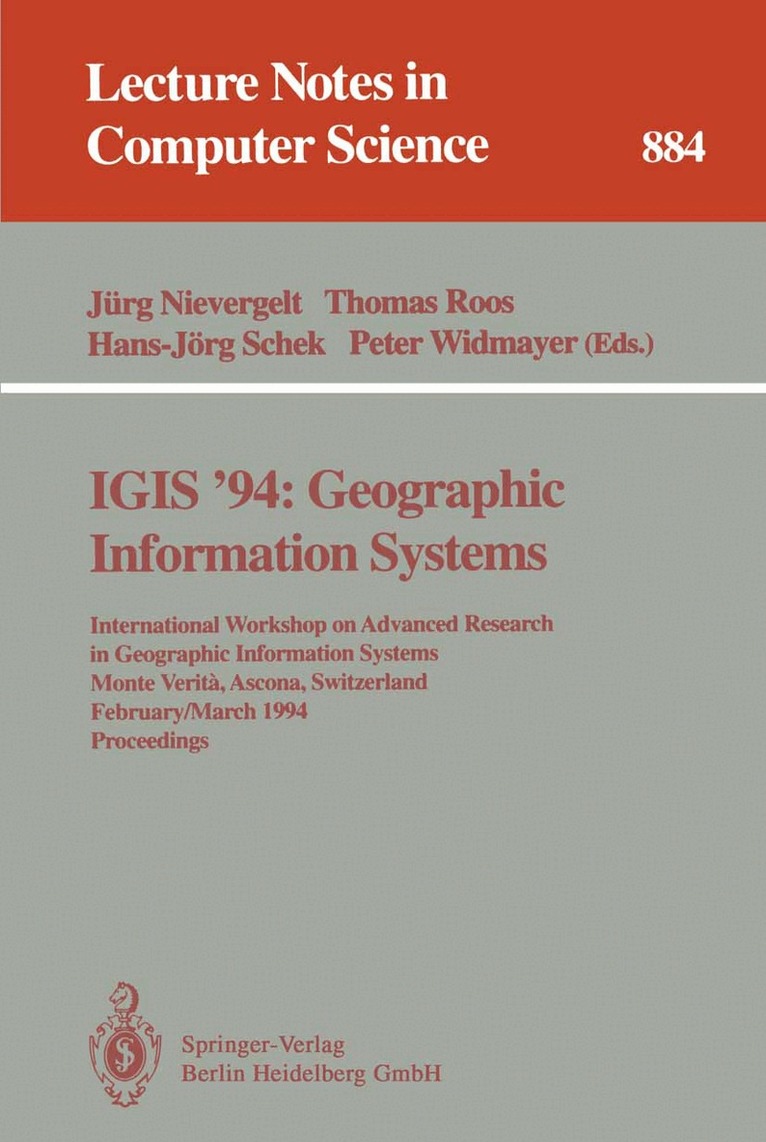
This volume constitutes the proceedings of the International Workshop on Advanced Research in Geographic Information Systems, IGIS '94, held in Ascona, Switzerland in February/March 1994.The 28 carefully refereed and revised papers address all current aspects of GIS research and their advanced applications to spatial and environmental data engineering. Among the topics covered are GIS theory, spatial databases, spatial data structures, environmental modelling and control, data modelling, object-orientation, pattern recognition, and optimization. In addition, software and non-commercial as well as commercial GIS are analysed.
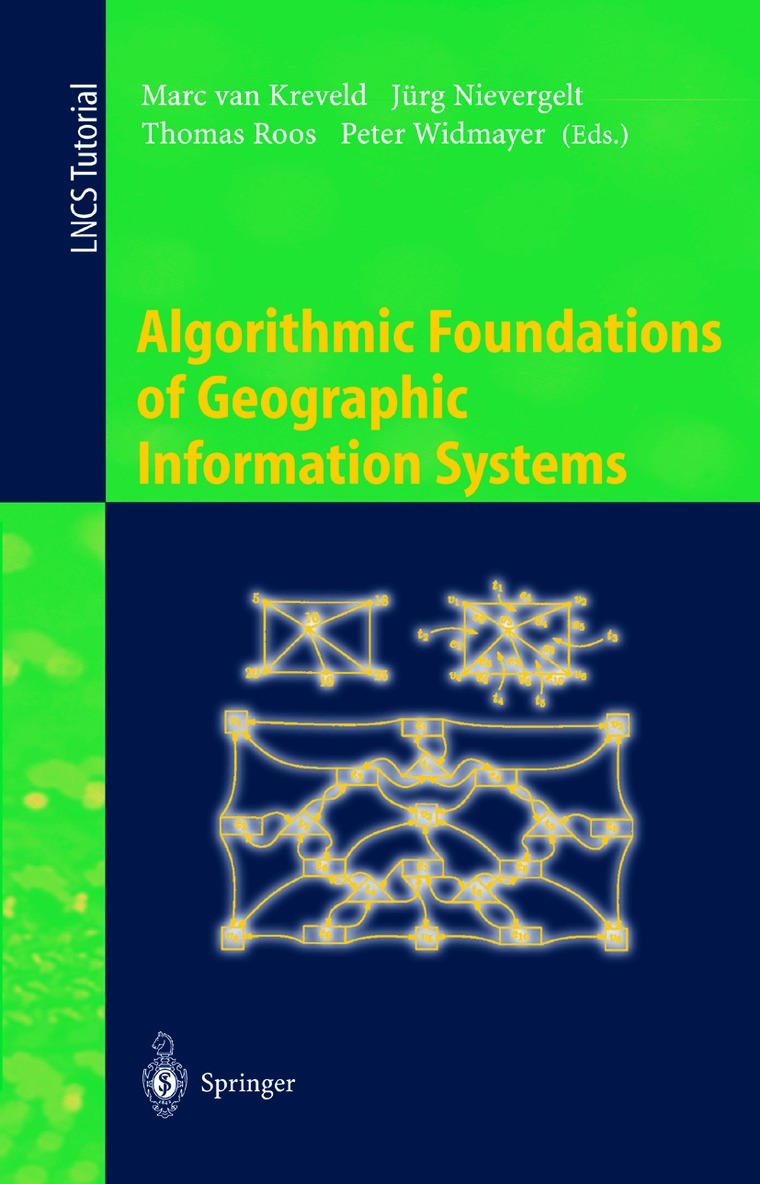
This tutorial survey brings together two lines of research and development whose interaction promises to have significant practical impact on the area of spatial information processing in the near future: geographic information systems (GIS) and geometric computation or, more particularly, geometric algorithms and spatial data structures. In nine uniformly structured and coherent chapters, the authors present a unique survey ranging from the history and basic characteristics to current issues of precision and robustness of geometric computing. This textbook is ideally suited for advanced courses on GIS and applied geometric algorithms. Research and design professionals active in the area will find it valuable as a state-of-the-art survey.
This volume constitutes the proceedings of the International Workshop on Advanced Research in Geographic Information Systems, IGIS '94, held in Ascona, Switzerland in February/March 1994.The 28 carefully refereed and revised papers address all current aspects of GIS research and their advanced applications to spatial and environmental data engineering. Among the topics covered are GIS theory, spatial databases, spatial data structures, environmental modelling and control, data modelling, object-orientation, pattern recognition, and optimization. In addition, software and non-commercial as well as commercial GIS are analysed.
This tutorial survey brings together two lines of research and development whose interaction promises to have significant practical impact on the area of spatial information processing in the near future: geographic information systems (GIS) and geometric computation or, more particularly, geometric algorithms and spatial data structures. In nine uniformly structured and coherent chapters, the authors present a unique survey ranging from the history and basic characteristics to current issues of precision and robustness of geometric computing. This textbook is ideally suited for advanced courses on GIS and applied geometric algorithms. Research and design professionals active in the area will find it valuable as a state-of-the-art survey.