Thomas Schoonover – författare
Visar alla böcker från författaren Thomas Schoonover. Handla med fri frakt och snabb leverans.
3 produkter
3 produkter
E-bok
PDF, Engelska, 2014155 kr
Läs direkt efter köp
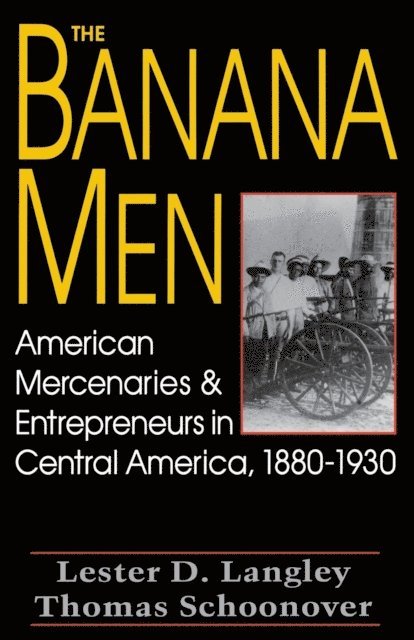
“An engaging and fascinating narrative of the entrepreneurs and mercenaries who ‘ravished’ Central America between 1880 and 1930.” —The AmericasAmbitious entrepreneurs, isthmian politicians, and mercenaries who dramatically altered Central America’s political culture, economies, and even its traditional social values populate this lively story of a generation of North and Central Americans and their roles in the transformation of Central America from the late nineteenth century until the onset of the Depression. The Banana Men is a study of modernization, its benefits, and its often frightful costs.The colorful characters in this study are fascinating, if not always admirable. Sam “the Banana Man” Zemurray, a Bessarabian Jewish immigrant, made a fortune in Honduran bananas after he got into the business of “revolutin,” and his exploits are now legendary. His hired mercenary Lee Christmas, a bellicose Mississippian, made a reputation in Honduras as a man who could use a weapon. The supporting cast includes Minor Keith, a railroad builder and banana baron; Manuel Bonilla, the Honduran whose cause Zemurray subsidized; and Jose Santos Zelaya, who ruled Nicaragua from 1893 to 1910.The political and social turmoil of modern Central America cannot be understood without reference to the fifty-year epoch in which the United States imposed its political and economic influence on vulnerable Central American societies. The predicament of Central Americans today, as isthmian peoples know, is rooted in their past, and North Americans have had a great deal to do with the shaping of their history, for better or worse.“Recounts incredible stories within the framework of social imperialism and dependency theory.” —Latin American Research Review
E-bok
Engelska, 2014155 kr
Läs direkt efter köp
“An engaging and fascinating narrative of the entrepreneurs and mercenaries who ‘ravished’ Central America between 1880 and 1930.” —The AmericasAmbitious entrepreneurs, isthmian politicians, and mercenaries who dramatically altered Central America’s political culture, economies, and even its traditional social values populate this lively story of a generation of North and Central Americans and their roles in the transformation of Central America from the late nineteenth century until the onset of the Depression. The Banana Men is a study of modernization, its benefits, and its often frightful costs.The colorful characters in this study are fascinating, if not always admirable. Sam “the Banana Man” Zemurray, a Bessarabian Jewish immigrant, made a fortune in Honduran bananas after he got into the business of “revolutin,” and his exploits are now legendary. His hired mercenary Lee Christmas, a bellicose Mississippian, made a reputation in Honduras as a man who could use a weapon. The supporting cast includes Minor Keith, a railroad builder and banana baron; Manuel Bonilla, the Honduran whose cause Zemurray subsidized; and Jose Santos Zelaya, who ruled Nicaragua from 1893 to 1910.The political and social turmoil of modern Central America cannot be understood without reference to the fifty-year epoch in which the United States imposed its political and economic influence on vulnerable Central American societies. The predicament of Central Americans today, as isthmian peoples know, is rooted in their past, and North Americans have had a great deal to do with the shaping of their history, for better or worse.“Recounts incredible stories within the framework of social imperialism and dependency theory.” —Latin American Research Review
E-bok
Engelska, 2013639 kr
Läs direkt efter köp
Analyzes the German role in Central American domestic and international relations
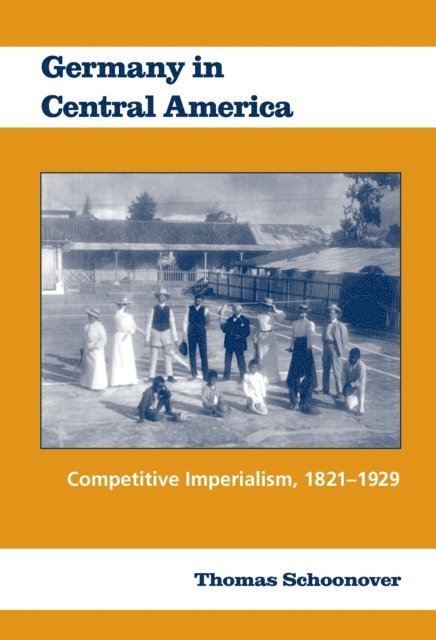
Using previously untapped resources including private collections, the records of cultural institutions, and federal and state government archives, Schoonover analyzes the German role in Central American domestic and international relations.Of the four countries most active in independent Central America-Britain, the United States, France, and Germany- historians know the least about the full extent of the involvement of the Germans. German colonial expansion was based on its position as an industrialized state seeking economic well-being and security in a growing world market. German leaders were quick to recognize that ties to the cheap labor of overseas countries could compensate for some of the costs and burdens of conceding material and social privileges to their domestic labor force. The Central American societies possessed limited resource bases; smaller and poorly educated populations; and less capital, communications, and technological development than Germany. They saw the borrowing of development as a key to their social, economic, and political progress. Wary Central American leaders also saw the influx of German industrialists as assurance against excessive U.S. presence in their political economies and cultures. Although the simplistic bargain to trade economic development for cheap labor appeared to succeed in the short term, complex issues of German domestic unemployment and social disorder filtered to Central American countries and added to their own burdens. By 1929, Germany had recovered most of its pre-World War I economic position.