Thomas Tanner - Böcker
Visar alla böcker från författaren Thomas Tanner. Handla med fri frakt och snabb leverans.
8 produkter
8 produkter
1 952 kr
Skickas inom 3-6 vardagar
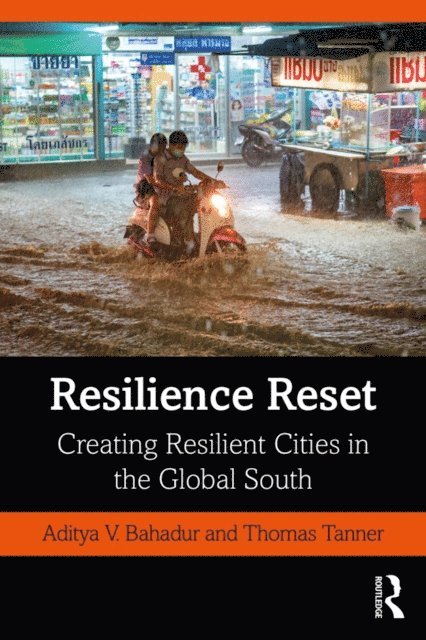
Drawing on evidence from urban resilience initiatives around the globe, the authors make a compelling argument for a "resilience reset", a pause and stocktake that critically examines the concepts, practices and challenges of building resilience, particularly in cities of the Global South.In turn, the book calls for the world’s cities to alter their course and "pivot" towards novel approaches to enhancing resilience. The book presents shifts in ways of acquiring and analysing data, building community resilience, approaching urban planning, engaging with informality, delivering financing, and building the skills of those running cities in a post-COVID world grappling with climate impacts. In Resilience Reset, the authors encourage researchers, policymakers, and practitioners to break out of existing modes of thinking and doing that may no longer be relevant for our rapidly urbanising and dynamic world. The book draws on the latest academic and practice-based evidence to provide actionable insights for cities that will enable them to deal with multiple interacting shocks and stresses.The book will be an indispensable resource to those studying urbanisation, development, climate change and risk management as well as for those designing and deploying operational initiatives to enhance urban resilience in businesses, international organisations, civil society organisations and governments. It is a must-read for anyone interested in managing the risks of climate impacts in urban centres in the Global South.
549 kr
Skickas inom 10-15 vardagar
Drawing on evidence from urban resilience initiatives around the globe, the authors make a compelling argument for a "resilience reset", a pause and stocktake that critically examines the concepts, practices and challenges of building resilience, particularly in cities of the Global South.In turn, the book calls for the world’s cities to alter their course and "pivot" towards novel approaches to enhancing resilience. The book presents shifts in ways of acquiring and analysing data, building community resilience, approaching urban planning, engaging with informality, delivering financing, and building the skills of those running cities in a post-COVID world grappling with climate impacts. In Resilience Reset, the authors encourage researchers, policymakers, and practitioners to break out of existing modes of thinking and doing that may no longer be relevant for our rapidly urbanising and dynamic world. The book draws on the latest academic and practice-based evidence to provide actionable insights for cities that will enable them to deal with multiple interacting shocks and stresses.The book will be an indispensable resource to those studying urbanisation, development, climate change and risk management as well as for those designing and deploying operational initiatives to enhance urban resilience in businesses, international organisations, civil society organisations and governments. It is a must-read for anyone interested in managing the risks of climate impacts in urban centres in the Global South.
2 290 kr
Skickas inom 10-15 vardagar
The evidence for human-induced climate change is now overwhelming, the brunt of its impacts is already being felt by poor people, and the case for urgent action is compelling. This book addresses the two greatest challenges of our time – averting catastrophic climate change and eradicating poverty – and the close interconnections between them.Climate Change and Development provides a comprehensive and multi-disciplinary foundation for understanding the complex and tangled relationship between development and climate change. It argues that transformational approaches are required in order to reconcile poverty reduction and climate protection and secure sustained prosperity in the twenty first century. Section One provides the building blocks for understanding climate science and the nexus between climate and development. Section Two outlines responses to climate change from the perspective of developing countries, with chapters on international agreements, climate change mitigation and adaptation, and climate finance. Each chapter offers analytical tools for evaluating responses, enabling readers to ask smart questions about the climate change and development nexus as policy and action evolve in the coming years. The last three chapters of the book, contained in Section Three, are forward looking and focus on why and how development must be re-framed to deliver more equitable and sustainable outcomes. This section sets out different critiques of ‘development-as-usual’ and explores alternative paradigms of development in a warming and resource-constrained world.This is an invaluable and clearly written text that uses real world examples to bring to life perspectives from across different disciplines. It also contains chapter learning outcomes, and end of chapter summaries, discussion questions, and suggestions for further reading and relevant websites. The text is suitable for both undergraduate and postgraduate students, as well as those working in international development contexts who wish to get to grips with this pressing global challenge.
671 kr
Skickas inom 10-15 vardagar
The evidence for human-induced climate change is now overwhelming, the brunt of its impacts is already being felt by poor people, and the case for urgent action is compelling. This book addresses the two greatest challenges of our time – averting catastrophic climate change and eradicating poverty – and the close interconnections between them.Climate Change and Development provides a comprehensive and multi-disciplinary foundation for understanding the complex and tangled relationship between development and climate change. It argues that transformational approaches are required in order to reconcile poverty reduction and climate protection and secure sustained prosperity in the twenty first century. Section One provides the building blocks for understanding climate science and the nexus between climate and development. Section Two outlines responses to climate change from the perspective of developing countries, with chapters on international agreements, climate change mitigation and adaptation, and climate finance. Each chapter offers analytical tools for evaluating responses, enabling readers to ask smart questions about the climate change and development nexus as policy and action evolve in the coming years. The last three chapters of the book, contained in Section Three, are forward looking and focus on why and how development must be re-framed to deliver more equitable and sustainable outcomes. This section sets out different critiques of ‘development-as-usual’ and explores alternative paradigms of development in a warming and resource-constrained world.This is an invaluable and clearly written text that uses real world examples to bring to life perspectives from across different disciplines. It also contains chapter learning outcomes, and end of chapter summaries, discussion questions, and suggestions for further reading and relevant websites. The text is suitable for both undergraduate and postgraduate students, as well as those working in international development contexts who wish to get to grips with this pressing global challenge.
Realising the 'Triple Dividend of Resilience'
A New Business Case for Disaster Risk Management
Inbunden, Engelska, 2016
1 069 kr
Skickas inom 10-15 vardagar
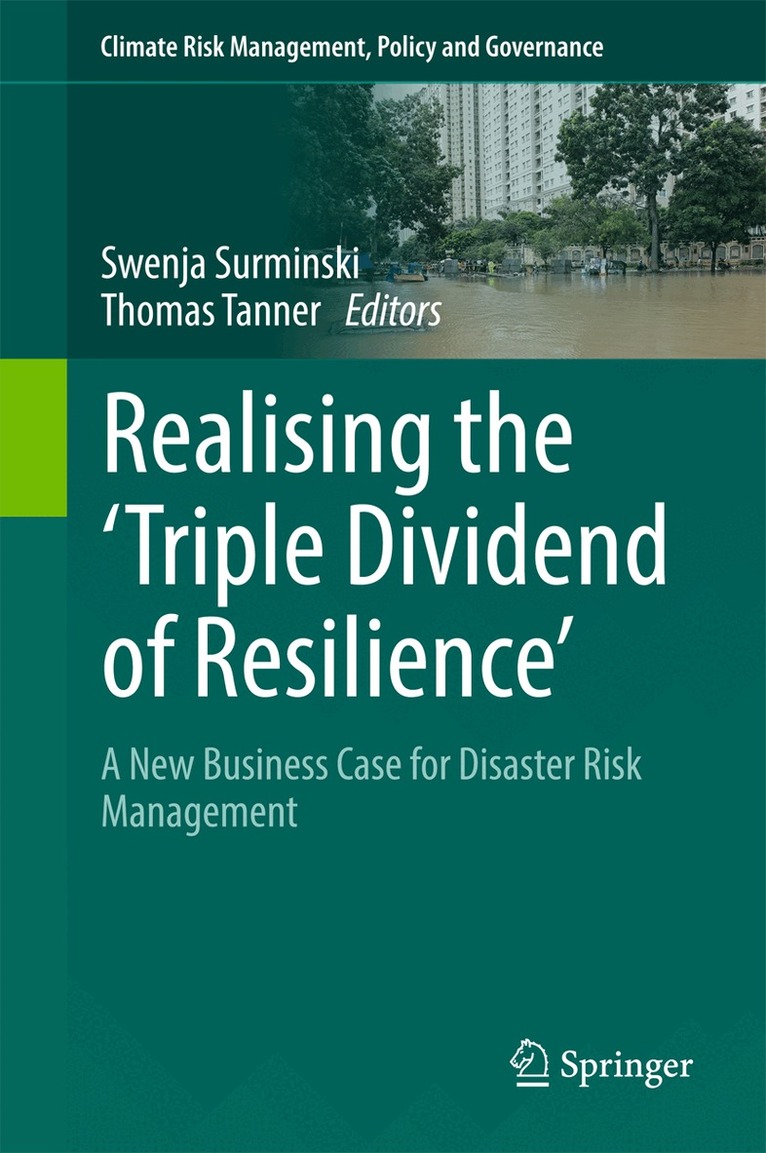
Why aren’t we investing more in disaster resilience, despite the rising costs of disaster events? This book argues that decision-makers in governments, businesses, households, and development agencies tend to focus on avoiding losses from disasters, and perceive the return on investment as uncertain – only realised if a somewhat unlikely disaster event actually happens. This book develops a new business case for investment based on the multiple dividends of resilience. This looks beyond only avoided losses (the first dividend) to the wider benefits gained independently of whether or not the disaster event occurs. These include unleashing entrepreneurial activities and productive investments by lowering the looming threat of losses from disasters and enabling businesses, farmers and homeowners to take positive risks (the second dividend); and co-benefits of resilience measures beyond just disaster risk (the third dividend), such as flood embankments in Bangladesh that double as roads, or wetlands in Colombo that reduce urban heat extremes.
Realising the 'Triple Dividend of Resilience'
A New Business Case for Disaster Risk Management
Häftad, Engelska, 2018
1 069 kr
Skickas inom 10-15 vardagar
Why aren’t we investing more in disaster resilience, despite the rising costs of disaster events?
301 kr
Skickas inom 5-8 vardagar
309 kr
Skickas inom 3-6 vardagar