Thomas Webler – författare
Visar alla böcker från författaren Thomas Webler. Handla med fri frakt och snabb leverans.
7 produkter
7 produkter
Inbunden, Engelska, 1995
2 161 kr
Skickas inom 10-15 vardagar
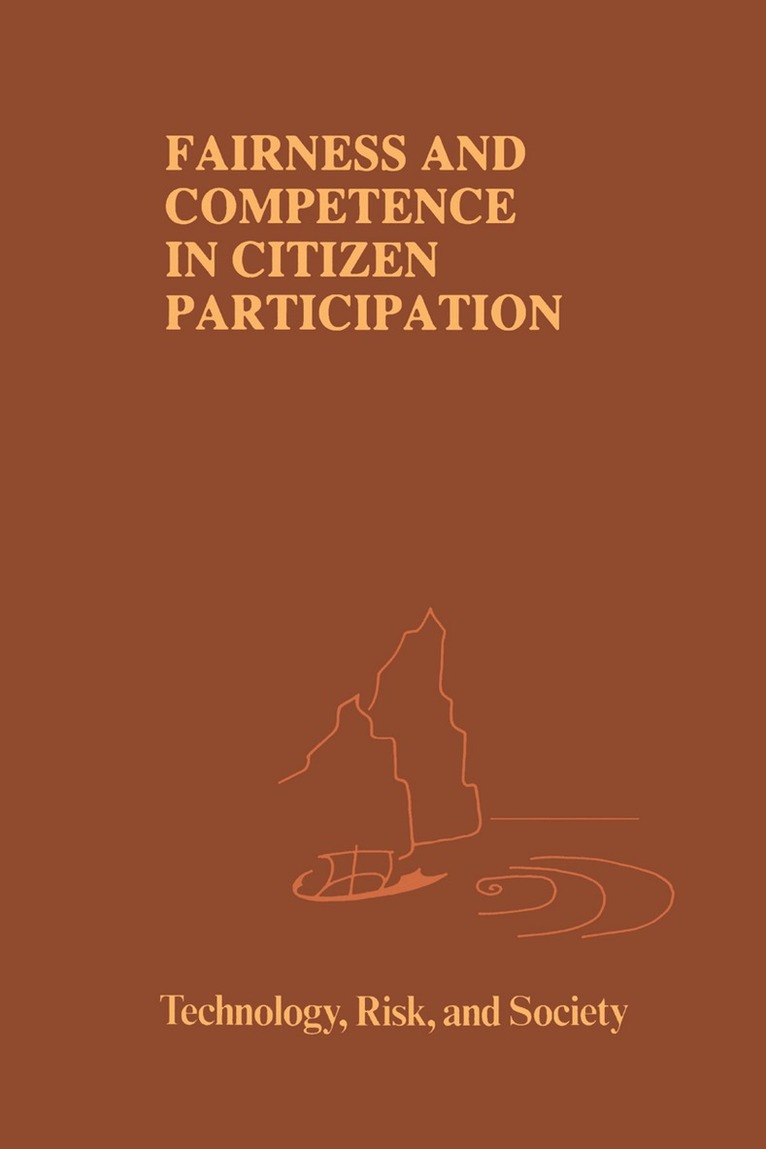
Ortwin Renn Thomas Wehler Peter Wiedemann In late July of 1992 the small and remote mountain resort of Morschach in the Swiss Alps became a lively place of discussion, debate, and discourse. Over a three-day period twenty-two analysts and practitioners of public participation from the United States and Europe came together to address one of the most pressing issues in contemporary environmental politics: How can environmental policies be designed in a way that achieves both effective protection of nature and an adequate representation of public values? In other words, how can we make the environmental decision process competent and fair? All the invited scholars from academia, international research institutes, and governmental agencies agreed on one fundamental principle: For environmental policies to be effective and legitimate, we need to involve the people who are or will be affected by the outcomes of these policies. There is no technocratic solution to this problem. Without public involvement, environmental policies are doomed to fail. The workshop was preceded by a joint effort by the three editors to develop a framework for evaluating different models of public participation in the environmental policy arena. During a preliminary review of the literature we made four major observations. These came to serve as the primary motivation for this book. First, the last decade has witnessed only a fair amount of interest within the sociological or political science communities in issues of public participation.
E-bok
PDF, Engelska, 2013891 kr
Läs direkt efter köp
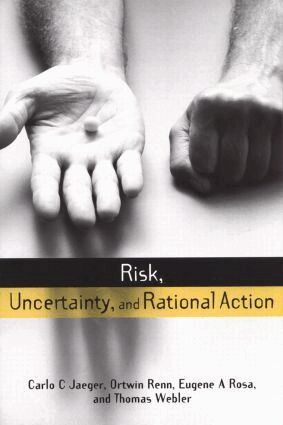
Risk as we now know it is a wholly new phenomenon, the by-product of our ever more complex and powerful technologies. In business, policy making, and in everyday life, it demands a new way of looking at technological and environmental uncertainty.In this definitive volume, four of the world''s leading risk researchers present a fundamental critique of the prevailing approaches to understanding and managing risk - the ''rational actor paradigm''. They show how risk studies must incorporate the competing interests, values, and rationalities of those involved and find a balance of trust and acceptable risk. Their work points to a comprehensive and significant new theory of risk and uncertainty and of the decision making process they require. The implications for social, political, and environmental theory and practice are enormous.Winner of the 2000-2002 Outstanding Publication Award of the Section on Environment and Technology of the American Sociological Association
E-bok
Engelska, 2013891 kr
Läs direkt efter köp
Risk as we now know it is a wholly new phenomenon, the by-product of our ever more complex and powerful technologies. In business, policy making, and in everyday life, it demands a new way of looking at technological and environmental uncertainty.In this definitive volume, four of the world''s leading risk researchers present a fundamental critique of the prevailing approaches to understanding and managing risk - the ''rational actor paradigm''. They show how risk studies must incorporate the competing interests, values, and rationalities of those involved and find a balance of trust and acceptable risk. Their work points to a comprehensive and significant new theory of risk and uncertainty and of the decision making process they require. The implications for social, political, and environmental theory and practice are enormous.Winner of the 2000-2002 Outstanding Publication Award of the Section on Environment and Technology of the American Sociological Association
Häftad, Engelska, 2001
779 kr
Skickas inom 10-15 vardagar
Risk as we now know it is a wholly new phenomenon, the by-product of our ever more complex and powerful technologies. In business, policy making, and in everyday life, it demands a new way of looking at technological and environmental uncertainty.In this definitive volume, four of the world's leading risk researchers present a fundamental critique of the prevailing approaches to understanding and managing risk - the 'rational actor paradigm'. They show how risk studies must incorporate the competing interests, values, and rationalities of those involved and find a balance of trust and acceptable risk. Their work points to a comprehensive and significant new theory of risk and uncertainty and of the decision making process they require. The implications for social, political, and environmental theory and practice are enormous.Winner of the 2000-2002 Outstanding Publication Award of the Section on Environment and Technology of the American Sociological Association
Del 24 - Risk, Governance and Society
Fairness and Competence in Citizen Participation
A Critical Review of Formats for Deliberative Policymaking
Inbunden, Engelska, 2026
976 kr
Skickas inom 10-15 vardagar
This book examines fair citizen participation as a key element of effective policy support. Over the past two decades, many countries have embraced more reflective and inclusive governance in environmental policymaking. This book demonstrates how democratic and deliberative approaches yield better policy outcomes than technocratic methods that only superficially engage the public. Reflective governance highlights the importance of deliberative democracy, offering fair and open discourse opportunities for all stakeholders. Throughout the chapters, some of the most renowned authors in the field present the principal mechanisms for public engagement in deliberative decision-making.By exploring innovative formats like stakeholder round tables and citizen assemblies, this book provides practical guidance on their unique merits and limitations. It addresses scholars, practitioners, and representatives of administrations, public and private institutions, and NGOs interested in a better understanding of the selection and design of the most effective formats for competent and fair policymaking, ensuring each format meets its full potential.
E-bok
Engelska, 20261 258 kr
Läs direkt efter köp
This book examines fair citizen participation as a key element of effective policy support. Over the past two decades, many countries have embraced more reflective and inclusive governance in environmental policymaking. This book demonstrates how democratic and deliberative approaches yield better policy outcomes than technocratic methods that only superficially engage the public. Reflective governance highlights the importance of deliberative democracy, offering fair and open discourse opportunities for all stakeholders. Throughout the chapters, some of the most renowned authors in the field present the principal mechanisms for public engagement in deliberative decision-making.By exploring innovative formats like stakeholder round tables and citizen assemblies, this book provides practical guidance on their unique merits and limitations. It addresses scholars, practitioners, and representatives of administrations, public and private institutions, and NGOs interested in a better understanding of the selection and design of the most effective formats for competent and fair policymaking, ensuring each format meets its full potential.
E-bok
PDF, Engelska, 20132 840 kr
Läs direkt efter köp
Ortwin Renn Thomas Wehler Peter Wiedemann In late July of 1992 the small and remote mountain resort of Morschach in the Swiss Alps became a lively place of discussion, debate, and discourse. Over a three-day period twenty-two analysts and practitioners of public participation from the United States and Europe came together to address one of the most pressing issues in contemporary environmental politics: How can environmental policies be designed in a way that achieves both effective protection of nature and an adequate representation of public values? In other words, how can we make the environmental decision process competent and fair? All the invited scholars from academia, international research institutes, and governmental agencies agreed on one fundamental principle: For environmental policies to be effective and legitimate, we need to involve the people who are or will be affected by the outcomes of these policies. There is no technocratic solution to this problem. Without public involvement, environmental policies are doomed to fail. The workshop was preceded by a joint effort by the three editors to develop a framework for evaluating different models of public participation in the environmental policy arena. During a preliminary review of the literature we made four major observations. These came to serve as the primary motivation for this book. First, the last decade has witnessed only a fair amount of interest within the sociological or political science communities in issues of public participation.