Thomas Wiedemann – författare
2 215 kr
Skickas inom 10-15 vardagar
605 kr
Skickas inom 10-15 vardagar
719 kr
Skickas inom 10-15 vardagar
719 kr
Skickas inom 10-15 vardagar
2 856 kr
Skickas inom 10-15 vardagar
862 kr
Skickas inom 10-15 vardagar
2 537 kr
Skickas inom 10-15 vardagar
1 256 kr
Skickas inom 10-15 vardagar
836 kr
Läs direkt efter köp
843 kr
Läs direkt efter köp
668 kr
Läs direkt efter köp
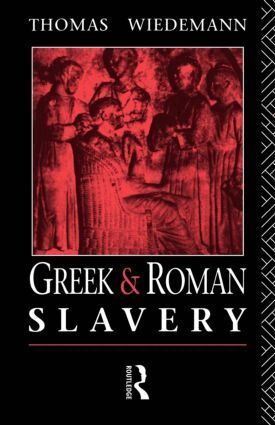
Greek and Roman Slavery brings together fresh English translations of 243 texts and inscriptions on slavery from fifth and fourth century Greece and Rome. The material is arranged thematically, offering the reader a comprehensive review of the idea and practice of slavery in ancient civilization. In addition, a thorough bibliography for each chapter, as well as an extensive index, make this a valuable source for scholars and students.
668 kr
Läs direkt efter köp
Greek and Roman Slavery brings together fresh English translations of 243 texts and inscriptions on slavery from fifth and fourth century Greece and Rome. The material is arranged thematically, offering the reader a comprehensive review of the idea and practice of slavery in ancient civilization. In addition, a thorough bibliography for each chapter, as well as an extensive index, make this a valuable source for scholars and students.
836 kr
Läs direkt efter köp
836 kr
Läs direkt efter köp
2 215 kr
Skickas inom 10-15 vardagar
2 215 kr
Skickas inom 10-15 vardagar
1 003 kr
Läs direkt efter köp
There is little evidence to enable us to reconstruct what it felt like to be a child in the Roman world. We do, however, have ample evidence about the feelings and expectations that adults had for children over the centuries between the end of the Roman republic and late antiquity.
Thomas Wiedemann draws on this evidence to describe a range of attitudes towards children in the classical period, identifying three areas where greater individuality was assigned to children: through political office-holding; through education; and, for Christians, through membership of the Church in baptism. These developments in both pagan and Christian practices reflect wider social changes in the Roman world during the first four centuries of the Christian era.
Of obvious value to classicists, Adults and Children in the Roman Empire, first published in 1989, is also indispensable for anthropologists, and well as those interested in ecclesiastical and social history.
1 003 kr
Läs direkt efter köp
There is little evidence to enable us to reconstruct what it felt like to be a child in the Roman world. We do, however, have ample evidence about the feelings and expectations that adults had for children over the centuries between the end of the Roman republic and late antiquity.
Thomas Wiedemann draws on this evidence to describe a range of attitudes towards children in the classical period, identifying three areas where greater individuality was assigned to children: through political office-holding; through education; and, for Christians, through membership of the Church in baptism. These developments in both pagan and Christian practices reflect wider social changes in the Roman world during the first four centuries of the Christian era.
Of obvious value to classicists, Adults and Children in the Roman Empire, first published in 1989, is also indispensable for anthropologists, and well as those interested in ecclesiastical and social history.
1 320 kr
Läs direkt efter köp
1 320 kr
Läs direkt efter köp
302 kr
Skickas inom 10-15 vardagar
337 kr
Skickas inom 10-15 vardagar
509 kr
Skickas inom 10-15 vardagar
493 kr
Läs direkt efter köp
610 kr
Skickas inom 10-15 vardagar
611 kr
Läs direkt efter köp
265 kr
Läs direkt efter köp
287 kr
Läs direkt efter köp
263 kr
Läs direkt efter köp
394 kr
Skickas inom 3-6 vardagar