Thomas Wildenberg – författare
Visar alla böcker från författaren . Handla med fri frakt och snabb leverans.
11 produkter
11 produkter
331 kr
Läs direkt efter köp
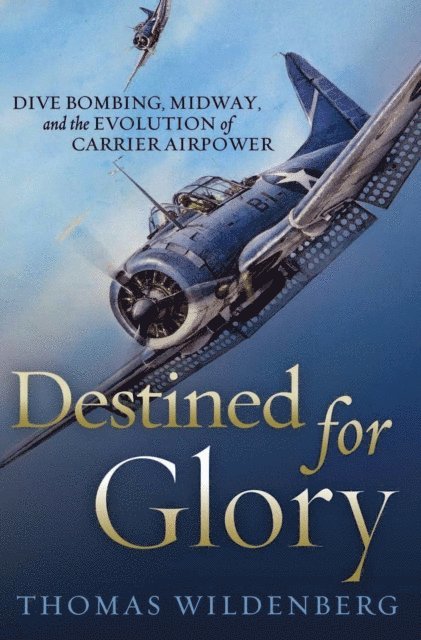
On 4 June 1942, three squadrons of U.S. Navy Dauntless dive bombers destroyed Japan''s carrier force sent to neutralize Midway, changing the course of the war in the Pacific. As Thomas Wildenberg convincingly demonstrates in this book, the key ingredient to the navy''s success at Midway was the planning and training devoted to the tactic of dive bombing over the previous seventeen years. Examining how political, economic, technical, and operational factors influenced the development of carrier airpower between 1925 and 1942, he shows why dive bombing became the navy''s weapon of choice—why it was emphasized over all other methods of aerial warfare and finally brought to bear to stop the Japanese advance. He also pays tribute to the select group of naval aviators and senior leaders whose insights and determination drove the evolution of carrier tactics in this formative period. The title reflects the essence of the story: the development of carrier air power in the U.S. Navy was driven by an unwritten understanding that the years spent on experimentation, training, and innovations were ""destined"" to bring success in a future battle. As part of this work, the author introduces newly discovered information showing that the outcome at Midway was actually predicted by naval aviators years before the battle took place. The book sheds new light on the navy''s preparations for war, demonstrating beyond a shadow of a doubt the effectiveness of U.S. naval planning before Pearl Harbor. Destined for Glory is the first book to thoroughly document the development of carrier air power in the United States Navy during the interwar years. Aviation enthusiasts and naval historians alike will find a wealth of previously unpublished data on the development of carrier aircraft and their tactical doctrine. Readers will discover new material related to the evolution of the fighters, torpedo bombers, and scout planes that made up the carrier air groups in World War II. Although several excellent books have been written about the Battle of Midway, none has focused on how the U.S. Navy came to develop the one aerial weapon “dive bombing” which proved to be the decisive instrument of victory. For it was dive bombing, and only dive bombing, that turned the tide of Japanese expansion in the Pacific. Introduced and developed in the interwar years, dive bombing became the corner stone in the navy''s efforts to secure command of the air. Although the development of the dive bomber played an extremely important role in the advance of naval aviation during the interwar period, it is only part of a much broader story that illustrates an important lesson for historians: what comes before the battle is as important as the battle itself. It will become evident from reading the text that the aerial successes of 1942 were unequivocally rooted in the tactics and equipment developed during the previous seventeen years.
E-bok
Engelska, 2014345 kr
Läs direkt efter köp
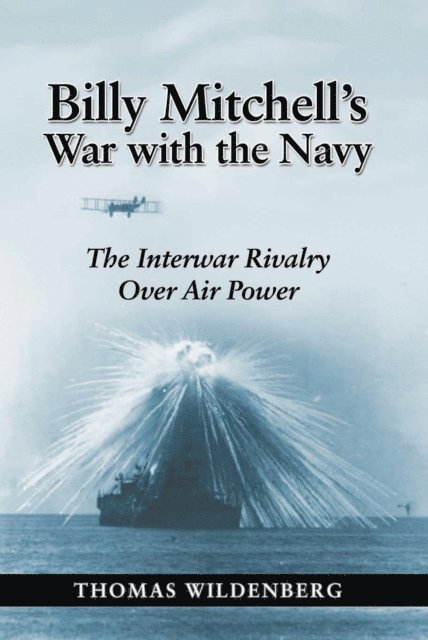
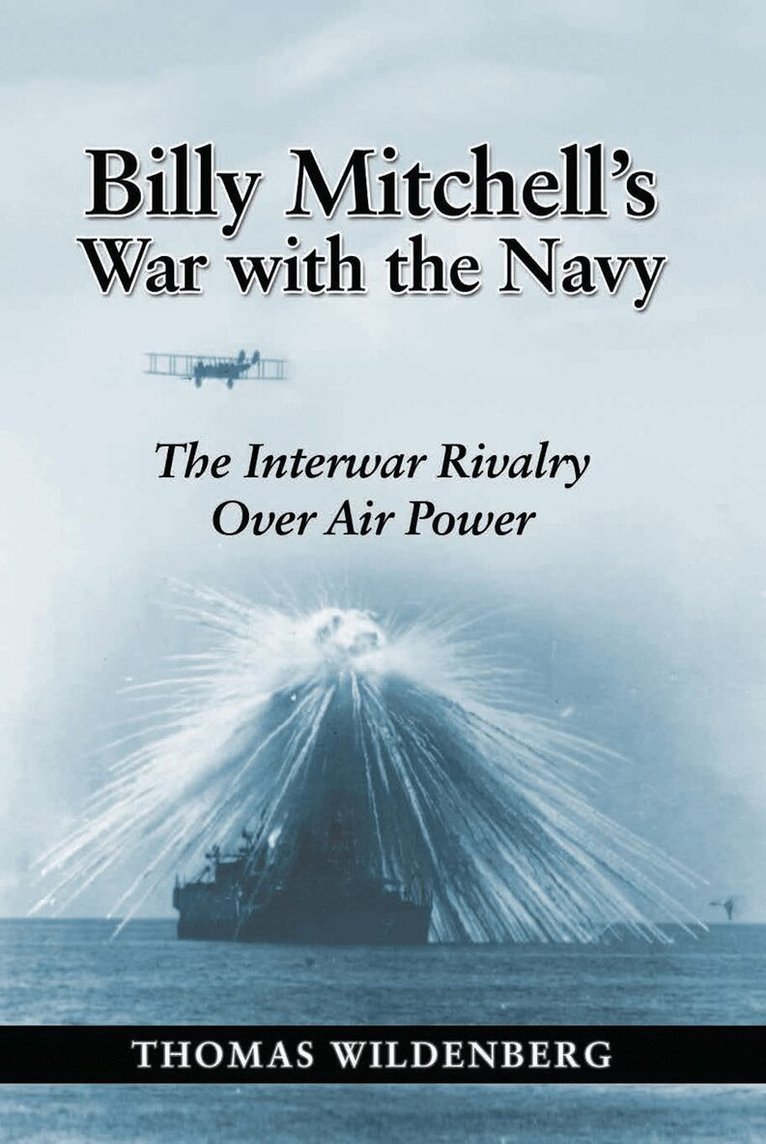
In the years following WWI, the U.S. Congress was more interested in disarmament than in funding national defense. For the military services this meant lean budgets and skeleton operating forces. Billy Mitchell’s War recounts the struggle between the Army and Navy air arms for the resources needed to define and establish the role of aviation within their respective services in the period between the two world wars. When Billy Mitchell returned from WW I, he brought with him the deep-seated belief that air power had made armies and navies obsolete. When Congress rejected the concept of a unified air service in 1920, Mitchell and his supporters turned on the Navy, seeking to substitute the Air Service as the nation''s first line of defense. While Mitchell proved that aircraft could sink a battleship with the bombing of the Ostfriesland in 1921, he was unable to convince the General Staff of the Army, the General Board of the Navy, the Secretary of War, the Secretary of the Navy, or Congress of the need for an independent air force. When Mitchell turned to the pen to discredit the Navy, he was convicted by his own words and actions in a court-martial that captivated the nation, and was forced to resign in 1925. Rather then ending the rivalry for air power, Mitchell’s resignation set the stage for the ongoing dispute between the two services in the years immediately before WWII.
E-bok
Engelska, 2015490 kr
Läs direkt efter köp
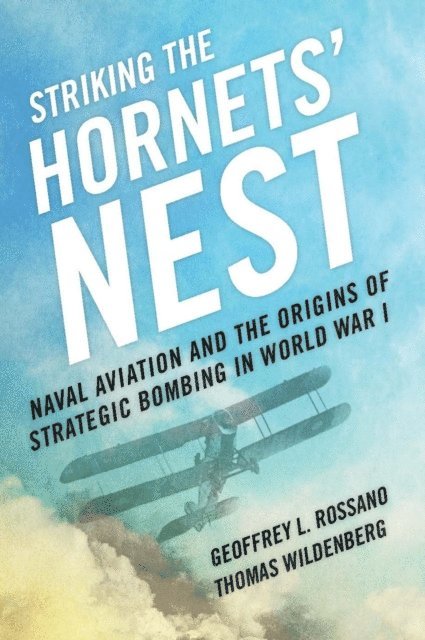
Striking the Hornets’ Nest provides the first extensive analysis of the Northern Bombing Group (NBG), the Navy’s most innovative aviation initiative of World War I and one of the world’s first dedicated strategic bombing programs. Very little has been written about the Navy’s aviation activities in World War I and even less on the NBG. Standard studies of strategic bombing tend to focus on developments in the Royal Air Force or the U.S. Army Air Service. This work concentrates on the origins of strategic bombing in World War I, and the influence this phenomenon had on the Navy’s future use of the airplane. The NBG program faced enormous logistical and personnel challenges. Demands for aircraft, facilities, and personnel were daunting, and shipping shortages added to the seemingly endless delays in implementing the program. Despite the impediments, the Navy (and Marine Corps) triumphed over organizational hurdles and established a series of bases and depots in northern France and southern England in the late summer and early fall of 1918. Ironically, by the time the Navy was ready to commence bombing missions, the German retreat had caused abandonment of the submarine bases the NBG had been created to attack. The men involved in this program were pioneers, overcoming major obstacles only to find they were no longer needed. Though the Navy rapidly abandoned its use of strategic bombing after World War I, their brief experimentation directed the future use of aircraft in other branches of the armed forces. It is no coincidence that Robert Lovett, the young Navy reserve officer who developed much of the NBG program in 1918, spent the entire period of World War II as Assistant Secretary of War for Air where he played a crucial role organizing and equipping the strategic bombing campaign unleashed against Germany and Japan. Rossano and Wildenberg have provided a definitive study of the NBG, a subject that has been overlooked for too long.
Häftad, Engelska, 2018
327 kr
Skickas inom 5-8 vardagar
During the 1920s and 1930s Adm. Joseph Mason Reeves (1878-1948) emerged as the most important flag officer in American naval aviation. He took command of the U.S. Navy's nascent carrier arm during a critical period and, imagining the aircraft carrier's possibilities as an offensive weapon, transformed it from a small auxiliary command in support of the battle line into a powerful strike force that could attack far in advance of the fleet.All the Factors of Victory is the first full-length biography of this eminent naval officer, whose story makes an important contribution to our understanding of not only the development of carrier warfare, but also how intraservice rivalries and the development of new technologies affected the Navy's mission.
436 kr
Läs direkt efter köp
Adm. Joseph Mason Reeves (1872–1948) took command of the U.S. Navy’s nascent carrier arm during a critical period, transforming it from a small auxiliary command in support of the battle line into a powerful strike force. Until the carrier commanders of World War II proved their mettle, Reeves’s expertise in the use of the aircraft carrier in naval tactics was unequaled. All the Factors of Victory is the first full-length biography of this eminent naval officer.
Inbunden, Engelska, 2025
433 kr
Skickas inom 5-8 vardagar
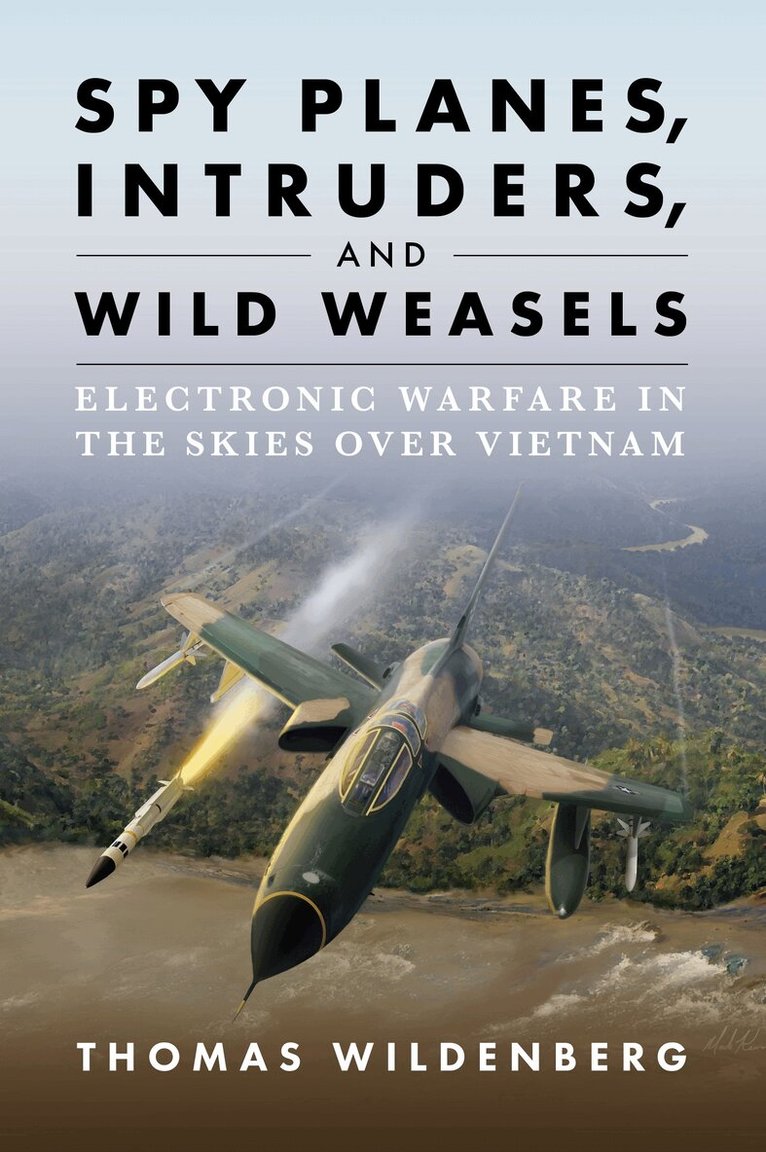
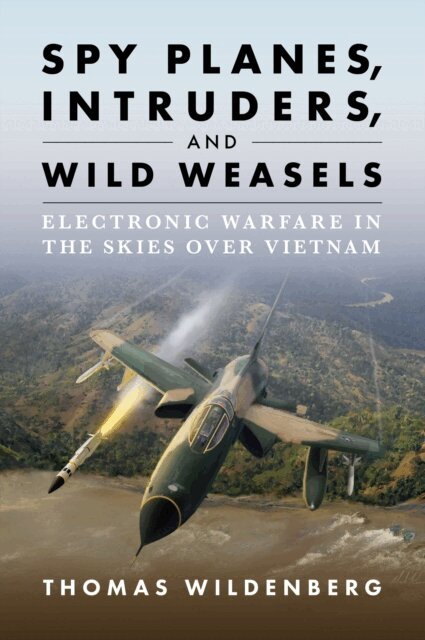
Spy Planes, Intruders, and Wild Weasels examines the emergence of electronic warfare and SEAD as critical components of air strategy during the Vietnam War. Utilizing declassified documents and firsthand accounts, Thomas Wildenberg provides a scholarly analysis of technological innovation, operational adaptation, and interagency coordination in the evolution of modern aerial warfare.The air war over Vietnam, often termed the first high-tech air war, was the first to feature electronic warfare (EW) in a decisive role. EW served not only as a means of defeating the surface-to-air missile—which was also used extensively for the first time during this conflict—but also as a way to improve the offensive and defensive capabilities of U.S. fighters in air combat. Spy Planes, Intruders, and Wild Weasels provides a comprehensive account of this heretofore neglected aspect of air combat history. Thomas Wildenberg draws from a wealth of declassified CIA and NSA documents, as well as compelling accounts from veterans and technical experts, to describe the tactics, innovations, and impacts of electronic warfare in air combat in Vietnam. From the wide-scale use of airborne jamming to the creation of aircraft like the EA-6B, the first aircraft designed specifically for electronic warfare, this definitive work illustrates the importance of EW in the history of the Vietnam War and the development of modern electronic warfare. The author traces the impact of EW technologies through key phases of the war, including Rolling Thunder, Linebacker I, and Linebacker II. As the war progressed, so did the sophistication of electronic warfare techniques. It was the first conflict in which the suppression of enemy air defenses and the aircraft dedicated for this purpose, called Wild Weasels, became a major component of operational planning and use. The book analyzes how U.S. forces adapted with advanced aircraft and equipment to counter North Vietnam’s increasingly sophisticated air defenses. Drawing from primary sources, the author offers a clear analysis of how electronic warfare changed military tactics, intelligence operations, and the future of conflict.
E-bok
Engelska, 2025476 kr
Läs direkt efter köp
Spy Planes, Intruders, and Wild Weasels examines the emergence of electronic warfare and SEAD as critical components of air strategy during the Vietnam War. Utilizing declassified documents and firsthand accounts, Thomas Wildenberg provides a scholarly analysis of technological innovation, operational adaptation, and interagency coordination in the evolution of modern aerial warfare.The air war over Vietnam, often termed the first high-tech air war, was the first to feature electronic warfare (EW) in a decisive role. EW served not only as a means of defeating the surface-to-air missile-which was also used extensively for the first time during this conflict-but also as a way to improve the offensive and defensive capabilities of U.S. fighters in air combat. Spy Planes, Intruders, and Wild Weasels provides a comprehensive account of this heretofore neglected aspect of air combat history. Thomas Wildenberg draws from a wealth of declassified CIA and NSA documents, as well as compelling accounts from veterans and technical experts, to describe the tactics, innovations, and impacts of electronic warfare in air combat in Vietnam. From the wide-scale use of airborne jamming to the creation of aircraft like the EA-6B, the first aircraft designed specifically for electronic warfare, this definitive work illustrates the importance of EW in the history of the Vietnam War and the development of modern electronic warfare. The author traces the impact of EW technologies through key phases of the war, including Rolling Thunder, Linebacker I, and Linebacker II. As the war progressed, so did the sophistication of electronic warfare techniques. It was the first conflict in which the suppression of enemy air defenses and the aircraft dedicated for this purpose, called Wild Weasels, became a major component of operational planning and use. The book analyzes how U.S. forces adapted with advanced aircraft and equipment to counter North Vietnam's increasingly sophisticated air defenses. Drawing from primary sources, the author offers a clear analysis of how electronic warfare changed military tactics, intelligence operations, and the future of conflict.
Inbunden, Engelska, 2023
387 kr
Skickas inom 5-8 vardagar
Naval warfare was confined for centuries to surface combat, or undersea clashes. In the twentieth century aerial warfare became the third domain and shortly thereafter, the electromagnetic spectrum also appeared. Until now, little has been written about this important aspect of military conflict on the high seas. In Fighting in the Electromagnetic Spectrum author Thomas Wildenberg provides the first book covering these aircraft, their missions, and the methodology of conducting combat in all its forms along this fourth domain, the electromagnetic spectrum.When navies began to make use of the airwaves, they soon discovered those waves could also be exploited as a source of information about the opposing force. This would later be termed Electronic Intelligence (ELINT). Navies learned the value of interrupting or corrupting the enemy’s communication signals that were transmitted in the “ether,” thus began a method of fighting termed Electronic Warfare (EW). Wildenberg cuts through the secrecy about this understandably mysterious domain of combat. He offers details on aircraft and methods and provides a layman’s set of definitions of terms. Wildenberg shares lessons learned from World War II skirmishes a as well as clashes in the Korean and Vietnam wars, while providing a Fighting in the Electromagnetic Spectrum offers the reader a foundational understanding of this complex form of combat in all its forms. This volume discloses rarely covered concepts and methods which will shape future great power future conflict.
E-bok
Engelska, 2023450 kr
Läs direkt efter köp
Naval warfare was confined for centuries to surface combat, or undersea clashes. In the twentieth century aerial warfare became the third domain and shortly thereafter, the electromagnetic spectrum also appeared. Until now, little has been written about this important aspect of military conflict on the high seas. In Fighting in the Electromagnetic Spectrum author Thomas Wildenberg provides the first book covering these aircraft, their missions, and the methodology of conducting combat in all its forms along this fourth domain, the electromagnetic spectrum. When navies began to make use of the airwaves, they soon discovered those waves could also be exploited as a source of information about the opposing force. This would later be termed Electronic Intelligence (ELINT). Navies learned the value of interrupting or corrupting the enemy’s communication signals that were transmitted in the “ether,” thus began a method of fighting termed Electronic Warfare (EW). Wildenberg cuts through the secrecy about this understandably mysterious domain of combat. He offers details on aircraft and methods and provides a layman’s set of definitions of terms. Wildenberg shares lessons learned from World War II skirmishes a as well as clashes in the Korean and Vietnam wars, while providing a Fighting in the Electromagnetic Spectrum offers the reader a foundational understanding of this complex form of combat in all its forms. This volume discloses rarely covered concepts and methods which will shape future great power future conflict.
Inbunden, Engelska, 2024
340 kr
Skickas inom 5-8 vardagar
This book provides readers with an in-depth understanding of the professional development of two notable and highly accomplished naval officers and their contributions to the development of the Aegis Weapons System. The main argument is that there was no single career path or set of formal qualifications for achieving excellence in the naval profession as characterized by selection for Flag rank. One of the major points is the revelation that a combination of essential personal traits and qualities and important operational and technical experiences fundamental to the nature of naval warfare are critical to developing highly competent and confident officers. Such officers are needed to lead major acquisition programs capable of delivering innovative weapons systems for a twenty-first t century Navy facing new age threats.
E-bok
Engelska, 2024265 kr
Läs direkt efter köp
This book provides readers with an in-depth understanding of the professional development of two notable and highly accomplished naval officers and their contributions to the development of the Aegis Weapons System. The main argument is that there was no single career path or set of formal qualifications for achieving excellence in the naval profession as characterized by selection for Flag rank. One of the major points is the revelation that a combination of essential personal traits and qualities and important operational and technical experiences fundamental to the nature of naval warfare are critical to developing highly competent and confident officers. Such officers are needed to lead major acquisition programs capable of delivering innovative weapons systems for a twenty-first t century Navy facing new age threats.