Tili Boon Cuillé – författare
Visar alla böcker från författaren Tili Boon Cuillé. Handla med fri frakt och snabb leverans.
3 produkter
3 produkter
918 kr
Skickas inom 7-10 vardagar
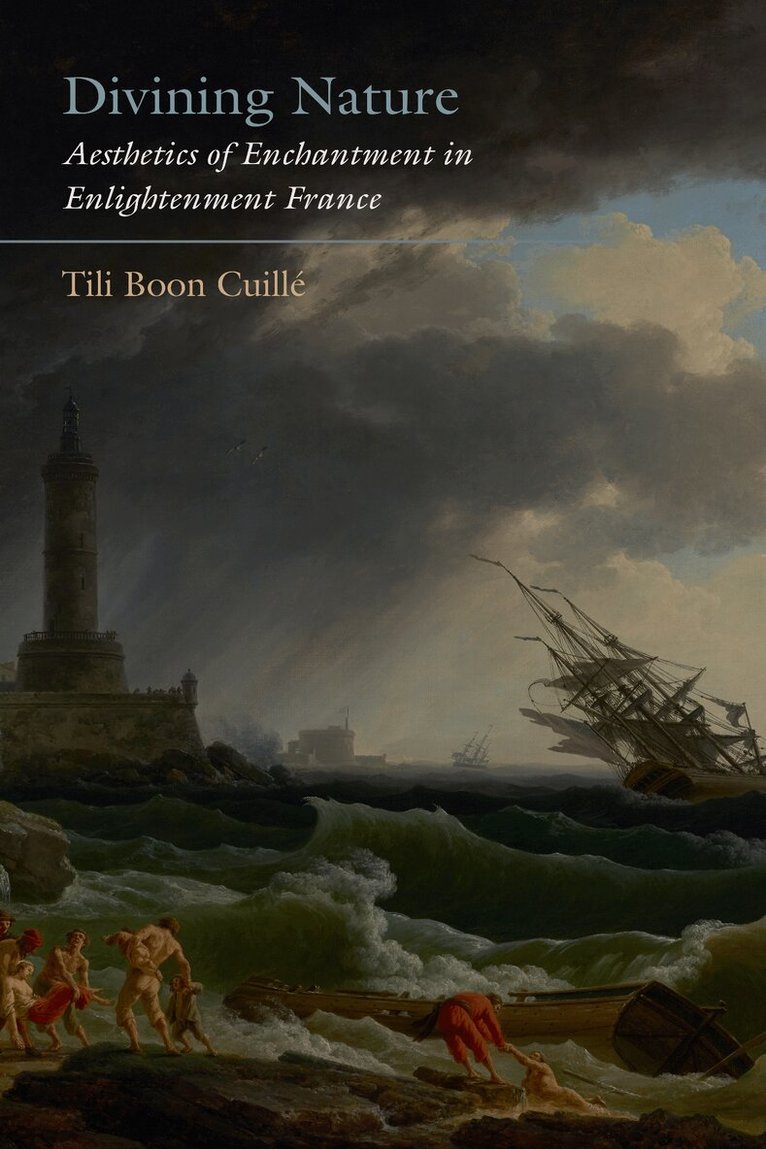
The Enlightenment remains widely associated with the rise of scientific progress and the loss of religious faith, a dual tendency that is thought to have contributed to the disenchantment of the world. In her wide-ranging and richly illustrated book, Tili Boon Cuillé questions the accuracy of this narrative by investigating the fate of the marvelous in the age of reason. Exploring the affinities between the natural sciences and the fine arts, Cuillé examines the representation of natural phenomena—whether harmonious or discordant—in natural history, painting, opera, and the novel from Buffon and Rameau to Ossian and Staël. She demonstrates that philosophical, artistic, and emotional responses to the "spectacle of nature" in eighteenth-century France included wonder, enthusiasm, melancholy, and the "sentiment of divinity." These "passions of the soul," traditionally associated with religion and considered antithetical to enlightenment, were linked to the faculties of reason, imagination, and memory that structured Diderot's Encyclopédie and to contemporary theorizations of the sublime. As Cuillé reveals, the marvelous was not eradicated but instead preserved through the establishment and reform of major French cultural institutions dedicated to science, art, religion, and folklore that were designed to inform, enchant, and persuade.This book has been made possible in part by the National Endowment for the Humanities: Exploring the human endeavor.
1 698 kr
Skickas inom 10-15 vardagar
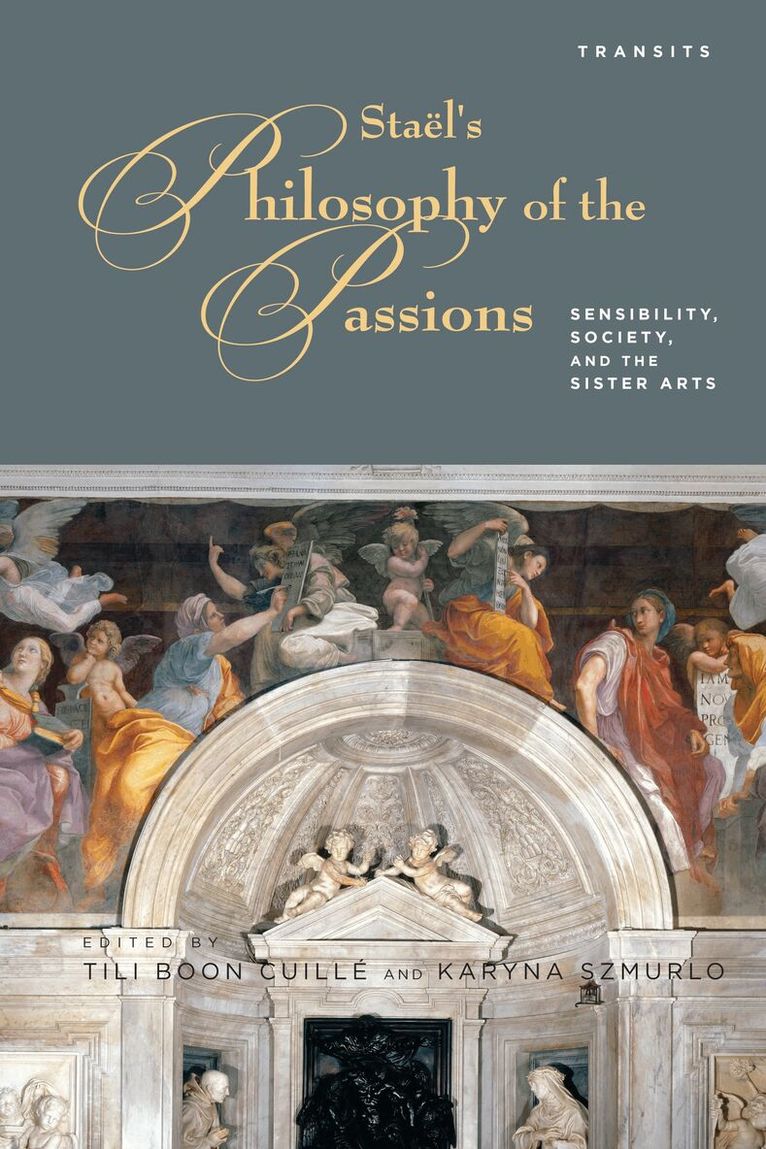
Sensibility, or the capacity to feel, played a vital role in philosophical reflection about the natural sciences, the social sciences, and the arts in eighteenth-century France. Yet scholars have privileged the Marquis de Sade’s vindication of physiological sensibility as the logical conclusion of Enlightenment over Germaine de Staël’s exploration of moral sensibility’s potential for reform and renewal that paved the way for Romanticism. This volume of essays showcases Staël’s contribution to the “affective revolution” in Europe, investigating the personal and political circumstances that informed her theory of the passions and the social and aesthetic innovations to which it gave rise. Contributors move seamlessly between her political, philosophical, and fictional works, attentive to the relationship between emotion and cognition and aware of the coherence of her thought on an individual, national, and international scale. They first examine the significance Staël attributed to pity, happiness, melancholy, and enthusiasm in The Influence of the Passions as she witnessed revolutionary strife and envisioned the new republic. They then explore her development of a cosmopolitan aesthetic, in such works as On Literature, Corinne, or Italy, On Germany, and The Spirit of Translation, that transcended traditional generic, national, and linguistic boundaries. Finally, they turn to her contributions to the visual and musical arts as she deftly negotiated the transition from a Neoclassical to a Romantic aesthetic. Staël’s Philosophy of the Passions concludes that, rather than founding a republic based on the rights of man, Staël’s reflection fostered international communities of women (artists, models, and collectors; authors, performers, and spectators), enabling them to participate in the re-articulation of sociocultural values in the wake of the French Revolution.Contributors: Tili Boon Cuillé, Catherine Dubeau, Nanette Le Coat, Christine Dunn Henderson, Karen de Bruin, M. Ione Crummy, Jennifer Law-Sullivan, Lauren Fortner Ravalico, C. C. Wharram, Kari Lokke, Susan Tenenbaum, Mary D. Sheriff, Heather Belnap Jensen, Fabienne Moore, Julia Effertz
853 kr
Skickas inom 10-15 vardagar
Sensibility, or the capacity to feel, played a vital role in philosophical reflection about the natural sciences, the social sciences, and the arts in eighteenth-century France. Yet scholars have privileged the Marquis de Sade’s vindication of physiological sensibility as the logical conclusion of Enlightenment over Germaine de Staël’s exploration of moral sensibility’s potential for reform and renewal that paved the way for Romanticism. This volume of essays showcases Staël’s contribution to the “affective revolution” in Europe, investigating the personal and political circumstances that informed her theory of the passions and the social and aesthetic innovations to which it gave rise. Contributors move seamlessly between her political, philosophical, and fictional works, attentive to the relationship between emotion and cognition and aware of the coherence of her thought on an individual, national, and international scale. They first examine the significance Staël attributed to pity, happiness, melancholy, and enthusiasm in The Influence of the Passions as she witnessed revolutionary strife and envisioned the new republic. They then explore her development of a cosmopolitan aesthetic, in such works as On Literature, Corinne, or Italy, On Germany, and The Spirit of Translation, that transcended traditional generic, national, and linguistic boundaries. Finally, they turn to her contributions to the visual and musical arts as she deftly negotiated the transition from a Neoclassical to a Romantic aesthetic. Staël’s Philosophy of the Passions concludes that, rather than founding a republic based on the rights of man, Staël’s reflection fostered international communities of women (artists, models, and collectors; authors, performers, and spectators), enabling them to participate in the re-articulation of sociocultural values in the wake of the French Revolution.Contributors: Tili Boon Cuillé, Catherine Dubeau, Nanette Le Coat, Christine Dunn Henderson, Karen de Bruin, M. Ione Crummy, Jennifer Law-Sullivan, Lauren Fortner Ravalico, C. C. Wharram, Kari Lokke, Susan Tenenbaum, Mary D. Sheriff, Heather Belnap Jensen, Fabienne Moore, Julia Effertz