Tim Christiaens - Böcker
Visar alla böcker från författaren Tim Christiaens. Handla med fri frakt och snabb leverans.
4 produkter
4 produkter
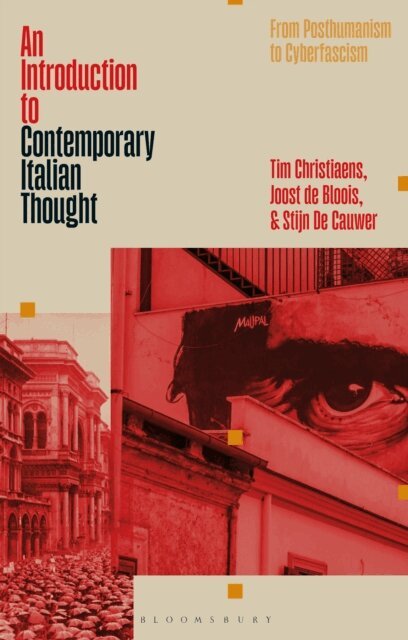
Introduction to Contemporary Italian Thought
From Posthumanism to Cyberfascism
Inbunden, Engelska, 2026
742 kr
Skickas inom 10-15 vardagar
Over the past three decades, Italian thought has emerged as a major field within continental philosophy. But what are the latest developments since Italian theory rose to a peak of popularity in the 2000s? This book offers an accessible and incisive introduction to contemporary Italian thought, revealing above all its continued relevance to some of the most pressing political, social and ethical conflicts today.Broadening the idea of Italian thought beyond biopolitics, An Introduction to Contemporary Italian Thought engages with a number of leading and upcoming philosophers, including Silvia Federici, Rosi Braidotti, Donatella di Cesare, Emanuele Coccia, Sandro Mezzadra, Franco ‘Bifo’ Berardi and Federico Luisetti. It demonstrates how Italian theory resonates in a wide variety of current debates, from digital technology, pandemics and populism to cyberfascism, environmentalism and decolonization. This not only uncovers the fruitfulness of Italian philosophy but further allows for fresh perspectives on debates dominated by well-trodden and often dated arguments. In consideration of populism, for instance, this book does not so much examine Donald Trump but rather turns to Silvio Berlusconi and Giorgia Meloni, just as its discussions of the digitization of work look beyond Silicon Valley to working conditions in EU and Global South from the perspective of Italian (post)workerism, and the Anthropocene is considered in light of radical zoological egalitarianism as it emerges in contemporary Italian thought.Tackling head-on the complex and porous notion of what constitutes ‘Italian thought’, Christiaens, De Bloois and De Cauwer bring new understanding to contemporary Italian theory and, with it, novel perspectives on current critical issues.
244 kr
Skickas inom 7-10 vardagar
Over the past three decades, Italian thought has emerged as a major field within continental philosophy. But what are the latest developments since Italian theory rose to a peak of popularity in the 2000s? This book offers an accessible and incisive introduction to contemporary Italian thought, revealing above all its continued relevance to some of the most pressing political, social and ethical conflicts today.Broadening the idea of Italian thought beyond biopolitics, An Introduction to Contemporary Italian Thought engages with a number of leading and upcoming philosophers, including Silvia Federici, Rosi Braidotti, Donatella di Cesare, Emanuele Coccia, Sandro Mezzadra, Franco ‘Bifo’ Berardi and Federico Luisetti. It demonstrates how Italian theory resonates in a wide variety of current debates, from digital technology, pandemics and populism to cyberfascism, environmentalism and decolonization. This not only uncovers the fruitfulness of Italian philosophy but further allows for fresh perspectives on debates dominated by well-trodden and often dated arguments. In consideration of populism, for instance, this book does not so much examine Donald Trump but rather turns to Silvio Berlusconi and Giorgia Meloni, just as its discussions of the digitization of work look beyond Silicon Valley to working conditions in EU and Global South from the perspective of Italian (post)workerism, and the Anthropocene is considered in light of radical zoological egalitarianism as it emerges in contemporary Italian thought.Tackling head-on the complex and porous notion of what constitutes ‘Italian thought’, Christiaens, De Bloois and De Cauwer bring new understanding to contemporary Italian theory and, with it, novel perspectives on current critical issues.
1 142 kr
Skickas inom 10-15 vardagar
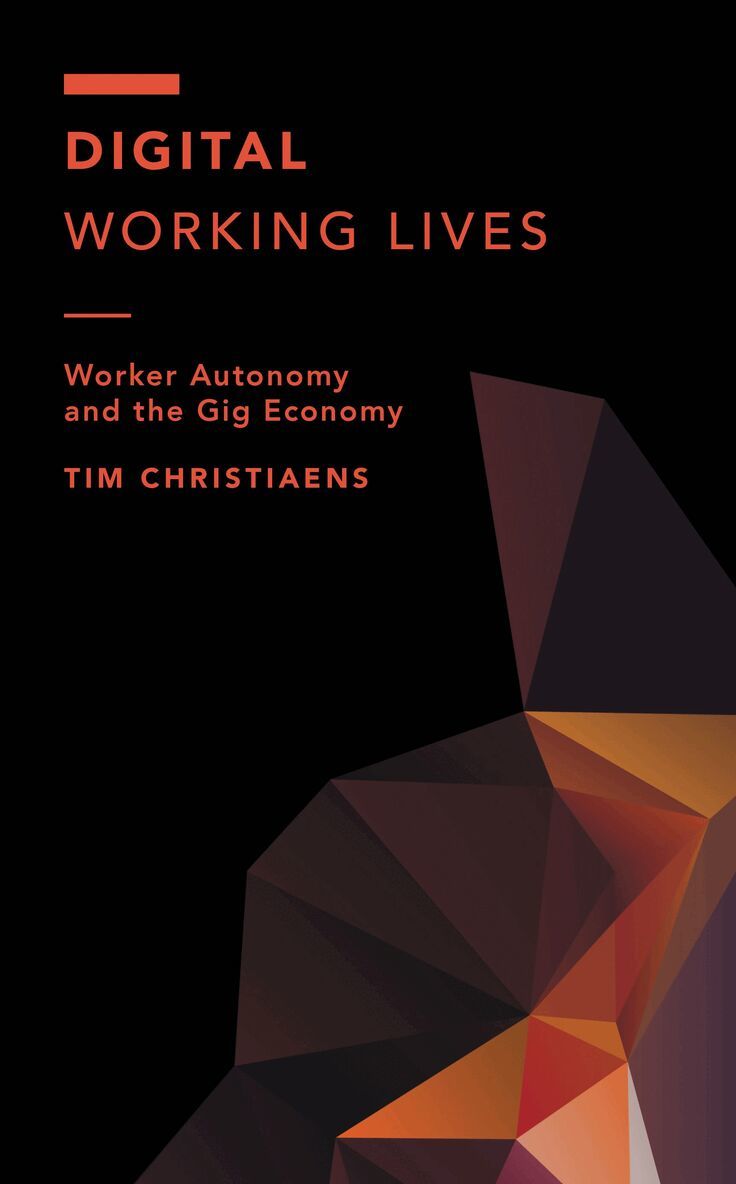
Recent innovations in digital technologies are fundamentally transforming the world of work. A digital gig economy is emerging that threatens to displace traditional labour relations based on legally regulated labour contracts. Companies like Uber, Deliveroo, or Amazon Mechanical Turk rely increasingly on ‘independent contractors’ who earn piece-rate wages by completing tasks sent to them via their smartphones. This development understandably pushes workers to desire more autonomy, but what would workers’ autonomy mean in the digital age? This book argues that the digital gig economy undermines workers’ autonomy by putting digital technology in charge of workers’ surveillance, leading to exploitation, alienation, and exhaustion. To secure a more sustainable future of work, digital technologies should instead be transformed into tools that support human development instead of subordinating it to algorithmic control. The best guarantee for human autonomy is a politics that transforms digital platforms into convivial tools that obey the rhythm of human life.
434 kr
Skickas inom 10-15 vardagar
Recent innovations in digital technologies are fundamentally transforming the world of work. A digital gig economy is emerging that threatens to displace traditional labour relations based on legally regulated labour contracts. Companies like Uber, Deliveroo, or Amazon Mechanical Turk rely increasingly on ‘independent contractors’ who earn piece-rate wages by completing tasks sent to them via their smartphones. This development understandably pushes workers to desire more autonomy, but what would workers’ autonomy mean in the digital age? This book argues that the digital gig economy undermines workers’ autonomy by putting digital technology in charge of workers’ surveillance, leading to exploitation, alienation, and exhaustion. To secure a more sustainable future of work, digital technologies should instead be transformed into tools that support human development instead of subordinating it to algorithmic control. The best guarantee for human autonomy is a politics that transforms digital platforms into convivial tools that obey the rhythm of human life.