Tim Marrs – författare
2 864 kr
Skickas inom 3-6 vardagar
2 815 kr
Läs direkt efter köp
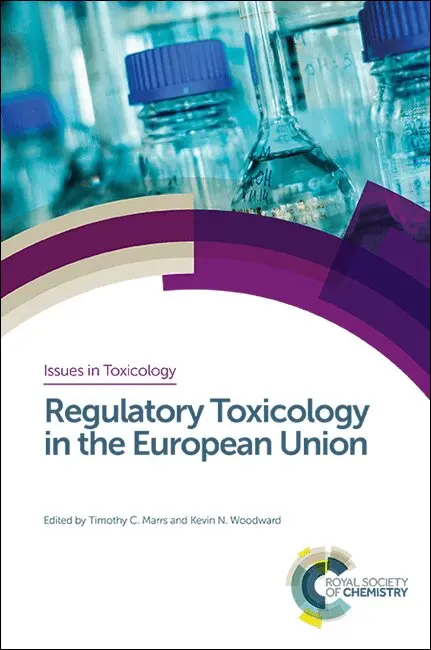
Consumer and environmental protection depend on the careful regulation of all classes of chemicals. Toxicology is the key science used to evaluate safety and so underpins regulatory decisions on chemicals. With the growing body of EU legislation involved in chemical regulation, there is a concomitant need to understand the toxicological principles underlying safety assessments
Regulatory Toxicology in the European Union is the first book to cover regulatory toxicology specifically in Europe. It addresses the need for a wider understanding of the principles of regulatory toxicology and their application and presents the relationship between toxicology and legislative processes in regulating chemical commodities across Europe. This title has a broad scope, covering historical and current chemical regulation in Europe, the role of European agencies and institutions, and also the use of toxicology data for important classes of chemicals, including human and veterinary medicines, animal feed and food additives, biocides, pesticides and nanomaterials. This book is therefore extremely pertinent and timely in the toxicology field at present.
This book is an essential reference for regulatory authorities, industrialists, academics, undergraduates and postgraduates working within safety and hazards, toxicology, the biological sciences, and the medicinal and pharmaceutical sciences across the European Union.
2 815 kr
Läs direkt efter köp
Consumer and environmental protection depend on the careful regulation of all classes of chemicals. Toxicology is the key science used to evaluate safety and so underpins regulatory decisions on chemicals. With the growing body of EU legislation involved in chemical regulation, there is a concomitant need to understand the toxicological principles underlying safety assessments
Regulatory Toxicology in the European Union is the first book to cover regulatory toxicology specifically in Europe. It addresses the need for a wider understanding of the principles of regulatory toxicology and their application and presents the relationship between toxicology and legislative processes in regulating chemical commodities across Europe. This title has a broad scope, covering historical and current chemical regulation in Europe, the role of European agencies and institutions, and also the use of toxicology data for important classes of chemicals, including human and veterinary medicines, animal feed and food additives, biocides, pesticides and nanomaterials. This book is therefore extremely pertinent and timely in the toxicology field at present.
This book is an essential reference for regulatory authorities, industrialists, academics, undergraduates and postgraduates working within safety and hazards, toxicology, the biological sciences, and the medicinal and pharmaceutical sciences across the European Union.
2 715 kr
Skickas inom 5-8 vardagar
1 764 kr
Skickas inom 5-8 vardagar
1 572 kr
Läs direkt efter köp
This first volume chronicles the early stages of the outbreak and world-wide spread of SARS-Cov-2 (COVID-19) and delineates the role of several disciplines in therapeutic and control measures. Documenting the epidemiologic response from China, the clinical evaluation, pathology and intial therapeutics that were available during the first 6 months and onwards of the outbreak, this book records how the response to the pandemic was mounted and how various branches of science and research combined to rapidly expand our understanding of the disease.
1 586 kr
Läs direkt efter köp
This first volume chronicles the early stages of the outbreak and world-wide spread of SARS-Cov-2 (COVID-19) and delineates the role of several disciplines in therapeutic and control measures. Documenting the epidemiologic response from China, the clinical evaluation, pathology and intial therapeutics that were available during the first 6 months and onwards of the outbreak, this book records how the response to the pandemic was mounted and how various branches of science and research combined to rapidly expand our understanding of the disease.
2 500 kr
Läs direkt efter köp
Neurotransmitters are usually considered to be endogenous substances that are released from neurons, act on receptor sites that are typically present on membranes of postsynaptic cells and produce a functional change in the properties of the target cell. They are essential features of the nervous systems of all animals, and numerous chemicals can act as neurotransmitters either intentionally (e.g. pesticides) or unintentionally (neurotoxins). The most common forms of neurotoxicity are the death of neurons, degeneration of axons, damage to glial cells and interference with the axonal membrane or neurotransmission. Important neurotoxins are found among pesticides, metals, solvents, natural substances, and industrial chemicals. Environmental chemicals may also contribute to the pathology of neurodevelopmental, neuropsychiatric, and neurodegenerative disorders. Neurotransmitters and Toxicology will be particularly appealing to toxicologists interested in neurotoxicology in various sub-disciplines, as well as neuro-chemists interested in pathology and disease mechanisms associated with neurotoxicants.
2 500 kr
Läs direkt efter köp
Neurotransmitters are usually considered to be endogenous substances that are released from neurons, act on receptor sites that are typically present on membranes of postsynaptic cells and produce a functional change in the properties of the target cell. They are essential features of the nervous systems of all animals, and numerous chemicals can act as neurotransmitters either intentionally (e.g. pesticides) or unintentionally (neurotoxins). The most common forms of neurotoxicity are the death of neurons, degeneration of axons, damage to glial cells and interference with the axonal membrane or neurotransmission. Important neurotoxins are found among pesticides, metals, solvents, natural substances, and industrial chemicals. Environmental chemicals may also contribute to the pathology of neurodevelopmental, neuropsychiatric, and neurodegenerative disorders. Neurotransmitters and Toxicology will be particularly appealing to toxicologists interested in neurotoxicology in various sub-disciplines, as well as neuro-chemists interested in pathology and disease mechanisms associated with neurotoxicants.
3 318 kr
Skickas inom 5-8 vardagar
1 764 kr
Skickas inom 5-8 vardagar
1 572 kr
Läs direkt efter köp
This second volume chronicles the later stages of the outbreak of SARS-Cov-2 (COVID-19) and delineates the role of several disciplines in therapeutic and control measures highliting the response from specific coutries of note and efforts to repurpose and produce new therapeutics and vaccines. By addressing considerations of efficacy and safety of drugs and chemicals used to combat COVID-19, virtually in real-time, this book documents and highlights the advances in science and place the toxicology, pharmaceutical science, public health and medical community in a better position to advise in future epidemics.
1 572 kr
Läs direkt efter köp
This second volume chronicles the later stages of the outbreak of SARS-Cov-2 (COVID-19) and delineates the role of several disciplines in therapeutic and control measures highliting the response from specific coutries of note and efforts to repurpose and produce new therapeutics and vaccines. By addressing considerations of efficacy and safety of drugs and chemicals used to combat COVID-19, virtually in real-time, this book documents and highlights the advances in science and place the toxicology, pharmaceutical science, public health and medical community in a better position to advise in future epidemics.
2 533 kr
Skickas inom 3-6 vardagar
2 123 kr
Läs direkt efter köp
Insects more similar in structure and physiology to mammals than plants or fungi. Consequently, insecticides are often of greater toxicity to mammals than herbicides. This is particularly the case with neurotoxins. However, some insecticides are targeted at structures or hormonal systems specific to insects (insect growth regulators/chitin synthesis inhibitors) so are less harmful but can still be mildly haematotoxic. There are, therefore, issues specific to insecticides, which do not occur with other pesticides - hence the need for a book specifically on insecticide toxicology in mammals. The book starts with general issues relating to the mammalian toxicity of insecticides, including target/non-target specificity, nomenclature and metabolism of insecticides. It then goes on to discuss specific types of insecticide including: organochlorines; anticholinesterases; pyrethrum and synthetic pyrethroids; nicotine and the neonicotinoids; insect growth regulators/ecdysone agonists/chitin synthesis inhibitors; insecticides of natural origin; biological insecticides; and insecticides used in veterinary medicine.