Tim Spofford – författare
278 kr
Läs direkt efter köp
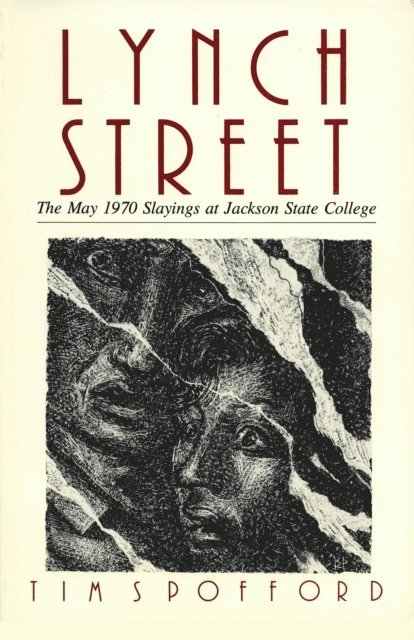
Only ten days after four white students had been gunned down by National Guardsmen at Kent State University in 1970, law enforcement officials fired upon and killed two young blacks and wounded twelve others in front of a women''s dormitory at Jackson State College in Mississippi. The first incident attracted media and public attention worldwide, overshadowing the later tragedy. Tim Spofford has not allowed the killings at Jackson State to be forgotten. Lynch Street presents the event in the context of the history of Jackson, Mississippi, as well as in the context of the student protests of the 1960s.
Lynch Street is not, as one might assume, named after lynchings, rather it is identified with John Ray Lynch, an emancipated slave and Mississippi''s first black congressman. Lynch Street is the site of the black Jackson State College, where two black men were killed during antiwar and civil-rights protests in May 1970, 10 days after the Kent State University incident where four white students were slain by National Guardsmen. According to Spofford, a writer for the Albany Times Union, the Jackson State killings have been largely forgotten in contrast to the Kent State deaths. In his account, Spofford relies mainly on interviews with the wounded students and the families of the dead. He traces the mounting tensions on Lynch Street between blacks and whites and maintains that Jackson State students were not known for their political activism; yet a mini-riot, fueled by an atmosphere of racism, escalated, and the police panicked, called for extra help and began shooting. Spofford successfully recalls the moment with primary sources. ... Illustrated.
278 kr
Läs direkt efter köp
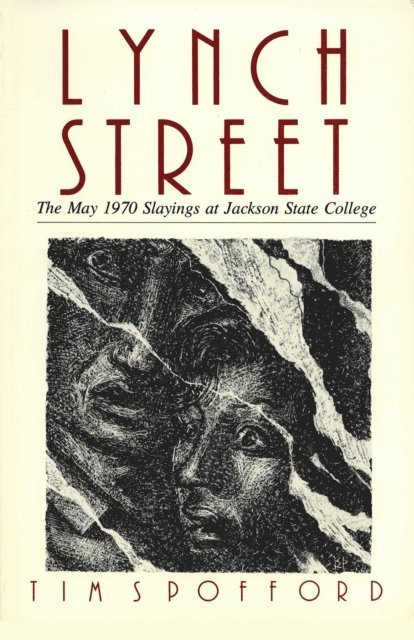
Only ten days after four white students had been gunned down by National Guardsmen at Kent State University in 1970, law enforcement officials fired upon and killed two young blacks and wounded twelve others in front of a women''s dormitory at Jackson State College in Mississippi. The first incident attracted media and public attention worldwide, overshadowing the later tragedy. Tim Spofford has not allowed the killings at Jackson State to be forgotten. Lynch Street presents the event in the context of the history of Jackson, Mississippi, as well as in the context of the student protests of the 1960s.
Lynch Street is not, as one might assume, named after lynchings, rather it is identified with John Ray Lynch, an emancipated slave and Mississippi''s first black congressman. Lynch Street is the site of the black Jackson State College, where two black men were killed during antiwar and civil-rights protests in May 1970, 10 days after the Kent State University incident where four white students were slain by National Guardsmen. According to Spofford, a writer for the Albany Times Union, the Jackson State killings have been largely forgotten in contrast to the Kent State deaths. In his account, Spofford relies mainly on interviews with the wounded students and the families of the dead. He traces the mounting tensions on Lynch Street between blacks and whites and maintains that Jackson State students were not known for their political activism; yet a mini-riot, fueled by an atmosphere of racism, escalated, and the police panicked, called for extra help and began shooting. Spofford successfully recalls the moment with primary sources. ... Illustrated.
334 kr
Skickas inom 3-6 vardagar
221 kr
Läs direkt efter köp
Does racial discrimination harm Black children''s sense of self?
The Doll Test illuminated its devastating toll.
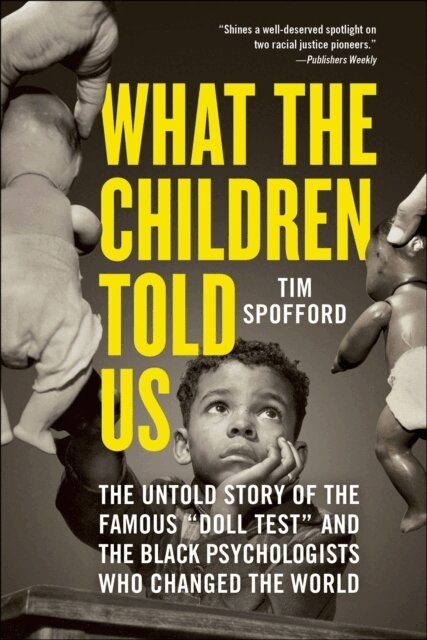
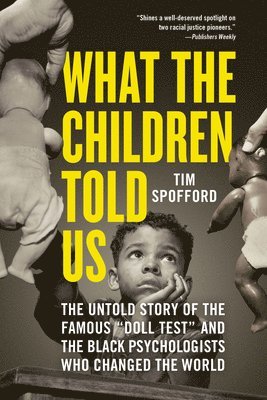
Dr. Kenneth Clark visited rundown and under-resourced segregated schools across America, presenting Black children with two dolls: a white one with hair painted yellow and a brown one with hair painted black. "Give me the doll you like to play with," he said. "Give me the doll that is a nice doll." The psychological experiment Kenneth developed with his wife, Mamie, designed to measure how segregation affected Black children''s perception of themselves and other Black people, was enlightening—and horrifying. Over and over again, the young children—some not yet five years old—selected the white doll as preferable, and the brown doll as "bad." Some children even denied their race. "Yes," said brown-skinned Joan W., age six, when questioned about her affection for the light-skinned doll. "I would like to be white."
What the Children Told Us is the story of the towering intellectual and emotional partnership between two Black scholars who highlighted the psychological effects of racial segregation. The Clarks'' story is one of courage, love, and an unfailing belief that Black children deserved better than what society was prepared to give them, and their unrelenting activism played a critical role in the landmark Brown v. Board of Education case. The Clarks'' decades of impassioned advocacy, their inspiring marriage, and their enduring work shines a light on the power of passion in an unjust world.
171 kr
Skickas