Timo Maran - Böcker
Visar alla böcker från författaren Timo Maran. Handla med fri frakt och snabb leverans.
5 produkter
5 produkter
241 kr
Skickas inom 7-10 vardagar
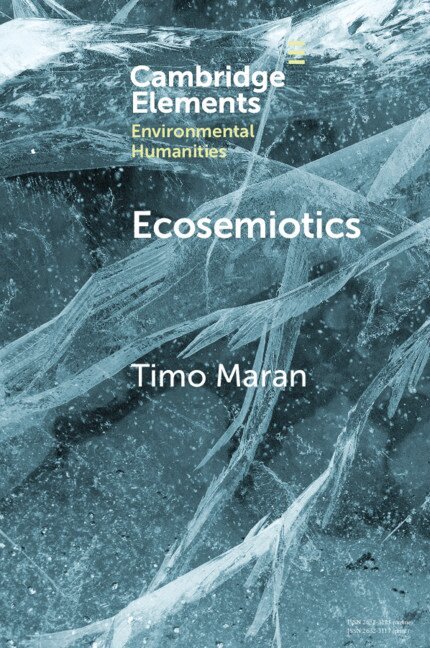
This Element provides an accessible introduction to ecosemiotics and demonstrates its pertinence for the study of today's unstable culture-nature relations. Ecosemiotics can be defined as the study of sign processes responsible for ecological phenomena. The arguments in this Element are developed in three steps that take inspiration from both humanities and biological sciences: 1) Showing the diversity, reach and effects of sign-mediated relations in the natural environment from the level of a single individual up the functioning of the ecosystem. 2) Demonstrating numerous ways in which prelinguistic semiotic relations are part of culture and identifying detrimental environmental effects that self-contained and purely symbol-based sign systems, texts and discourses bring along. 3) Demonstrating how ecosemiotic analysis centred on models and modelling can effectively map relations between texts and the natural environment, or the lack thereof, and how this methodology can be used artistically to initiate environmentally friendly cultural forms and practices.
2 992 kr
Skickas inom 5-8 vardagar
The book is the first annotated reader to focus specifically on the discipline of zoosemiotics. Zoosemiotics can be defined today as the study of signification, communication and representation within and across animal species. The name for the field was proposed in 1963 by the American semiotician Thomas A. Sebeok. He also established the framework for the paradigm by finding and tightening connections to predecessors, describing terminology, developing methodology and setting directions for possible future studies.The volume includes a wide selection of original texts accompanied by editorial introductions. An extensive opening introduction discusses the place of zoosemiotics among other sciences as well as its inner dimensions; the understanding of the concept of communication in zoosemiotics, the heritage of biologist Jakob v. Uexküll; contemporary developments in zoosemiotics and other issues. Chapter introductions discuss the background of the authors and selected texts, as well as other relevant texts.The selected texts cover a wide range of topics, such as semiotic constitution of nature, cognitive capabilities of animals, typology of animal expression and many other issues. The roots of zoosemiotics can be traced back to the works of David Hume and John Locke. Great emphasis is placed on the heritage of Thomas A. Sebeok, and a total of four of his essays are included. The Reader also includes influential studies in animal communication (honey bee dance language, vervet monkey alarm calls) as well as theory elaborations by Gregory Bateson and others. The reader concludes with a section dedicated to contemporary research. Readings in Zoosemiotics is intended as a primary source of information about zoosemiotics, and also provides additional readings for students of cognitive ethology and animal communication studies.
489 kr
Skickas inom 3-6 vardagar
The book is the first annotated reader to focus specifically on the discipline of zoosemiotics. Zoosemiotics can be defined today as the study of signification, communication and representation within and across animal species. The name for the field was proposed in 1963 by the American semiotician Thomas A. Sebeok. He also established the framework for the paradigm by finding and tightening connections to predecessors, describing terminology, developing methodology and setting directions for possible future studies.The volume includes a wide selection of original texts accompanied by editorial introductions. An extensive opening introduction discusses the place of zoosemiotics among other sciences as well as its inner dimensions; the understanding of the concept of communication in zoosemiotics, the heritage of biologist Jakob v. Uexküll; contemporary developments in zoosemiotics and other issues. Chapter introductions discuss the background of the authors and selected texts, as well as other relevant texts.The selected texts cover a wide range of topics, such as semiotic constitution of nature, cognitive capabilities of animals, typology of animal expression and many other issues. The roots of zoosemiotics can be traced back to the works of David Hume and John Locke. Great emphasis is placed on the heritage of Thomas A. Sebeok, and a total of four of his essays are included. The Reader also includes influential studies in animal communication (honey bee dance language, vervet monkey alarm calls) as well as theory elaborations by Gregory Bateson and others. The reader concludes with a section dedicated to contemporary research. Readings in Zoosemiotics is intended as a primary source of information about zoosemiotics, and also provides additional readings for students of cognitive ethology and animal communication studies.
1 387 kr
Skickas inom 10-15 vardagar
The present book analyses critically the tripartite mimicry model (consisting of the mimic, model and receiver species) and develops semiotic tools for comparative analysis. It is proposed that mimicry has a double structure where sign relations in communication are in constant interplay with ecological relations between species. Multi-constructivism and toolbox-like conceptual methods are advocated for, as these allow taking into account both the participants’ Umwelten as well as cultural meanings related to specific mimicry cases.From biosemiotic viewpoint, mimicry is a sign relation, where deceptively similar messages are perceived, interpreted and acted upon. Focusing on living subjects and their communication opens up new ways to understand mimicry. Such view helps to explain the diversity of mimicry as well as mimicry studies and treat these in a single framework. On a meta-level, a semiotic view allows critical reflection on the use of mimicry concept in modern biology. The author further discusses interpretations of mimicry in contemporary semiotics, analyses mimicry as communicative interaction, relates mimicry to iconic signs and focuses on abstract resemblances in mimicry. Theoretical discussions are illustrated with detailed excursions into practical mimicry cases in nature (brood parasitism, eyespots, myrmecomorphy, etc.). The book concludes with a conviction that mimicry should be treated in a broader semiotic-ecological context as it presumes the existence of ecological codes and other sign conventions in the ecosystem.
1 387 kr
Skickas inom 10-15 vardagar
The author further discusses interpretations of mimicry in contemporary semiotics, analyses mimicry as communicative interaction, relates mimicry to iconic signs and focuses on abstract resemblances in mimicry.