Timothy Bewes - Böcker
Visar alla böcker från författaren Timothy Bewes. Handla med fri frakt och snabb leverans.
9 produkter
9 produkter
1 295 kr
Skickas inom 7-10 vardagar
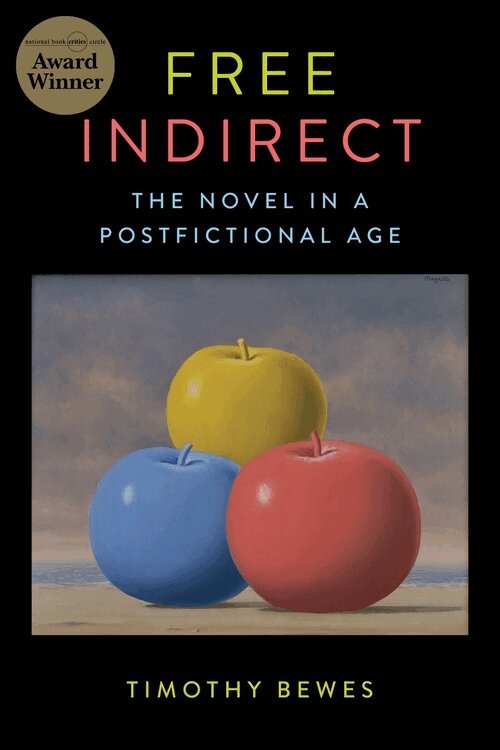
Everywhere today, we are urged to “connect.” Literary critics celebrate a new “honesty” in contemporary fiction or call for a return to “realism.” Yet such rhetoric is strikingly reminiscent of earlier theorizations. Two of the most famous injunctions of twentieth-century writing—E. M. Forster’s “Only connect . . .” and Fredric Jameson’s “Always historicize!”—helped establish connection as the purpose of the novel and its reconstruction as the task of criticism. But what if connection was not the novel’s modus operandi but the defining aesthetic ideology of our era—and its most monetizable commodity? What kind of thought is left for the novel when all ideas are acceptable as long as they can be fitted to a consumer profile?This book develops a new theory of the novel for the twenty-first century. In the works of writers such as J. M. Coetzee, Rachel Cusk, James Kelman, W. G. Sebald, and Zadie Smith, Timothy Bewes identifies a mode of thought that he calls “free indirect,” in which the novel’s refusal of prevailing ideologies can be found. It is not situated in a character or a narrator and does not take a subjective or perceptual form. Far from heralding the arrival of a new literary genre, this development represents the rediscovery of a quality that has been largely ignored by theorists: thought at the limits of form. Free Indirect contends that this self-awakening of contemporary fiction represents the most promising solution to the problem of thought today.
330 kr
Skickas inom 7-10 vardagar
Everywhere today, we are urged to “connect.” Literary critics celebrate a new “honesty” in contemporary fiction or call for a return to “realism.” Yet such rhetoric is strikingly reminiscent of earlier theorizations. Two of the most famous injunctions of twentieth-century writing—E. M. Forster’s “Only connect . . .” and Fredric Jameson’s “Always historicize!”—helped establish connection as the purpose of the novel and its reconstruction as the task of criticism. But what if connection was not the novel’s modus operandi but the defining aesthetic ideology of our era—and its most monetizable commodity? What kind of thought is left for the novel when all ideas are acceptable as long as they can be fitted to a consumer profile?This book develops a new theory of the novel for the twenty-first century. In the works of writers such as J. M. Coetzee, Rachel Cusk, James Kelman, W. G. Sebald, and Zadie Smith, Timothy Bewes identifies a mode of thought that he calls “free indirect,” in which the novel’s refusal of prevailing ideologies can be found. It is not situated in a character or a narrator and does not take a subjective or perceptual form. Far from heralding the arrival of a new literary genre, this development represents the rediscovery of a quality that has been largely ignored by theorists: thought at the limits of form. Free Indirect contends that this self-awakening of contemporary fiction represents the most promising solution to the problem of thought today.
495 kr
Skickas inom 7-10 vardagar
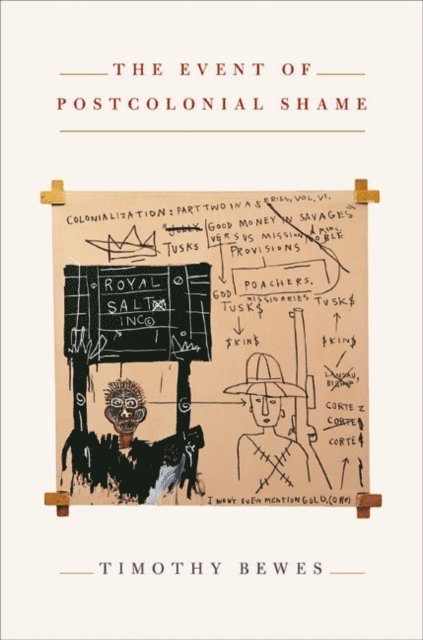
In a postcolonial world, where structures of power, hierarchy, and domination operate on a global scale, writers face an ethical and aesthetic dilemma: How to write without contributing to the inscription of inequality? How to process the colonial past without reverting to a pathology of self-disgust? Can literature ever be free of the shame of the postcolonial epoch--ever be truly postcolonial? As disparities of power seem only to be increasing, such questions are more urgent than ever. In this book, Timothy Bewes argues that shame is a dominant temperament in twentieth-century literature, and the key to understanding the ethics and aesthetics of the contemporary world. Drawing on thinkers such as Jean-Paul Sartre, Frantz Fanon, Theodor Adorno, and Gilles Deleuze, Bewes argues that in literature there is an "event" of shame that brings together these ethical and aesthetic tensions. Reading works by J. M. Coetzee, Joseph Conrad, Nadine Gordimer, V. S.Naipaul, Caryl Phillips, Ngugi wa Thiong'o, and Zoe Wicomb, Bewes presents a startling theory: the practices of postcolonial literature depend upon and repeat the same structures of thought and perception that made colonialism possible in the first place. As long as those structures remain in place, literature and critical thinking will remain steeped in shame. Offering a new mode of postcolonial reading, The Event of Postcolonial Shame demands a literature and a criticism that acknowledge their own ethical deficiency without seeking absolution from it.
224 kr
Tillfälligt slut
Since culture is the mediator between the individual and society, it is not surprising that it is a crucial part of politics. This is recognized by New Labour. Chris Smith, Secretary of State for Culture, Media and Sport, in a speech soon after the 1997 Labour election victory, stated that "Culture is what gives us a sense of identity both as individuals and as a nation". He argued that culture lies at the very heart of the mission of the new government. This book presents a series of differing inflections of the relationship between politics and culture. The editors argue that it is crucial to analyze the culture of New Labour; but also that any politics in the age of "the triumph of capitalism" needs to be informed by cultural theory.
Georg Lukacs: The Fundamental Dissonance of Existence
Aesthetics, Politics, Literature
Inbunden, Engelska, 2011
2 108 kr
Skickas inom 10-15 vardagar
The end of the Soviet period, the vast expansion in the power and influence of capital, and recent developments in social and aesthetic theory, have made the work of Hungarian Marxist philosopher and social critic Georg Lukcs more vital than ever. The very innovations in literary method that, during the 80s and 90s, marginalized him in the West have now made possible new readings of Lukcs, less in thrall to the positions taken by Lukcs himself on political and aesthetic matters. What these developments amount to, this book argues, is an opportunity to liberate Lukcs's thought from its formal and historical limitations, a possibility that was always inherent in Lukcs's own thinking about the paradoxes of form. This collection brings together recent work on Lukcs from the fields of Philosophy, Social and Political Thought, Literary and Cultural Studies. Against the odds, Lukcs's thought has survived: as a critique of late capitalism, as a guide to the contradictions of modernity, and as a model for a temperament that refuses all accommodation with the way things are.
Georg Lukacs: The Fundamental Dissonance of Existence
Aesthetics, Politics, Literature
Häftad, Engelska, 2012
607 kr
Skickas inom 10-15 vardagar
The end of the Soviet period, the vast expansion in the power and influence of capital, and recent developments in social and aesthetic theory, have made the work of Hungarian Marxist philosopher and social critic Georg Lukács more vital than ever.The very innovations in literary method that, during the 80s and 90s, marginalized him in the West have now made possible new readings of Lukács, less in thrall to the positions taken by Lukács himself on political and aesthetic matters. What these developments amount to, this book argues, is an opportunity to liberate Lukács's thought from its formal and historical limitations, a possibility that was always inherent in Lukács's own thinking about the paradoxes of form. This collection brings together recent work on Lukács from the fields of Philosophy, Social and Political Thought, Literary and Cultural Studies. Against the odds, Lukács's thought has survived: as a critique of late capitalism, as a guide to the contradictions of modernity, and as a model for a temperament that refuses all accommodation with the way things are.
175 kr
Skickas inom 7-10 vardagar
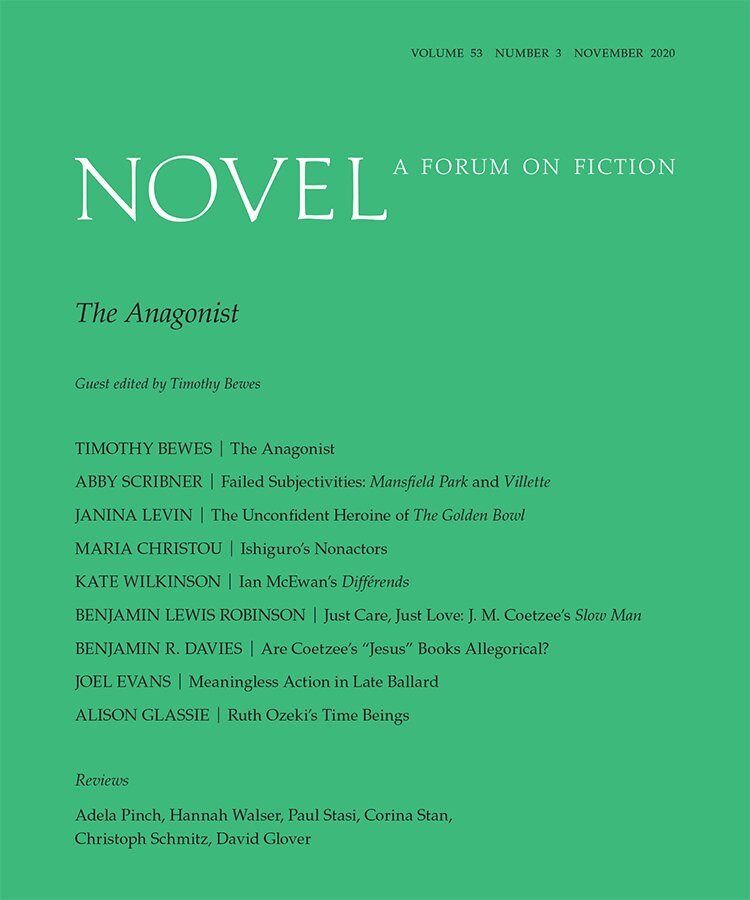
This issue of Novel proposes a new type of novelistic hero: the “anagonist.” Unlike the protagonist, the anagonist does not act; or if she does, her action is inconsequential to the work. The concept itself, however, is problematic, for the figure of the anagonist is averse to typology, such that its decisive identification in any particular work is almost impossible. More than a contribution to narrative categories therefore, the appearance of the anagonist as a critical term is a reconceptualization and rethinking of the nature and role of action in the novel form.
361 kr
Skickas inom 3-6 vardagar
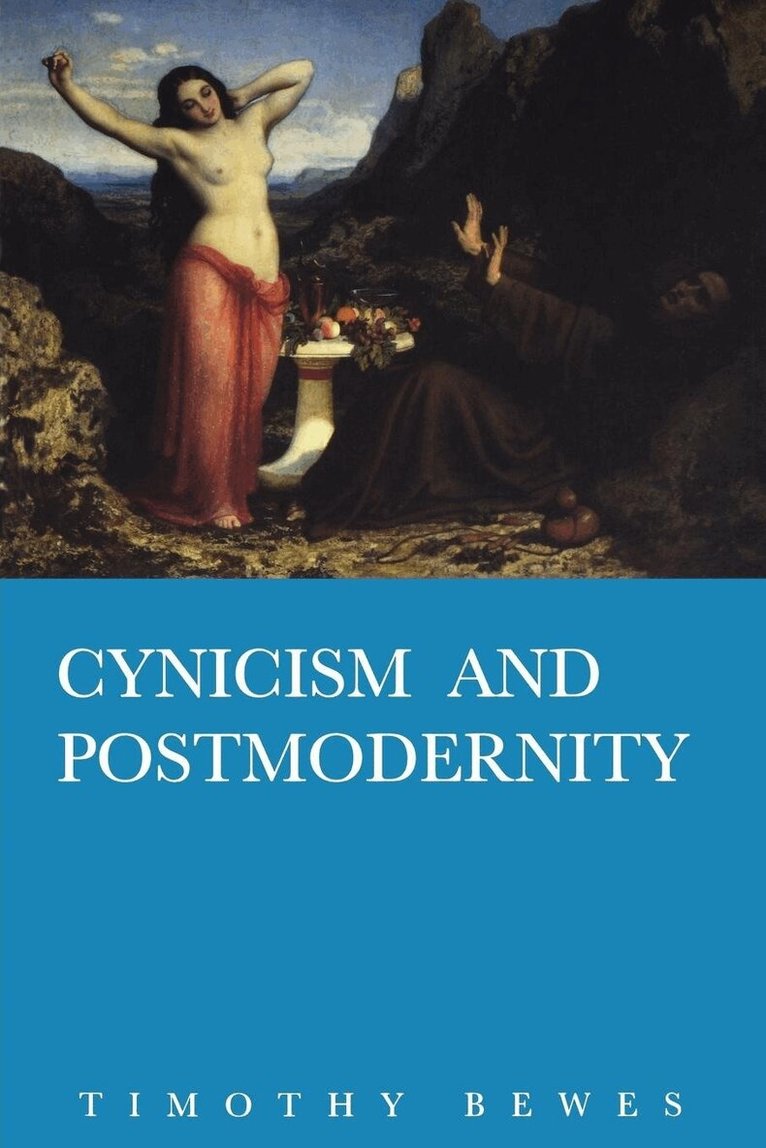
Melancholic and introspective, ironical and apolitical, the urban cynic is a myth of our time. A casualty of modernization? Or a product of postmodernism? In this original and provocative book, Timothy Bewes undertakes a descent into the modern cynical consciousness, and emerges with a critical assessment of the preoccupations of contemporary society. He charts the development of a culture of cynicism within postmodernity, in forms such as an obsession with finality and integrity, a widespread retreat into introspection and inertia, and a neurotic attachment to metaphysical truth. The inflated currency of the term "cynicism" reflects a very real crisis in the constitution and practice of the political; Cynicism and Postmodernity proposes a means of negotiating this terrain with the political sensibility intact.Immersed in the phenomena of contemporary culture, the recent history of postmodern theory, and the political and philosophical preoccupations of the modern age, this is a book for students of literature, philosophy and culture, and for all those fascinated, like the author, by the state of politics, critical thinking and the plight of the individual in society as a new century booms.
361 kr
Skickas inom 3-6 vardagar
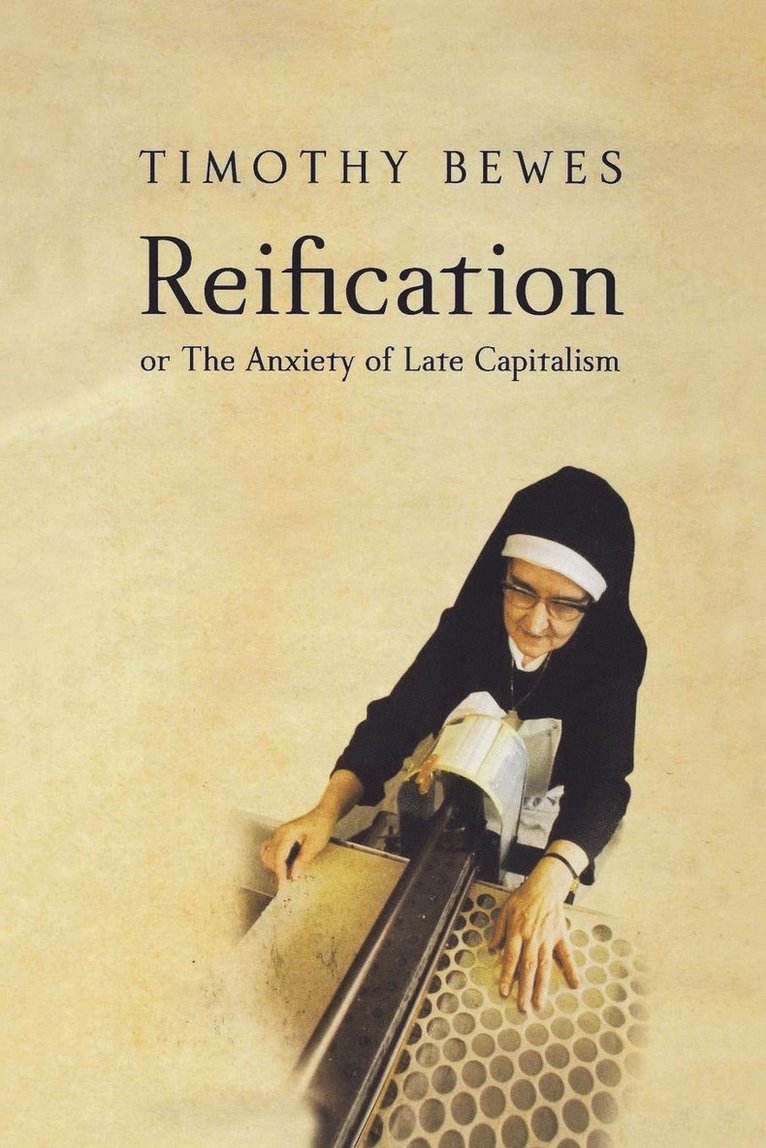
Of all the concepts which have emerged to describe the effects of capitalism on the human world, none is more graphic or easily grasped than "reification"-the process by which men and women are turned into objects, things. Arising out of Marx's account of commodity fetishism, the concept of reification offers an unrivalled tool with which to explain the real consequences of the power of capital on consciousness itself.Symptoms of reification are proliferating around us-from the branding of goods and services to racial and sexual stereotypes, all forms of religious faith, the growth of nationalism, and recent concepts like "spin" and "globalization." At such a time, the term ought to enjoy greater critical currency than ever. Recent thinkers, however, have expressed deep reservations about the concept, and the term has become marginalized in the humanities and social societies.Eschewing this trend, Timothy Bewes opens up a new formulation of the concept, claiming that, in the highly reflective age of "late capitalism," reification is best understood as a form of social and cultural anxiety: further, that such an understanding returns the concept to its origins in the work of Georg Lukács. Drawing upon writers including Kierkegaard, Herman Melville, Proust and Flannery O'Connor, he outlines a theory of reification which promises to unite politics with truth, art with experience, and philosophy with real life.