Timothy J. Cooley – författare
Visar alla böcker från författaren Timothy J. Cooley. Handla med fri frakt och snabb leverans.
7 produkter
7 produkter
E-bok
PDF, Engelska, 1996180 kr
Läs direkt efter köp
What are the new directions in ethnomusicological fieldwork? What do we see when we acknowledge the shadows we cast in the field? Will fieldwork continue as an integral part of ethnomusicological theory and method? Glancing forward and backward, the authors in this collection explore a range of issues that can help ethnomusicologists and those who study human experience and creativity to conceptualize the nature of fieldwork. This is the first book by ethnomusicologists to consider fieldwork as an issue-laden practice, rather than as a methodology requiring a prescriptive manual. The contributors challenge the very notion of fieldwork: its goals, the nature of knowledge gained, and the place of fieldwork in historical studies. Until now the focus in ethnomusicological writing and teaching centered around analyses and ethnographic representations of musical cultures. This book signals a new fieldwork, shifting the balance away from the data-collecting model toward an approach that is reflexive, humanistic, and experiential. It makes provocative reading for all fieldworkers, those in ethnomusicology as well as anthropology, sociology, folklore, area studies, linguistics, and other ethnographic disciplines.
E-bok
PDF, Engelska, 2008408 kr
Läs direkt efter köp
Ethnomusicological fieldwork has significantly changed since the end of the the 20th century. Ethnomusicology is in a critical moment that requires new perspecitves on fieldwork - perspectives that are not addressed in the standard guides to ethnomusicological or anthropological method. The focus in ethnomusicological writing and teaching has traditionally centered around analyses and ethnographic representations of musical cultures, rather than on the personal world of understanding, experience, knowing, and doing fieldwork. Shadows in the Field deliberately shifts the focus of ethnomusicology and of ethnography in general from representation (text) to experience (fieldwork). The "new fieldwork" moves beyond mere data collection and has become a defining characteristic of ethnomusicology that engages the scholar in meaningful human contexts. In this new edition of Shadows in the Field, renowned ethnomusicologists explore the roles they themselves act out while performing fieldwork and pose significant questions for the field: What are the new directions in ethnomusicological fieldwork? Where does fieldwork of "the past" fit into these theories? And above all, what do we see when we acknowledge the shadows we cast in the field? The second edition of Shadows in the Field includes updates of all existing chapters, a new preface by Bruno Nettl, and seven new chapters addressing critical issues and concerns that have become increasingly relevant since the first edition.
E-bok
Engelska, 2008408 kr
Läs direkt efter köp
Ethnomusicological fieldwork has significantly changed since the end of the the 20th century. Ethnomusicology is in a critical moment that requires new perspecitves on fieldwork - perspectives that are not addressed in the standard guides to ethnomusicological or anthropological method. The focus in ethnomusicological writing and teaching has traditionally centered around analyses and ethnographic representations of musical cultures, rather than on the personal world of understanding, experience, knowing, and doing fieldwork. Shadows in the Field deliberately shifts the focus of ethnomusicology and of ethnography in general from representation (text) to experience (fieldwork). The "new fieldwork" moves beyond mere data collection and has become a defining characteristic of ethnomusicology that engages the scholar in meaningful human contexts. In this new edition of Shadows in the Field, renowned ethnomusicologists explore the roles they themselves act out while performing fieldwork and pose significant questions for the field: What are the new directions in ethnomusicological fieldwork? Where does fieldwork of "the past" fit into these theories? And above all, what do we see when we acknowledge the shadows we cast in the field? The second edition of Shadows in the Field includes updates of all existing chapters, a new preface by Bruno Nettl, and seven new chapters addressing critical issues and concerns that have become increasingly relevant since the first edition.
Inbunden, Engelska, 2019
1 250 kr
Skickas inom 5-8 vardagar
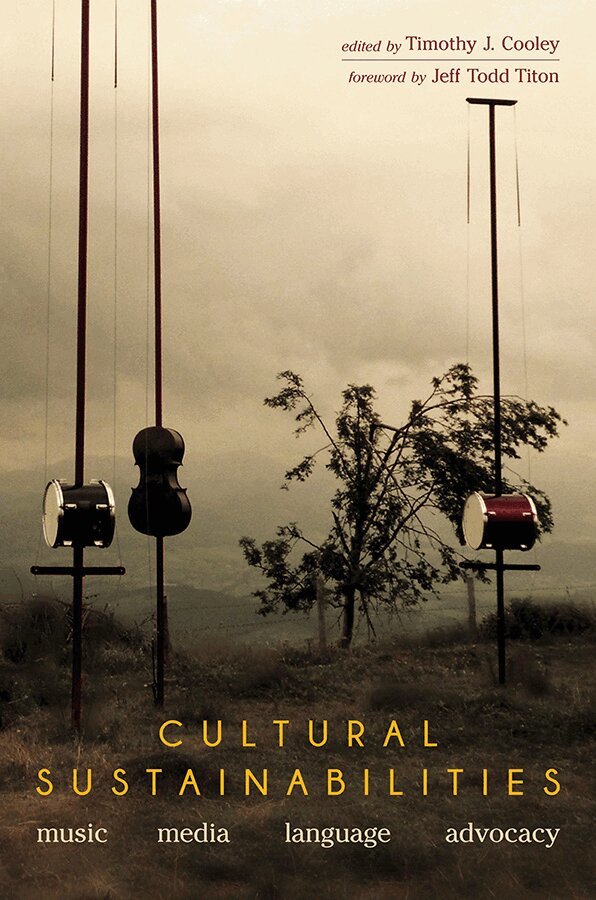
Environmental sustainability and human cultural sustainability are inextricably linked. Reversing damaging human impact on the global environment is ultimately a cultural question, and as with politics, the answers are often profoundly local. Cultural Sustainabilities presents twenty-three essays by musicologists and ethnomusicologists, anthropologists, folklorists, ethnographers, documentary filmmakers, musicians, artists, and activists, each asking a particular question or presenting a specific local case study about cultural and environmental sustainability. Contributing to the environmental humanities, the authors embrace and even celebrate human engagement with ecosystems, though with a profound sense of collective responsibility created by the emergence of the Anthropocene. Contributors: Aaron S. Allen, Michael B. Bakan, Robert Baron, Daniel Cavicchi, Timothy J. Cooley, Mark F. DeWitt, Barry Dornfeld, Thomas Faux, Burt Feintuch, Nancy Guy, Mary Hufford, Susan Hurley-Glowa, Patrick Hutchinson, Michelle Kisliuk, Pauleena M. MacDougall, Margarita Mazo, Dotan Nitzberg, Jennifer C. Post, Tom Rankin, Roshan Samtani, Jeffrey A. Summit, Jeff Todd Titon, Joshua Tucker, Rory Turner, Denise Von Glahn, and Thomas Walker
Häftad, Engelska, 2019
346 kr
Skickas inom 5-8 vardagar
Environmental sustainability and human cultural sustainability are inextricably linked. Reversing damaging human impact on the global environment is ultimately a cultural question, and as with politics, the answers are often profoundly local. Cultural Sustainabilities presents twenty-three essays by musicologists and ethnomusicologists, anthropologists, folklorists, ethnographers, documentary filmmakers, musicians, artists, and activists, each asking a particular question or presenting a specific local case study about cultural and environmental sustainability. Contributing to the environmental humanities, the authors embrace and even celebrate human engagement with ecosystems, though with a profound sense of collective responsibility created by the emergence of the Anthropocene. Contributors: Aaron S. Allen, Michael B. Bakan, Robert Baron, Daniel Cavicchi, Timothy J. Cooley, Mark F. DeWitt, Barry Dornfeld, Thomas Faux, Burt Feintuch, Nancy Guy, Mary Hufford, Susan Hurley-Glowa, Patrick Hutchinson, Michelle Kisliuk, Pauleena M. MacDougall, Margarita Mazo, Dotan Nitzberg, Jennifer C. Post, Tom Rankin, Roshan Samtani, Jeffrey A. Summit, Jeff Todd Titon, Joshua Tucker, Rory Turner, Denise Von Glahn, and Thomas Walker
Häftad, Engelska, 2014
263 kr
Skickas inom 5-8 vardagar
This first major examination the interrelationships of music and surfing explores different ways that surfers combine surfing with making and listening to music. Tim Cooley uses his knowledge and experience as a practicing musician and avid surfer to consider the musical practices of surfers in locations around the world, taking into account ideas about surfing as a global affinity group and the real-life stories of surfers and musicians he encounters. In doing so, he expands ethnomusicological thinking about the many ways musical practices are integral to human socializing, creativity, and the condition of being human. Cooley discusses the origins of surfing in Hawai'i, its central role in Hawaiian society, and the mele (chants) and hula (dance or visual poetry) about surfing. He covers instrumental rock from groups like Dick Dale and the Del Tones and many others, and songs about surfing performed by the Beach Boys. As he traces trends globally, three broad styles emerge: surf music, punk rock, and acoustic singer-songwriter music.Cooley also examines surfing contests and music festivals as well as the music used in a selection surf movies that were particularly influential in shaping the musical practices of significant groups of surfers. Engaging, informative, and enlightening, this book is a fascinating exploration of surfing as a cultural practice with accompanying rituals, habits, and conceptions about who surfs and why, and of how musical ideas and practices are key to the many things that surfing is and aspires to be.
E-bok
Engelska, 2014433 kr
Läs direkt efter köp
This first major examination the interrelationships of music and surfing explores different ways that surfers combine surfing with making and listening to music. Tim Cooley uses his knowledge and experience as a practicing musician and avid surfer to consider the musical practices of surfers in locations around the world, taking into account ideas about surfing as a global affinity group and the real-life stories of surfers and musicians he encounters. In doing so, he expands ethnomusicological thinking about the many ways musical practices are integral to human socializing, creativity, and the condition of being human.Cooley discusses the origins of surfing in Hawai‘i, its central role in Hawaiian society, and the mele (chants) and hula (dance or visual poetry) about surfing. He covers instrumental rock from groups like Dick Dale and the Del Tones and many others, and songs about surfing performed by the Beach Boys. As he traces trends globally, three broad styles emerge: surf music, punk rock, and acoustic singer-songwriter music. Cooley also examines surfing contests and music festivals as well as the music used in a selection surf movies that were particularly influential in shaping the musical practices of significant groups of surfers. Engaging, informative, and enlightening, this book is a fascinating exploration of surfing as a cultural practice with accompanying rituals, habits, and conceptions about who surfs and why, and of how musical ideas and practices are key to the many things that surfing is and aspires to be.