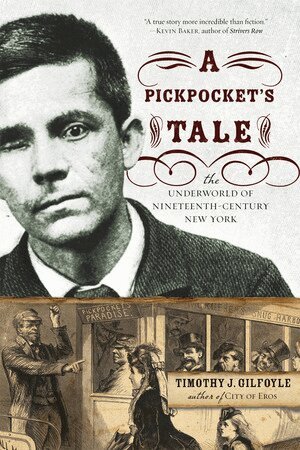
In George Appo's world, child pickpockets swarmed the crowded streets, addicts drifted in furtive opium dens, and expert swindlers worked the lucrative green-goods game. On a good night Appo made as much as a skilled laborer made in a year. Bad nights left him with more than a dozen scars and over a decade in prisons from the Tombs and Sing Sing to the Matteawan State Hospital for the Criminally Insane, where he reunited with another inmate, his father. The child of Irish and Chinese immigrants, Appo grew up in the notorious Five Points and Chinatown neighborhoods. He rose as an exemplar of the "good fellow," a criminal who relied on wile, who followed a code of loyalty even in his world of deception. Here is the underworld of the New York that gave us Edith Wharton, Boss Tweed, Central Park, and the Brooklyn Bridge.
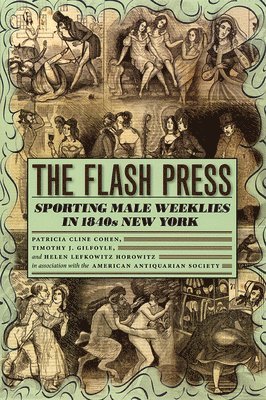
Obscene, libidinous, loathsome, lascivious. Those were just some of the ways critics described the nineteenth-century weeklies that covered and publicized New York City's extensive sexual underworld. Publications like the "Flash" and the "Whip" - distinguished by a captivating brew of lowbrow humor and titillating gossip about prostitutes, theater denizens, and sporting events - were not the sort generally bound in leather for future reference, and despite their popularity with an enthusiastic readership, they quickly receded into almost complete obscurity. Recently, though, two sizable collections of these papers have resurfaced, and in "The Flash Press" three renowned scholars provide a landmark study of their significance, as well as a wide selection of their ribald articles and illustrations.Including short tales of urban life, editorials on prostitution, and moralizing rants against homosexuality, these selections epitomize a distinct form of urban journalism.Here, in addition to providing a thorough overview of this colorful reportage, its editors, and its audience, the authors examine nineteenth-century ideas of sexuality and freedom that mixed Tom Paine's republicanism with elements of the Marquis de Sade's sexual ideology. They also trace the evolution of censorship and obscenity law, showing how a string of legal battles ultimately led to the demise of the flash papers: editors were hauled into court, sentenced to jail for criminal obscenity and libel, and eventually pushed out of business - but not before they forever changed the debate over public sexuality and freedom of expression in America's most important city.
In George Appo's world, child pickpockets swarmed the crowded streets, addicts drifted in furtive opium dens, and expert swindlers worked the lucrative green-goods game. On a good night Appo made as much as a skilled laborer made in a year. Bad nights left him with more than a dozen scars and over a decade in prisons from the Tombs and Sing Sing to the Matteawan State Hospital for the Criminally Insane, where he reunited with another inmate, his father. The child of Irish and Chinese immigrants, Appo grew up in the notorious Five Points and Chinatown neighborhoods. He rose as an exemplar of the "good fellow," a criminal who relied on wile, who followed a code of loyalty even in his world of deception. Here is the underworld of the New York that gave us Edith Wharton, Boss Tweed, Central Park, and the Brooklyn Bridge.
Obscene, libidinous, loathsome, lascivious. Those were just some of the ways critics described the nineteenth-century weeklies that covered and publicized New York City's extensive sexual underworld. Publications like the "Flash" and the "Whip" - distinguished by a captivating brew of lowbrow humor and titillating gossip about prostitutes, theater denizens, and sporting events - were not the sort generally bound in leather for future reference, and despite their popularity with an enthusiastic readership, they quickly receded into almost complete obscurity. Recently, though, two sizable collections of these papers have resurfaced, and in "The Flash Press" three renowned scholars provide a landmark study of their significance, as well as a wide selection of their ribald articles and illustrations.Including short tales of urban life, editorials on prostitution, and moralizing rants against homosexuality, these selections epitomize a distinct form of urban journalism.Here, in addition to providing a thorough overview of this colorful reportage, its editors, and its audience, the authors examine nineteenth-century ideas of sexuality and freedom that mixed Tom Paine's republicanism with elements of the Marquis de Sade's sexual ideology. They also trace the evolution of censorship and obscenity law, showing how a string of legal battles ultimately led to the demise of the flash papers: editors were hauled into court, sentenced to jail for criminal obscenity and libel, and eventually pushed out of business - but not before they forever changed the debate over public sexuality and freedom of expression in America's most important city.