Timothy Quill - Böcker
Visar alla böcker från författaren Timothy Quill. Handla med fri frakt och snabb leverans.
2 produkter
2 produkter
454 kr
Skickas inom 5-8 vardagar
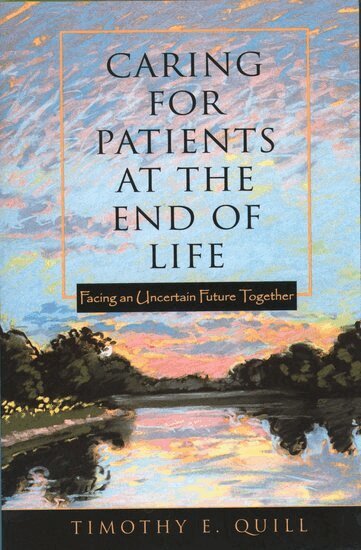
In "Caring for Patients at the End of Life: Facing an Uncertain Future Together", the author uses his wide range of clinical experience caring for severely ill patients and their families to illustrate the challenges and potential of end-of-life care. Section one utilizes the near death experiences of two patients to explore values underlying medical humanism, and then presents the case of "Diane" to explore the fundamental clinical commitments of partnership and non-abandonment. Section two explores, illustrates, and provides practical guidance for clinicians, patients, and families about critical communication issues including delivering bad news, discussing palliative care, and exploring the wish to die. In section three, difficult ethical and policy challenges inherent in hospice work, including the rule of double effect, terminal sedation, and physician-assisted suicide, are explored using a mix of real cases and an analysis of underlying clinical, ethical, and policy issues. In a final chapter, the author discusses the tragic death of his brother which occurred as this book was being completed, and how his family made the most emotionally challenging decisions of their lives.
345 kr
Skickas inom 7-10 vardagar
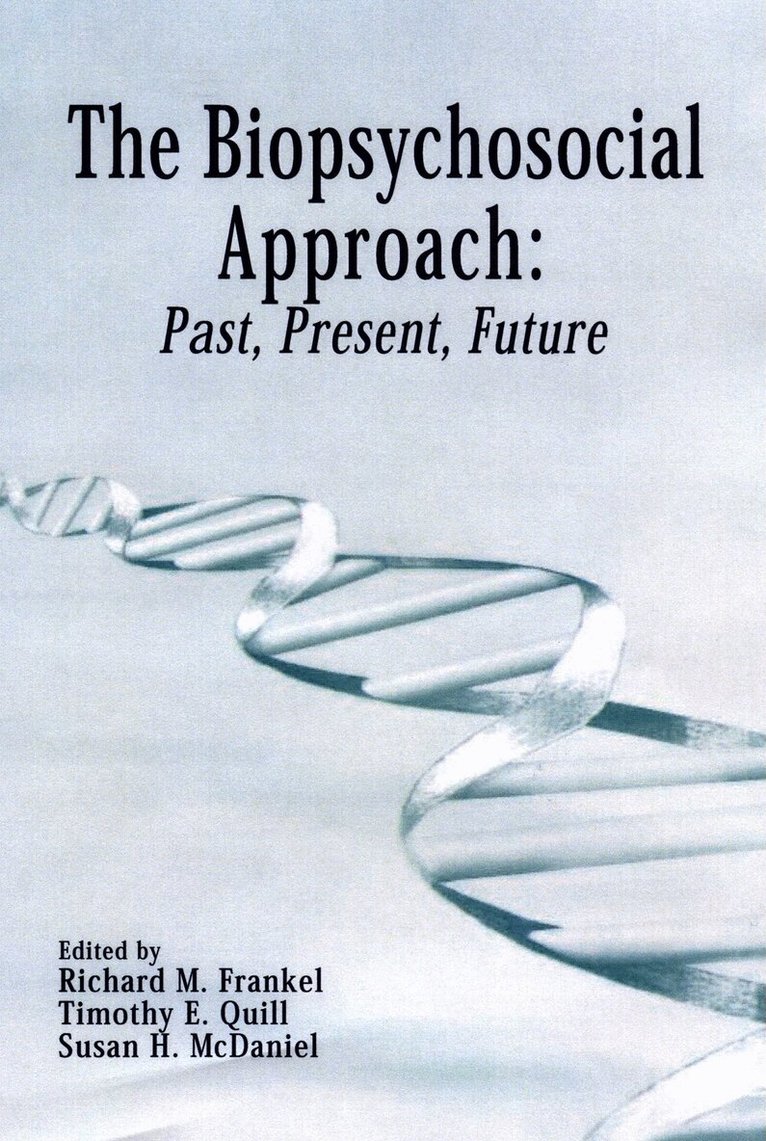
For thousands of years, Western culture has dichotomized science and art, empiricism and subjective experience, and biology and psychology. In contrast with the prevailing view in philosophy, neuroscience, and literary criticism,George Engel, an internist and practicing physician, published a paper in the journal Science in 1977 entitled "The Need for a New Medical Model: A Challenge for Biomedicine." In the context of clinical medicine, Engel madethe deceptively simple observation that actions at the biological, psychological, and social level are dynamically interrelated and that these relationships affect both the process and outcomes of care.The biopsychosocial perspective involves an appreciation that disease and illness do not manifest themselves only in terms of pathophysiology, but also may simultaneously affect many different levels of functioning, from cellular to organ system to person to family to society. This model provides a broader understanding of disease processes as encompassing multiple levels of functioning including the effect of the physician-patient relationship.This book, which containsEngel's seminal article, looks at the continuing relevance of his work and the biopsychosocial model as it is applied to clinical practice, research, and education and administration. Contributors include: Thomas Inui,Richard Frankel, Timothy Quill, Susan McDaniel, Ronald Epstein, Peter Leroux, Diane Morse, Anthony Suchman, Geoffrey Williams, Frank Degruy, Robert Ader, Thomas CampbelL, Edward DecI, Moira Stewart, Elaine Dannefer, Edward Hundert, Lindsey Henson, Robert Smith, Kurt Fritzsche, Manfred Cierpka, Michael Wirsching, Howard Beckman, and Theodore Brown.