Timothy R. Levine – författare
Visar alla böcker från författaren Timothy R. Levine. Handla med fri frakt och snabb leverans.
5 produkter
5 produkter
524 kr
Skickas inom 5-8 vardagar
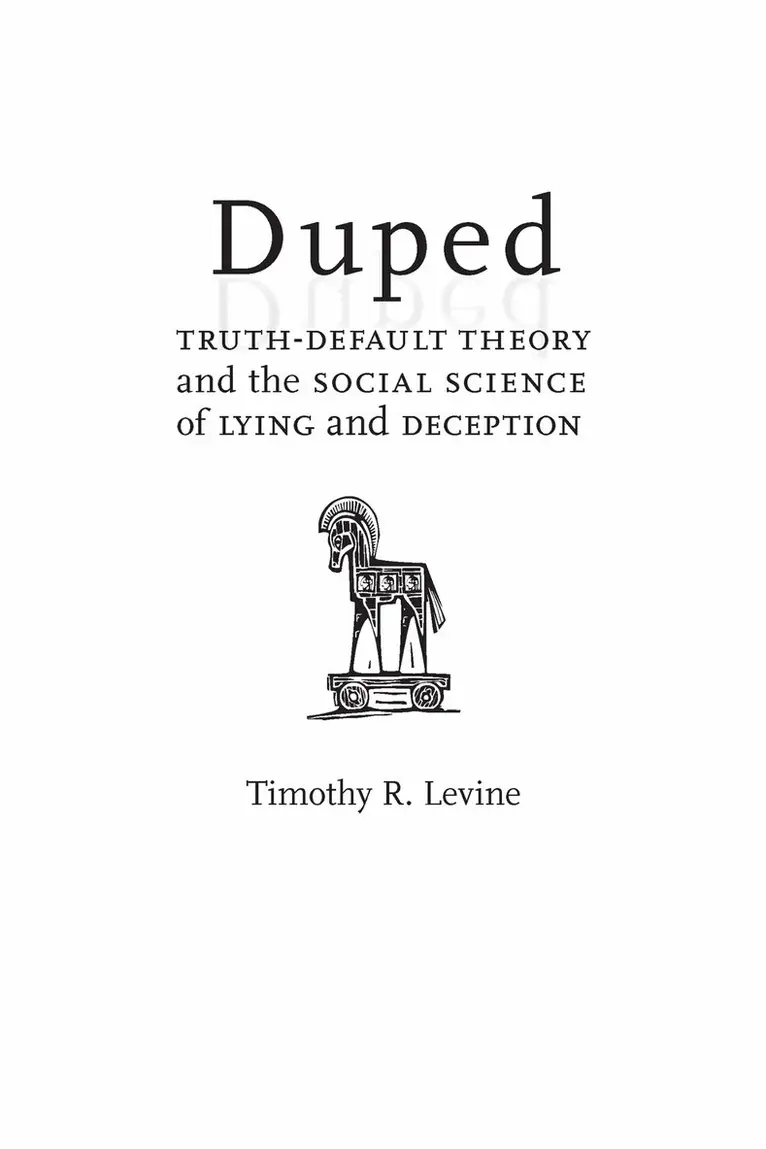
A scrupulous account that overturns many commonplace notions about how we can best detect lies and falsehoods. Across a host of issues such as the advent of fake news, climate-science denial, and Bernie Madoff's appeal to investors, people can be astonishingly gullible. Some people appear authentic and sincere even when the facts discredit them, and many people fall victim to conspiracy theories and economic scams that should be dismissed as obviously ludicrous. This happens because of a near-universal human tendency to operate within a mindset that can be characterized as a 'truth-default.' We uncritically accept most of the messages we receive as 'honest.' We all are perceptually blind to deception. We are hardwired to be duped. The question is, can anything be done to militate against our vulnerability to deception without further eroding the trust in people and social institutions that we so desperately need in civil society? Timothy R. Levine's Duped: Truth-Default Theory and the Social Science of Lying and Deception recounts a decades-long program of empirical research that culminates in a new theory of deception-Truth-Default Theory. This theory holds that the content of incoming communication is typically and uncritically accepted as true, and most of the time, this is good. Truth-default allows humans to function socially. Further, because most deception is enacted by a few prolific liars, the so called 'truth-bias' is not really a bias after all. Passive belief makes us right most of the time, but the catch is that it also makes us vulnerable to occasional deceit. Levine's research on lie detection and truth-bias has produced many provocative new findings over the years. He has uncovered what makes some people more believable than others and has discovered several ways to improve lie-detection accuracy. In Duped, Levine details where these ideas came from, how they were tested, and how the findings combine to produce a coherent new understanding of human deception and deception detection.
356 kr
Skickas inom 5-8 vardagar
A scrupulous account that overturns many commonplace notions about how we can best detect lies and falsehoods. Across a host of issues such as the advent of fake news, climate-science denial, and Bernie Madoff's appeal to investors, people can be astonishingly gullible. Some people appear authentic and sincere even when the facts discredit them, and many people fall victim to conspiracy theories and economic scams that should be dismissed as obviously ludicrous. This happens because of a near-universal human tendency to operate within a mindset that can be characterized as a 'truth-default.' We uncritically accept most of the messages we receive as 'honest.' We all are perceptually blind to deception. We are hardwired to be duped. The question is, can anything be done to militate against our vulnerability to deception without further eroding the trust in people and social institutions that we so desperately need in civil society? Timothy R. Levine's Duped: Truth-Default Theory and the Social Science of Lying and Deception recounts a decades-long program of empirical research that culminates in a new theory of deception-Truth-Default Theory. This theory holds that the content of incoming communication is typically and uncritically accepted as true, and most of the time, this is good. Truth-default allows humans to function socially. Further, because most deception is enacted by a few prolific liars, the so called 'truth-bias' is not really a bias after all. Passive belief makes us right most of the time, but the catch is that it also makes us vulnerable to occasional deceit. Levine's research on lie detection and truth-bias has produced many provocative new findings over the years. He has uncovered what makes some people more believable than others and has discovered several ways to improve lie-detection accuracy. In Duped, Levine details where these ideas came from, how they were tested, and how the findings combine to produce a coherent new understanding of human deception and deception detection.
5 171 kr
Tillfälligt slut
The Encyclopedia of Deception examines lying from multiple perspectives drawn from the disciplines of social psychology, sociology, history, business, political science, cultural anthropology, moral philosophy, theology, law, family studies, evolutionary biology, philosophy, and more. From the "little white lie," to lying on a resume, to the grandiose lies of presidents, this two-volume reference explores the phenomenon of lying in a multidisciplinary context to elucidate this common aspect of our daily lives. Not only a cultural phenomenon historically, lying is a frequent occurrence in our everyday lives. Research shows that we are likely to lie or intentionally deceive others several times a day or in one out of every four conversations that lasts more than 10 minutes. Key Features: More than 360 authored by key figures in the field are organized A-to-Z in two volumes, which are available in both print and electronic formats. Entries are written in a clear and accessible style that invites readers to explore and reflect on the use of lying and self-deception. Each article concludes with cross references to related entries and further readings. This academic, multi-author reference work will serve as a general, non-technical resource for students and researchers within social and behavioral science programs who seek to better understand the historical role of lying and how it is employed in modern society. Key Themes: Advertising, Marketing, and Public Relations Animals and Nature Communication Deception in Different Cultures Entertainment, Media, and Sports Ethics, Morality, Religion Law, Business, and Academia Military Politics and Government (includes espionage) Psychology: Clinical and Developmental Psychology: Social, Law-Legal, Forensic Social History (lies in history; famous liars, hoaxes)
Understanding Human Communication
Why Communication Is Important and How to Be Good at It
Häftad, Engelska, 2024
553 kr
Skickas inom 10-15 vardagar
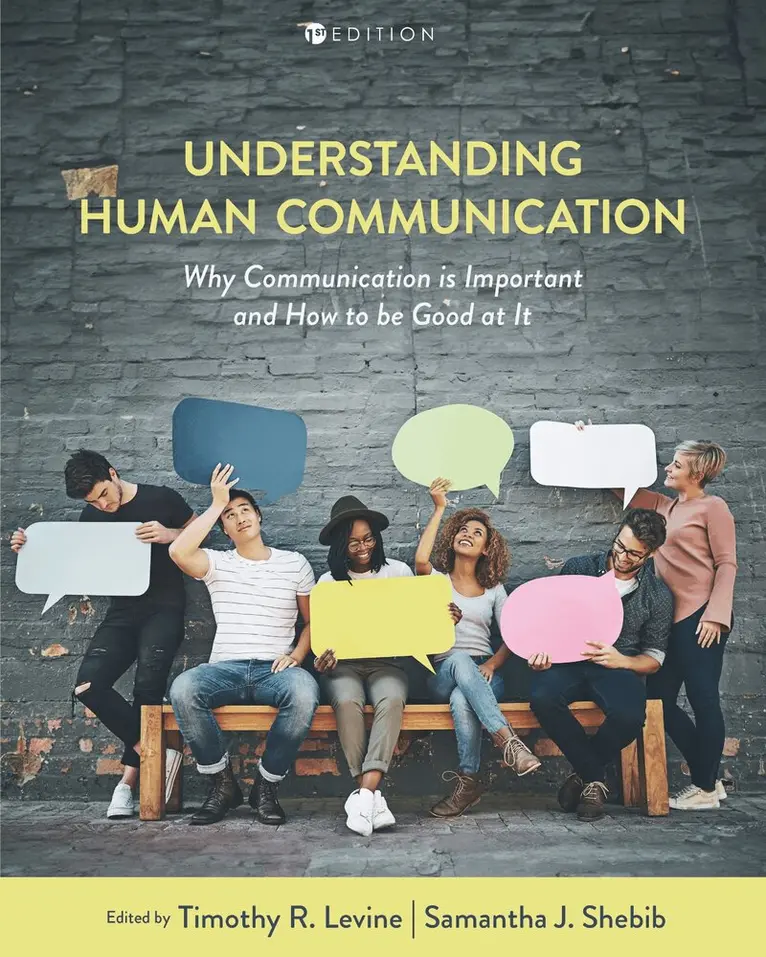
Understanding Human Communication: Why Communication Is Important and How to Be Good at It provides readers with an exploration of why effective communication is vital and how it can be mastered. The book underscores communication as a critical skill for various social, personal, and professional scenarios, and provides readers with an innovative and narrative approach to better understanding human communication.The text addresses the intricacies of communication through various lenses, such as the limitations of code models, the role of evidence in persuasion, the influence of source credibility, and emotional appeals in messaging. It discusses the diffusion of innovations, clarifying how and why new ideas and practices become widespread or remain obscure. Complemented by an examination of nonverbal cues, the influence of culture and gender on communication, and deception in communication, the book presents a comprehensive picture of the dynamics involved in relating and communicating with others.Understanding Human Communication is ideal for courses in human communication, persuasion, and interpersonal dynamics. Its structure and content support the learning needs of students embarking on their study of communication as a discipline as well as those seeking to enhance their communication skills in varied contexts.
Understanding Human Communication
Why Communication Is Important and How to Be Good at It
Inbunden, Engelska, 2024
1 046 kr
Skickas inom 5-8 vardagar