Timothy Swanson - Böcker
Visar alla böcker från författaren Timothy Swanson. Handla med fri frakt och snabb leverans.
8 produkter
8 produkter
1 630 kr
Skickas inom 10-15 vardagar
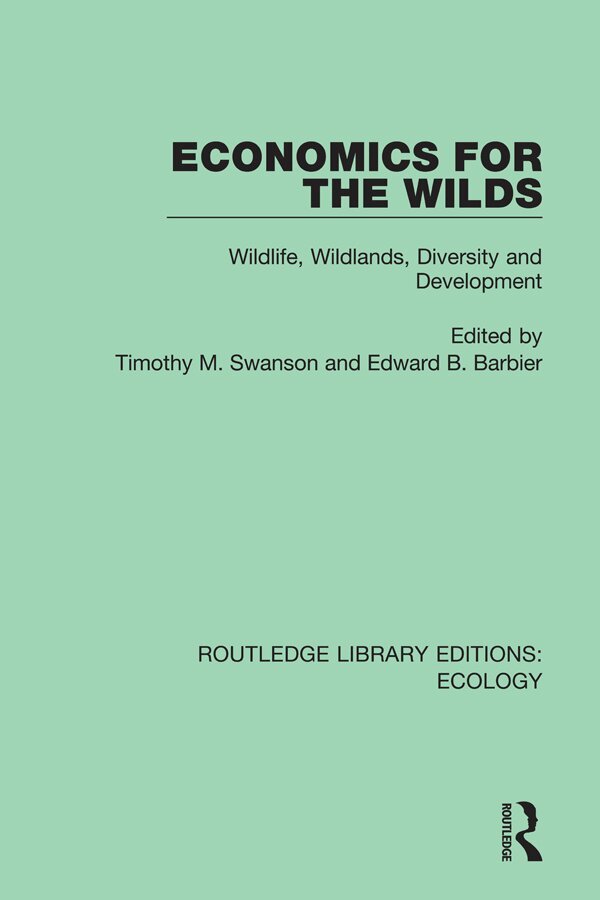
Originally published in 1992 Economics for the Wilds argues that an economics that properly values the resources of the wilds offers the best long-term security for their future. Most of the world’s wilds have, in fact, always been utilized by local societies who have managed their resources sustainably, and one important guarantee for their preservation is therefore the continued participation of those communities and an adequate reward to them for their management. The book looks at the complexity and global nature of the issues, at the application of economics to the wilds and at the policies for their conservation and sustainable management which then result. It also examines specific forms of utilization of wild species and habitats, both sustainable and unsustainable, and including community-based development, tourism, the use of rainforest products, poaching and the impact of conservation on wildlife use. The book concludes that a comprehensive utilization strategy for wild resources is needed to ensure their continued existence and the continued flow of benefits from them.
485 kr
Skickas inom 10-15 vardagar
Originally published in 1992 Economics for the Wilds argues that an economics that properly values the resources of the wilds offers the best long-term security for their future. Most of the world’s wilds have, in fact, always been utilized by local societies who have managed their resources sustainably, and one important guarantee for their preservation is therefore the continued participation of those communities and an adequate reward to them for their management. The book looks at the complexity and global nature of the issues, at the application of economics to the wilds and at the policies for their conservation and sustainable management which then result. It also examines specific forms of utilization of wild species and habitats, both sustainable and unsustainable, and including community-based development, tourism, the use of rainforest products, poaching and the impact of conservation on wildlife use. The book concludes that a comprehensive utilization strategy for wild resources is needed to ensure their continued existence and the continued flow of benefits from them.
696 kr
Skickas inom 10-15 vardagar
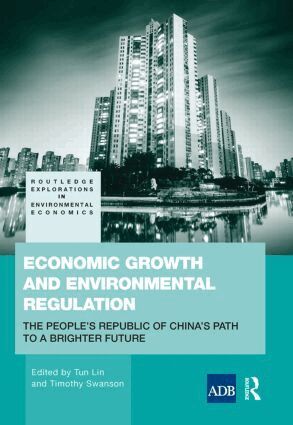
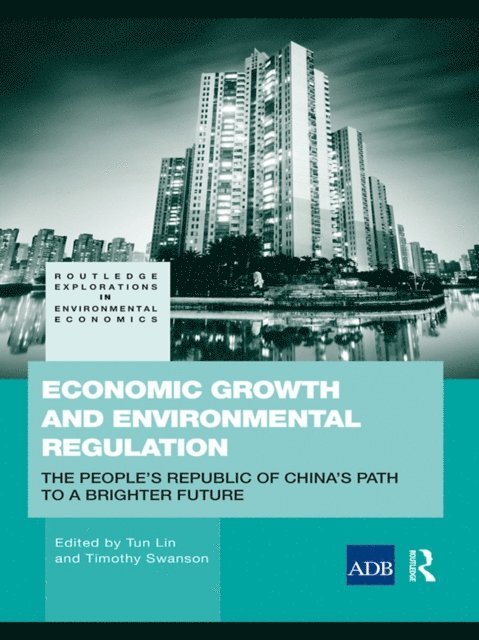
This volume assembles a group of eminent scholars to look at the problem of growth and environment from the perspective of environmental regulation. The questions addressed are: How does economic growth interact with regulation, and what are the best approaches to regulation in use today?The context for the volume is the current situation in China, where twenty years of rapid growth have created a situation in which there are both demands for environmental regulation and needs for choosing a future development path. The advent of "A Macro-Environmental Strategy" for China presents an opportunity to ask how and why China should introduce regulation into its management of its development. The volume includes contributions from leading Chinese experts and established environmental economists from other countries including Timo Goeschl, Ben Groom and Andreas Kontoleon.The volume looks at both the demand side of environmental regulation and the supply side. The demand side of regulatory intervention examines how regulation operates to supplement existing resource-allocation mechanisms, via effective demand aggregation and implementation mechanisms. The supply side of regulation examines how regulation operates to guide industrial growth down particular pathways, in the pursuit of managed development. Both sides of environmental regulation involve the important issue of implementation and enforcement.This volume will be of most value to academics and scholars of environmental economics, growth economics, the Chinese economy and policy-makers of environmental regulations.
Economic Growth and Environmental Regulation
China's Path to a Brighter Future
Inbunden, Engelska, 2009
2 305 kr
Skickas inom 10-15 vardagar
This volume assembles a group of eminent scholars to look at the problem of growth and environment from the perspective of environmental regulation. The questions addressed are: How does economic growth interact with regulation, and what are the best approaches to regulation in use today?The context for the volume is the current situation in China, where twenty years of rapid growth have created a situation in which there are both demands for environmental regulation and needs for choosing a future development path. The advent of "A Macro-Environmental Strategy" for China presents an opportunity to ask how and why China should introduce regulation into its management of its development. The volume includes contributions from leading Chinese experts and established environmental economists from other countries including Timo Goeschl, Ben Groom and Andreas Kontoleon.The volume looks at both the demand side of environmental regulation and the supply side. The demand side of regulatory intervention examines how regulation operates to supplement existing resource-allocation mechanisms, via effective demand aggregation and implementation mechanisms. The supply side of regulation examines how regulation operates to guide industrial growth down particular pathways, in the pursuit of managed development. Both sides of environmental regulation involve the important issue of implementation and enforcement.This volume will be of most value to academics and scholars of environmental economics, growth economics, the Chinese economy and policy-makers of environmental regulations.
639 kr
Skickas inom 7-10 vardagar
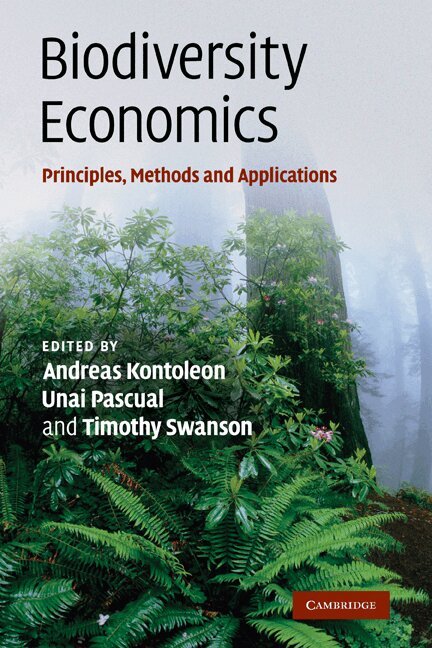
Human induced biodiversity loss is greater now than at any time in human history, with extinctions occurring at rates hundreds of times higher than background extinction levels. The field of biodiversity economics analyses the socio-economic causes of and solutions to biodiversity loss by combining the disciplines of economics, ecology and biology. This field has shown a remarkable degree of transformation over the past four decades and now incorporates the analysis of the entire diversity of biological resources within the living world. Biodiversity Economics presents a series of papers that show how bio-economic analysis can be applied to the examination and evaluation of the problem of various forms of biodiversity loss. Containing insightful bio-economic research by some of prominent practitioners in the field, this volume will be an essential research tool to those working on biodiversity issues in the academic, policy and private sectors.
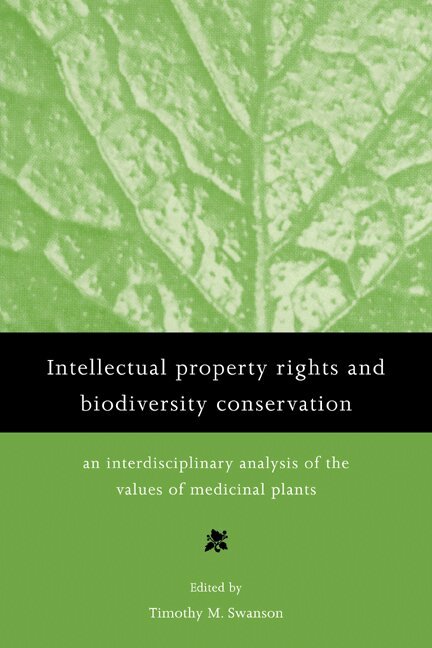
Intellectual Property Rights and Biodiversity Conservation
An Interdisciplinary Analysis of the Values of Medicinal Plants
Häftad, Engelska, 1998
800 kr
Skickas inom 7-10 vardagar
The urgent need to ensure the conservation of biological diversity is now widely recognised, but practical measures to protect endangered species and habitats are still carried out on a small scale and generally limited to developed countries. This volume provides a detailed analysis of the economic and scientific rationales for biodiversity conservation. It discusses the justification for, and implementation of intellectual property rights regimes as incentive systems to encourage conservation. An interdisciplinary approach is used in the book, encompassing fields of study that include evolutionary biology, chemistry, economics and legal studies. The arguments are presented using the case study of the use of medicinal plants in the pharmaceutical industry. The book will be of interest and relevance to a broad spectrum of conservationists, from research students to policy makers.
1 995 kr
Skickas inom 7-10 vardagar
Human induced biodiversity loss is greater now than at any time in human history, with extinctions occurring at rates hundreds of times higher than background extinction levels. The field of biodiversity economics analyses the socio-economic causes of and solutions to biodiversity loss by combining the disciplines of economics, ecology and biology. This field has shown a remarkable degree of transformation over the past four decades and now incorporates the analysis of the entire diversity of biological resources within the living world. Biodiversity Economics presents a series of papers that show how bio-economic analysis can be applied to the examination and evaluation of the problem of various forms of biodiversity loss. Containing insightful bio-economic research by some of prominent practitioners in the field, this volume will be an essential research tool to those working on biodiversity issues in the academic, policy and private sectors.
Global Action for Biodiversity
An International Framework for Implementing the Convention on Biological Diversity
Häftad, Engelska, 1997
444 kr
Skickas inom 10-15 vardagar
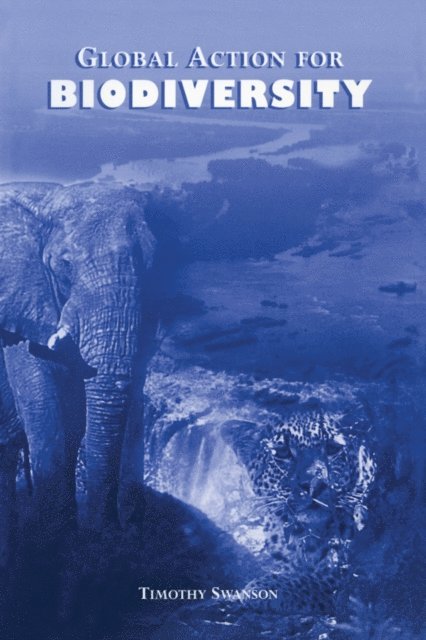
At the Rio Earth Summit in 1992, the nations of the world adopted the convention on Biological Diversity. Since then, over 160 countries have ratified the Convention, three Conferences of the Parties have taken place and a permanent secretariat has been established. Despite this, there remains a lot of uncertainty and even more controversy about what the Convention was intended to accomplish and how it was to do so.This book, published in association with the IUCN - The World Conservation Union, sets out to answer some of these questions by recounting the history of the movements leading up to the Convention, but especially by analysing the forces giving rise to the problem. It provides a specific set of policy prescriptions intended to facilitate the development of institutions and obligations within the international community which will give real effect to the aspirations of the Convention, and the ensure that it has some real effect at ground level.The author begins with an overview of the issues and then develops the basic nature of the problems within a bio-economic framework. He highlights the gaps in the Convention which remain to be filled, offers detailed explanations of the concepts involved and describes the nature of the solutions required. Thus he sets out a detailed plan for global action in support of an effective international convention for the conservation of biological diversity.The book is an excellent introduction to a very topical debate, and a valuable reference point for conservationists, policy makers and students of development studies, environmental studies, environmental policy and conservation biology.