Timothy W. Burns - Böcker
Visar alla böcker från författaren Timothy W. Burns. Handla med fri frakt och snabb leverans.
6 produkter
6 produkter
347 kr
Skickas inom 7-10 vardagar
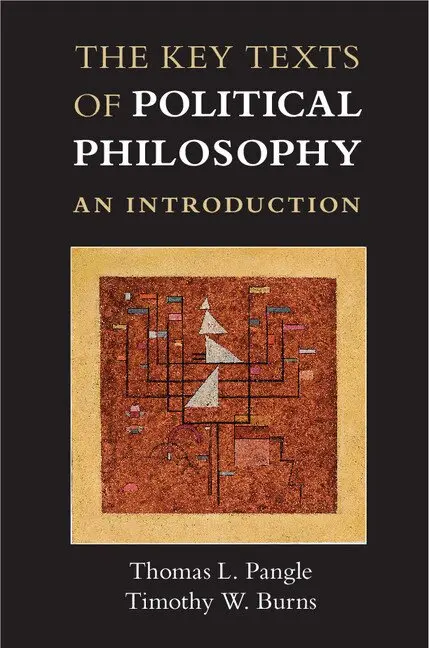
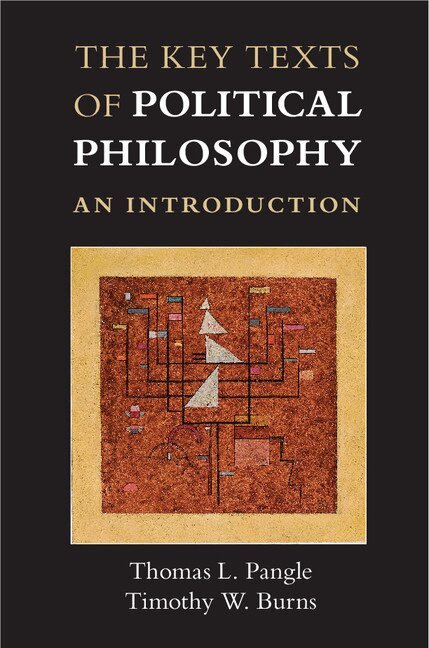
This book introduces readers to analytical interpretation of seminal writings and thinkers in the history of political thought, including Socrates, Plato, Aristotle, the Bible, Thomas Aquinas, Machiavelli, Bacon, Hobbes, Locke, Montesquieu, Rousseau, Tocqueville, Marx, and Nietzsche. Chronologically arranged, each chapter in the book is devoted to the work of a single thinker. The selected texts together engage with 2000 years of debate on fundamental questions including: what is the purpose of political life? What is justice? What is a right? Do human beings have rights? What kinds of human virtues are there and which regimes best promote them? The difficulty of accessing the texts included in this volume is the result not only of their subtlety but also of the dramatic change in everyday life. The authors shed light on the texts' vocabulary and complexities of thought and help students understand and weigh the various interpretations of each philosopher's thought.
1 166 kr
Skickas inom 7-10 vardagar
This book introduces readers to analytical interpretation of seminal writings and thinkers in the history of political thought, including Socrates, Plato, Aristotle, the Bible, Thomas Aquinas, Machiavelli, Bacon, Hobbes, Locke, Montesquieu, Rousseau, Tocqueville, Marx, and Nietzsche. Chronologically arranged, each chapter in the book is devoted to the work of a single thinker. The selected texts together engage with 2000 years of debate on fundamental questions including: what is the purpose of political life? What is justice? What is a right? Do human beings have rights? What kinds of human virtues are there and which regimes best promote them? The difficulty of accessing the texts included in this volume is the result not only of their subtlety but also of the dramatic change in everyday life. The authors shed light on the texts' vocabulary and complexities of thought and help students understand and weigh the various interpretations of each philosopher's thought.
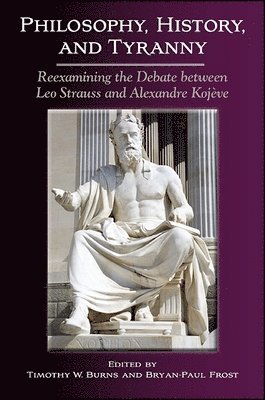
Philosophy, History, and Tyranny
Reexamining the Debate between Leo Strauss and Alexandre Kojève
Inbunden, Engelska, 2016
1 456 kr
Skickas inom 3-6 vardagar
The first comprehensive examination of the debate between Leo Strauss and Alexandre Kojève on the subject of philosophy and tyranny.On Tyranny remains a perennial favorite, possessing a timelessness that few philosophical or scholarly debates have ever achieved. On one hand, On Tyranny is the first book-length work in Leo Strauss's extended study of Xenophon, and his "Restatement" retains a vivacity and directness that is sometimes absent in his later works. On the other, "Tyranny and Wisdom" is perhaps the most succinct yet fullest articulation of Alexandre Kojève's overall political thought, and it presents what may be the most uncompromising alternative to Strauss's position as a whole. This volume contains for the first time a comprehensive and critical examination of the debate from scholars well versed in the thought of Strauss, Kojève, Hegel, Heidegger, and the end of history thesis. Of particular interest will be the appendix, which offers for the first time Kojève's unabridged response to Strauss, a response previously available only from the Fonds Kojève at Le Bibliothèque Nationale de France. Accessible to students and scholars alike, this volume works equally well in the classroom and as a resource for more advanced research.
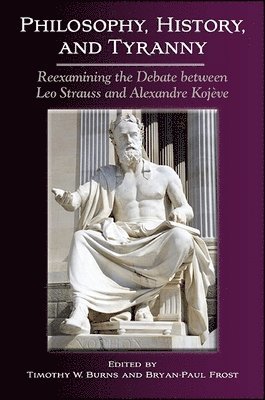
Philosophy, History, and Tyranny
Reexamining the Debate between Leo Strauss and Alexandre Kojève
Häftad, Engelska, 2017
464 kr
Skickas inom 5-8 vardagar
The first comprehensive examination of the debate between Leo Strauss and Alexandre Kojève on the subject of philosophy and tyranny.On Tyranny remains a perennial favorite, possessing a timelessness that few philosophical or scholarly debates have ever achieved. On one hand, On Tyranny is the first book-length work in Leo Strauss's extended study of Xenophon, and his "Restatement" retains a vivacity and directness that is sometimes absent in his later works. On the other, "Tyranny and Wisdom" is perhaps the most succinct yet fullest articulation of Alexandre Kojève's overall political thought, and it presents what may be the most uncompromising alternative to Strauss's position as a whole. This volume contains for the first time a comprehensive and critical examination of the debate from scholars well versed in the thought of Strauss, Kojève, Hegel, Heidegger, and the end of history thesis. Of particular interest will be the appendix, which offers for the first time Kojève's unabridged response to Strauss, a response previously available only from the Fonds Kojève at Le Bibliothèque Nationale de France. Accessible to students and scholars alike, this volume works equally well in the classroom and as a resource for more advanced research.
1 456 kr
Skickas inom 3-6 vardagar
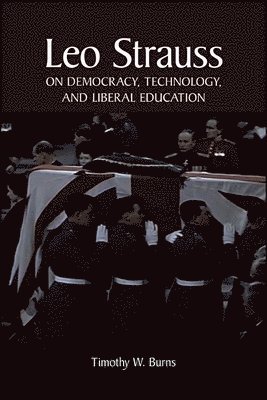
The first book-length study of Leo Strauss' understanding of the relation between modern democracy, technology, and liberal education.Liberal democracy is today under unprecedented attack from both the left and the right. Offering a fresh and penetrating examination of how Leo Strauss understood the emergence of liberal democracy and what is necessary to sustain and elevate it, Leo Strauss on Democracy, Technology, and Liberal Education explores Strauss' view of the intimate (and troubling) relation between the philosophic promotion of liberal democracy and the turn to the modern scientific-technological project of the "conquest of nature." Timothy W. Burns explicates the political reasoning behind Strauss' recommendation of reminders of genuine political greatness within democracy over and against the failure of nihilistic youth to recognize it. Elucidating what Strauss envisaged by a liberally-educated sub-political or cultural-level aristocracy-one that could elevate and sustain liberal democracy-and the roles that both philosophy and divine-law traditions should have in that education, Burns also lays out Strauss' frequent (though often tacit) engagement with the thought of Heidegger on these issues.
566 kr
Skickas inom 3-6 vardagar
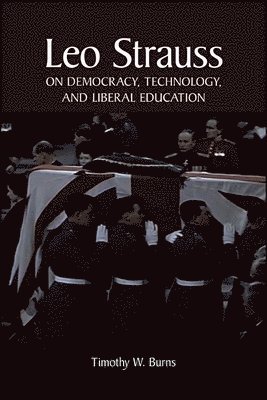
The first book-length study of Leo Strauss' understanding of the relation between modern democracy, technology, and liberal education.Liberal democracy is today under unprecedented attack from both the left and the right. Offering a fresh and penetrating examination of how Leo Strauss understood the emergence of liberal democracy and what is necessary to sustain and elevate it, Leo Strauss on Democracy, Technology, and Liberal Education explores Strauss' view of the intimate (and troubling) relation between the philosophic promotion of liberal democracy and the turn to the modern scientific-technological project of the "conquest of nature." Timothy W. Burns explicates the political reasoning behind Strauss' recommendation of reminders of genuine political greatness within democracy over and against the failure of nihilistic youth to recognize it. Elucidating what Strauss envisaged by a liberally-educated sub-political or cultural-level aristocracy-one that could elevate and sustain liberal democracy-and the roles that both philosophy and divine-law traditions should have in that education, Burns also lays out Strauss' frequent (though often tacit) engagement with the thought of Heidegger on these issues.