Timothy W. Guinnane - Böcker
Visar alla böcker från författaren Timothy W. Guinnane. Handla med fri frakt och snabb leverans.
4 produkter
4 produkter
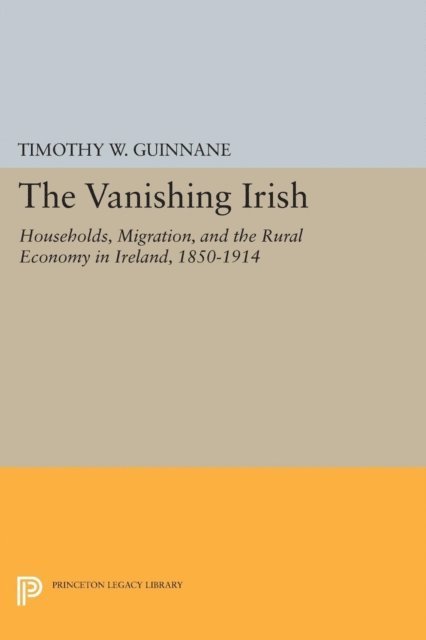
Vanishing Irish
Households, Migration, and the Rural Economy in Ireland, 1850-1914
Inbunden, Engelska, 1997
2 462 kr
Skickas inom 3-6 vardagar
In the years between the Great Famine of the 1840s and the First World War, Ireland experienced a drastic drop in population: the percentage of adults who never married soared from 10 percent to 25 percent, while the overall population decreased by one third. What accounted for this? For many social analysts, the history of post-Famine Irish depopulation was a Malthusian morality tale where declining living standards led young people to postpone marriage out of concern for their ability to support a family. The problem here, argues Timothy Guinnane, is that living standards in post-Famine Ireland did not decline. Rather, other, more subtle economic changes influenced the decision to delay marriage or not marry at all. In this engaging inquiry into the "vanishing Irish," Guinnane explores the options that presented themselves to Ireland's younger generations, taking into account household structure, inheritance, religion, cultural influences on marriage and family life, and especially emigration.Guinnane focuses on rural Ireland, where the population changes were most profound, and explores the way the demographic patterns reflect the rural Irish economy, Ireland's place as a small part in a much larger English-speaking world, and the influence of earlier Irish history and culture. Particular effort is made to compare Irish demographic behavior to similar patterns elsewhere in Europe, revealing an Ireland anchored in European tradition and yet a distinctive society in its own right. Originally published in 1997. The Princeton Legacy Library uses the latest print-on-demand technology to again make available previously out-of-print books from the distinguished backlist of Princeton University Press. These editions preserve the original texts of these important books while presenting them in durable paperback and hardcover editions. The goal of the Princeton Legacy Library is to vastly increase access to the rich scholarly heritage found in the thousands of books published by Princeton University Press since its founding in 1905.
Vanishing Irish
Households, Migration, and the Rural Economy in Ireland, 1850-1914
Häftad, Engelska, 2015
493 kr
Skickas inom 7-10 vardagar
In the years between the Great Famine of the 1840s and the First World War, Ireland experienced a drastic drop in population: the percentage of adults who never married soared from 10 percent to 25 percent, while the overall population decreased by one third. What accounted for this? For many social analysts, the history of post-Famine Irish depopulation was a Malthusian morality tale where declining living standards led young people to postpone marriage out of concern for their ability to support a family. The problem here, argues Timothy Guinnane, is that living standards in post-Famine Ireland did not decline. Rather, other, more subtle economic changes influenced the decision to delay marriage or not marry at all. In this engaging inquiry into the "vanishing Irish," Guinnane explores the options that presented themselves to Ireland's younger generations, taking into account household structure, inheritance, religion, cultural influences on marriage and family life, and especially emigration.Guinnane focuses on rural Ireland, where the population changes were most profound, and explores the way the demographic patterns reflect the rural Irish economy, Ireland's place as a small part in a much larger English-speaking world, and the influence of earlier Irish history and culture. Particular effort is made to compare Irish demographic behavior to similar patterns elsewhere in Europe, revealing an Ireland anchored in European tradition and yet a distinctive society in its own right. Originally published in 1997. The Princeton Legacy Library uses the latest print-on-demand technology to again make available previously out-of-print books from the distinguished backlist of Princeton University Press. These editions preserve the original texts of these important books while presenting them in durable paperback and hardcover editions. The goal of the Princeton Legacy Library is to vastly increase access to the rich scholarly heritage found in the thousands of books published by Princeton University Press since its founding in 1905.
Vanishing Irish
Households, Migration, and the Rural Economy in Ireland, 1850-1914
Inbunden, Engelska, 2016
2 586 kr
Skickas inom 3-6 vardagar
In the years between the Great Famine of the 1840s and the First World War, Ireland experienced a drastic drop in population: the percentage of adults who never married soared from 10 percent to 25 percent, while the overall population decreased by one third. What accounted for this? For many social analysts, the history of post-Famine Irish depopulation was a Malthusian morality tale where declining living standards led young people to postpone marriage out of concern for their ability to support a family. The problem here, argues Timothy Guinnane, is that living standards in post-Famine Ireland did not decline. Rather, other, more subtle economic changes influenced the decision to delay marriage or not marry at all. In this engaging inquiry into the "vanishing Irish," Guinnane explores the options that presented themselves to Ireland's younger generations, taking into account household structure, inheritance, religion, cultural influences on marriage and family life, and especially emigration.Guinnane focuses on rural Ireland, where the population changes were most profound, and explores the way the demographic patterns reflect the rural Irish economy, Ireland's place as a small part in a much larger English-speaking world, and the influence of earlier Irish history and culture. Particular effort is made to compare Irish demographic behavior to similar patterns elsewhere in Europe, revealing an Ireland anchored in European tradition and yet a distinctive society in its own right. Originally published in 1997. The Princeton Legacy Library uses the latest print-on-demand technology to again make available previously out-of-print books from the distinguished backlist of Princeton University Press. These editions preserve the original texts of these important books while presenting them in durable paperback and hardcover editions. The goal of the Princeton Legacy Library is to vastly increase access to the rich scholarly heritage found in the thousands of books published by Princeton University Press since its founding in 1905.
History Matters
Essays on Economic Growth, Technology, and Demographic Change
Inbunden, Engelska, 2003
1 051 kr
Skickas inom 10-15 vardagar
Combining theoretical work with careful historical description and analysis of new data sources, History Matters makes a strong case for a more historical approach to economics, both by argument and by example. Seventeen original essays, written by distinguished economists and economic historians, use economic theory and historical cases to explore how and why "history matters."The chapters, which range in subject matter from the economic theory of irreversible investment to the nineteenth-century decline in U.S. rural fertility to the English poor law reform, are unified by three themes. The first explores the significance, causes, and consequences of path dependence in the evolution of technology and institutions. The second relates to the ways in which economic and political behavior are profoundly shaped and constrained by the cultural and political context inherited from history at a particular point in time. The final theme demonstrates the importance of integrating economic theory into historical research in the gathering and interpretation of data.