T.J. Pandian – författare
1 059 kr
Läs direkt efter köp
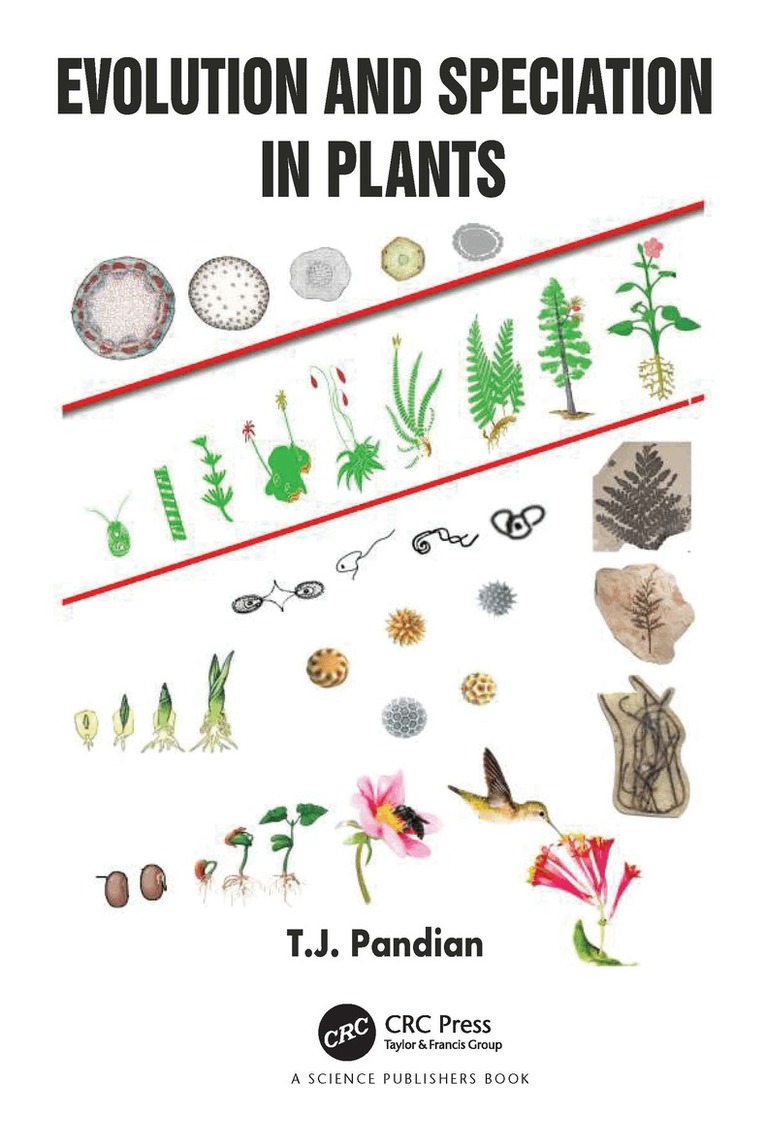
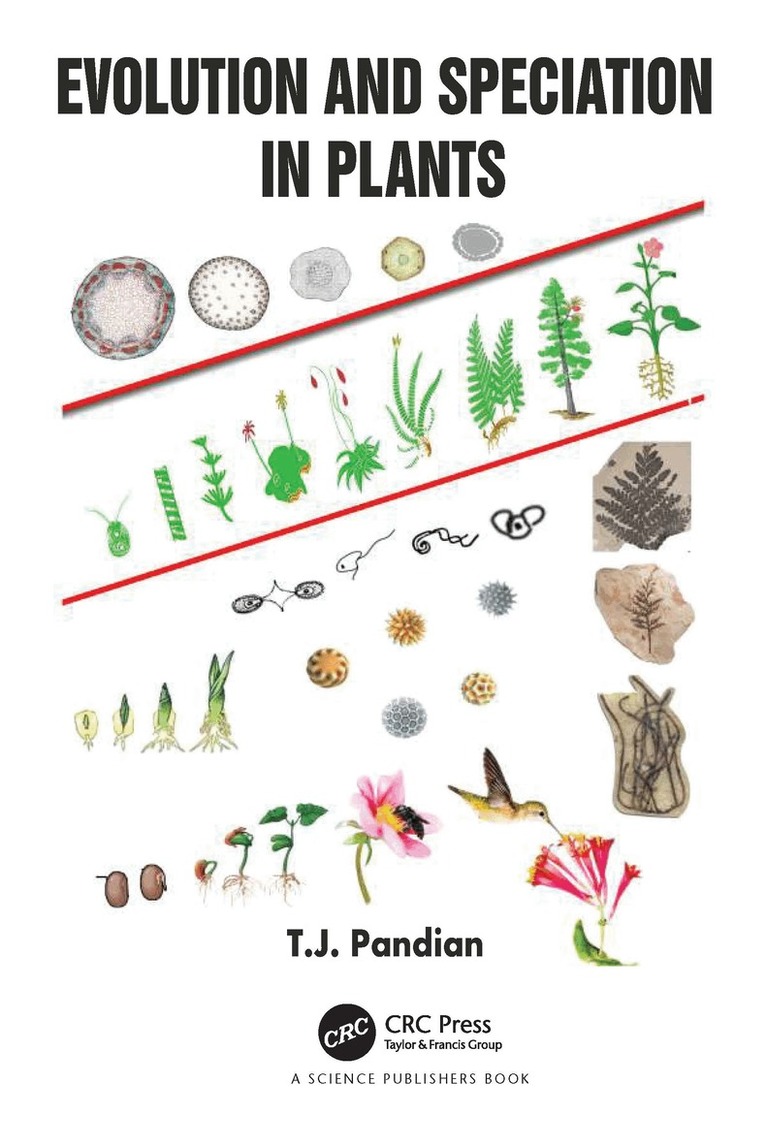
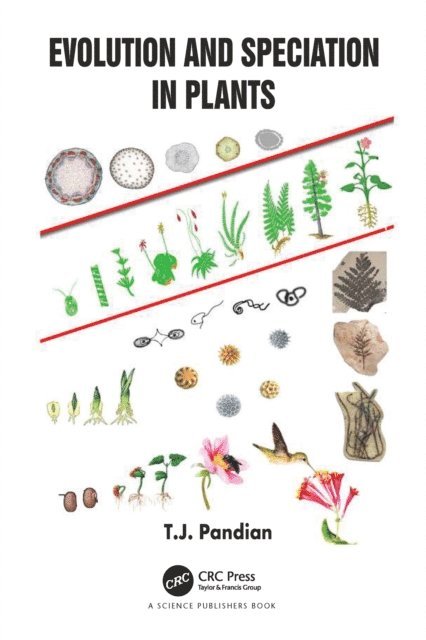
Plants are autotrophs and sessile, while animals are heterotrophs and motile. Sessility has imposed on plants 94% hermaphroditism, 23% selfing, 3% polyploidization and 39% clonality, in comparison to < 5% herma-phroditism, < 1% selfing and 2% clonality in motile animals. Whereas plants consist of 374,000 species but 1,664 variety/species, animals comprise 1,543,196 species and 210 variety/species. Hence, plants have undergone variety diversity, while animals have species diversity. In animals and plants, the species ratio is reduced from 4.1 animals : 1.0 plant to 1.4 for pollinating animals : 1.0 pollinated plants. In pollination, animals are benefited dietarily but plants are cross pollinated, generating new gene combinations – the raw material for evolution and speciation. For the reduced species diversity in plants, reasons are traced to 90% hermaphroditism, ~ 23% selfing and 39% clonality. Clonality decreases from 100% in 6-7 tissue typed sponges and 3 tissue typed algae drastically to 0.7% in 60 tissue typed worms but gradually to ~ 23% in 60 tissued typed angiosperms. About 12-15, 5-8 and 77-80% of all animal and plant species are distributed in marine, freshwater and terrestrial habitats, respectively. Animals have conserved the ‘right’ sequence of gametogenesis but plants have gone through a ‘wrong’ sequence prior to settling with right one albeit with double fertilization in angiosperms. Both animals and plants are 80% male heterogametics. Only 0.5% of them can afford semelparity. While 20 and 57% angiosperms are perennial trees and herbs, annual herbs make up 23% only. In all of them, 85, > 19 and < 1% are pollinated by fast flying animals, wind and water, respectively. Increasing pollen load enhances fruit- and seed-set. In contrast to animals, the life cycle of plants is direct but complicated. Unlike animals, plants have greatly contributed to weathering of rocks and the atmospheric gas composition during the geological past. From dormant spores and seeds of plants, life can be restored after thousands of years.
1 059 kr
Läs direkt efter köp
Plants are autotrophs and sessile, while animals are heterotrophs and motile. Sessility has imposed on plants 94% hermaphroditism, 23% selfing, 3% polyploidization and 39% clonality, in comparison to < 5% herma-phroditism, < 1% selfing and 2% clonality in motile animals. Whereas plants consist of 374,000 species but 1,664 variety/species, animals comprise 1,543,196 species and 210 variety/species. Hence, plants have undergone variety diversity, while animals have species diversity. In animals and plants, the species ratio is reduced from 4.1 animals : 1.0 plant to 1.4 for pollinating animals : 1.0 pollinated plants. In pollination, animals are benefited dietarily but plants are cross pollinated, generating new gene combinations – the raw material for evolution and speciation. For the reduced species diversity in plants, reasons are traced to 90% hermaphroditism, ~ 23% selfing and 39% clonality. Clonality decreases from 100% in 6-7 tissue typed sponges and 3 tissue typed algae drastically to 0.7% in 60 tissue typed worms but gradually to ~ 23% in 60 tissued typed angiosperms. About 12-15, 5-8 and 77-80% of all animal and plant species are distributed in marine, freshwater and terrestrial habitats, respectively. Animals have conserved the ‘right’ sequence of gametogenesis but plants have gone through a ‘wrong’ sequence prior to settling with right one albeit with double fertilization in angiosperms. Both animals and plants are 80% male heterogametics. Only 0.5% of them can afford semelparity. While 20 and 57% angiosperms are perennial trees and herbs, annual herbs make up 23% only. In all of them, 85, > 19 and < 1% are pollinated by fast flying animals, wind and water, respectively. Increasing pollen load enhances fruit- and seed-set. In contrast to animals, the life cycle of plants is direct but complicated. Unlike animals, plants have greatly contributed to weathering of rocks and the atmospheric gas composition during the geological past. From dormant spores and seeds of plants, life can be restored after thousands of years.
975 kr
Läs direkt efter köp
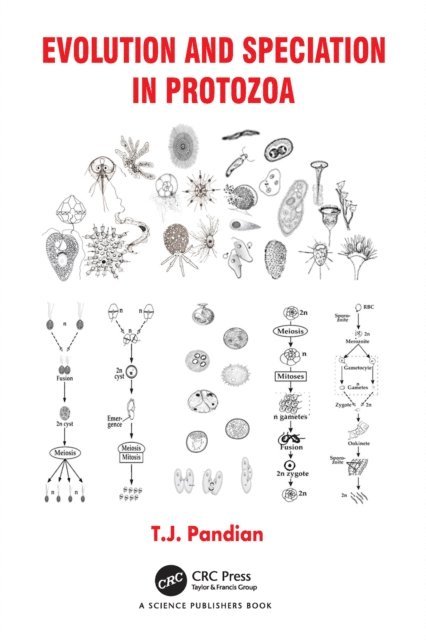
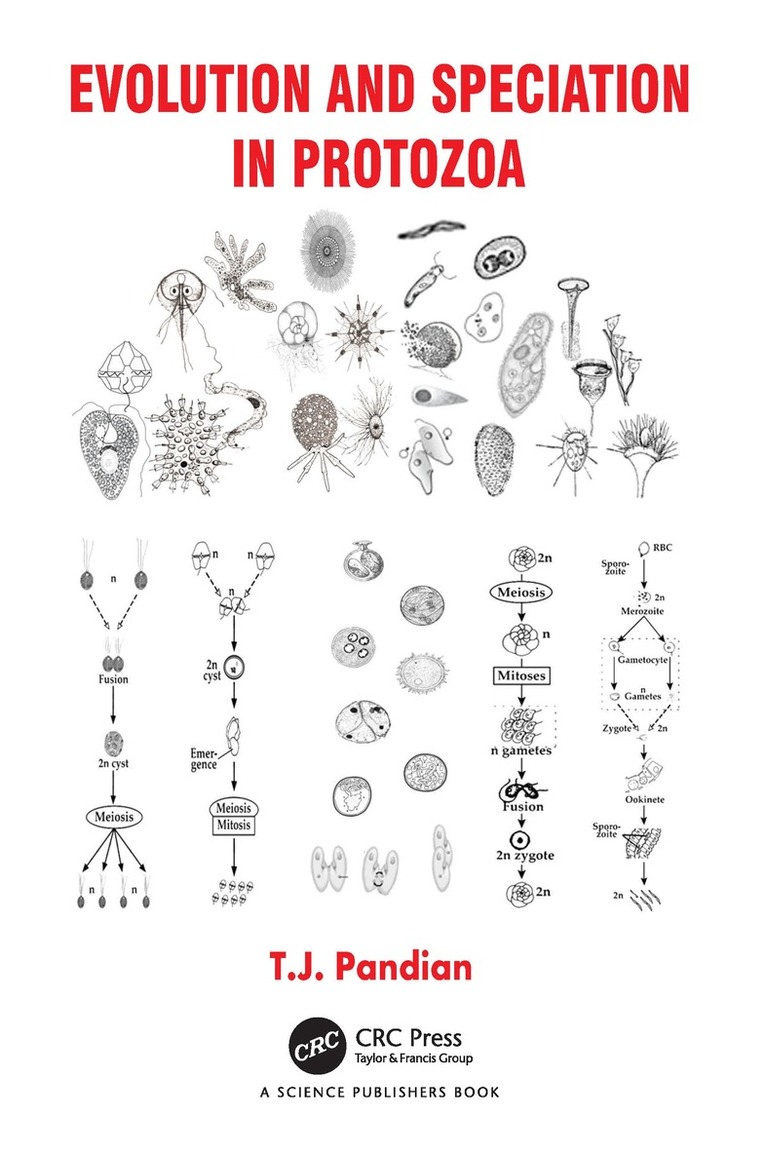
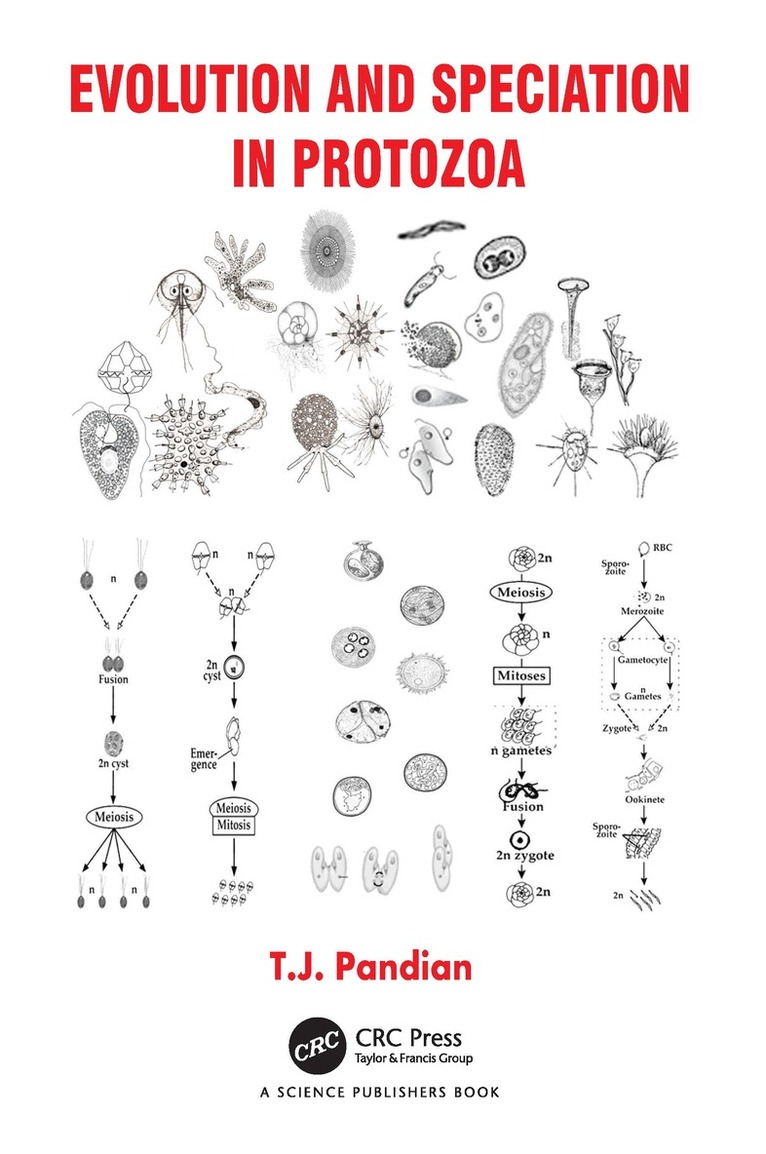
The polyphyletic Protozoa have explored the possibility of performing almost all metazoan functions with a few subcellular organelles. Their unicellularity and structural simplicity have (i) limited diversity to 32,950 species, (ii) restricted spatial distribution to aquatic habitats (94%, against 15% in Metazoa), (iii) demonstrated the ubiquitous dominance of clonality, (iv) reduced sexualization in 50% species, (v) facilitated the use of vegetative gametes in 40% species and (vi) secondary loss of sex in 10% species. With the fastest multiplication rates, i.e. once every 6-60 hours, they occur in high densities of 105-106 cell/ml. Their diverse and complicated life cycles are described in 30 types. Being risky, the cycle involves two hosts in < 2,000 parasitic species and injective transmission mode by sanguivorous insects and ticks in < 300 species. Their radial symmetry has accelerated diversity more than in radially symmetric less speciose Porifera (8,553 species), Cnidaria (10,856) and Echinodermata (7,000). In them, diversity is decelerated in the following descending order: symmetry > clonality > hermaphroditism > motility. Motility ranges from 2-3 μm for Rhizopoda to 400-2,000 μm for Ciliophora. Not surprisingly, 6,800 species of arcellinids, filosians and formainifers are testated or shelled. Within 1,229 sessile species, the peritrichid and suctorian ciliates are better adapted to coloniality. Unlike those of many Metazoa, the protozoan cyst is a dynamic stage, in which clonal or sexual reproduction occurs. Over 81% protozoans encyst, as it ensures (i) 90% survival during unfavorable conditions (against 15 in 12% non-encysted protozoans), (ii) genome transfer through generations, (iii) dispersal into new habitats and (iv) transmission to new hosts. Their mean body size ranges from 2 μm to 2 mm – a range over 1,000-times – only 8% aquatic metazoans cover a similar size range. In comparison to 77% macrophagy in Metazoa, only 46% protozoans are macrophagous predators. Within motile microphagy, protozoans filter 3-2 times smaller food particle at 50% cheaper clearance cost. This efficiency has expanded microphagy to 15% in protozoans, against 3% in Metazoa. Hence, their turnover rate in trophic dynamics is twice faster than that of metazoans. Foraminifers serve as ecological sensitive indicators in petroleum exploration and rise in sea level. For the first time, incidences of clonality and meiosis as well as symbiosis and parasitism have been shown to hint at the origin and evolution of different protozoan taxonomic groups during the geological past.
975 kr
Läs direkt efter köp
The polyphyletic Protozoa have explored the possibility of performing almost all metazoan functions with a few subcellular organelles. Their unicellularity and structural simplicity have (i) limited diversity to 32,950 species, (ii) restricted spatial distribution to aquatic habitats (94%, against 15% in Metazoa), (iii) demonstrated the ubiquitous dominance of clonality, (iv) reduced sexualization in 50% species, (v) facilitated the use of vegetative gametes in 40% species and (vi) secondary loss of sex in 10% species. With the fastest multiplication rates, i.e. once every 6-60 hours, they occur in high densities of 105-106 cell/ml. Their diverse and complicated life cycles are described in 30 types. Being risky, the cycle involves two hosts in < 2,000 parasitic species and injective transmission mode by sanguivorous insects and ticks in < 300 species. Their radial symmetry has accelerated diversity more than in radially symmetric less speciose Porifera (8,553 species), Cnidaria (10,856) and Echinodermata (7,000). In them, diversity is decelerated in the following descending order: symmetry > clonality > hermaphroditism > motility. Motility ranges from 2-3 μm for Rhizopoda to 400-2,000 μm for Ciliophora. Not surprisingly, 6,800 species of arcellinids, filosians and formainifers are testated or shelled. Within 1,229 sessile species, the peritrichid and suctorian ciliates are better adapted to coloniality. Unlike those of many Metazoa, the protozoan cyst is a dynamic stage, in which clonal or sexual reproduction occurs. Over 81% protozoans encyst, as it ensures (i) 90% survival during unfavorable conditions (against 15 in 12% non-encysted protozoans), (ii) genome transfer through generations, (iii) dispersal into new habitats and (iv) transmission to new hosts. Their mean body size ranges from 2 μm to 2 mm – a range over 1,000-times – only 8% aquatic metazoans cover a similar size range. In comparison to 77% macrophagy in Metazoa, only 46% protozoans are macrophagous predators. Within motile microphagy, protozoans filter 3-2 times smaller food particle at 50% cheaper clearance cost. This efficiency has expanded microphagy to 15% in protozoans, against 3% in Metazoa. Hence, their turnover rate in trophic dynamics is twice faster than that of metazoans. Foraminifers serve as ecological sensitive indicators in petroleum exploration and rise in sea level. For the first time, incidences of clonality and meiosis as well as symbiosis and parasitism have been shown to hint at the origin and evolution of different protozoan taxonomic groups during the geological past.
2 923 kr
Skickas inom 10-15 vardagar
882 kr
Skickas inom 10-15 vardagar
2 034 kr
Skickas inom 10-15 vardagar
837 kr
Skickas inom 10-15 vardagar