
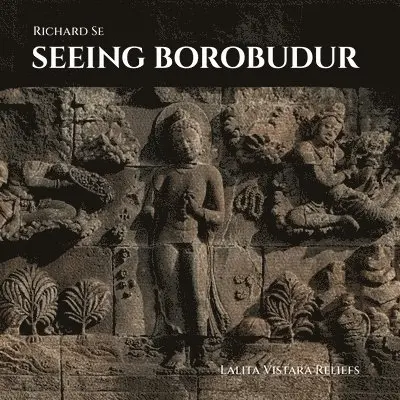
Architectural photography is where Se found his niche and in Seeing Borobudur he turns his expert eye on the world's largest Buddhist monument in Central Java, Indonesia. Dating back to the 9th century, the UNESCO World Heritage site features thousands of stunning relief panels and hundreds of statues set within incredible temple architecture. This book offers a unique perspective on these treasures, taking readers on an in-depth exploration of the temple and the different religious stories, myths and depictions of everyday life found in the panels, which are generally considered to be some of the most exquisite of the ancient Buddhist world.
T.K. Sabapathy has been writing on the art of Southeast Asia for over four decades (1973–2015), as a critic, curator and art historian. This collection of his work, representing the scope and depth of Sabapathy’s output, and highlighting his most important and influential writings, is also a survey of the vast changes in the landscape of art in the region over the period.A historian and educator, penetrating critic and ardent advocate, Sabapathy’s early scholarly engagements were marked by clear commitments to the art historiography of the Hindu-Buddhist traditions of Southeast Asia. He later emerged as an eloquent proponent of modern and contemporary Southeast Asian art. His art historical methods, critical documentation, deep dialogue with artists and detailed explication of their works have helped define Singapore and Malaysian art. His extensive studies of Southeast Asian art and artists have helped set the course of art discourse in the region.This publication provides an opportunity for more focused (re)reading, review and renewed consideration of T.K. Sabapathy’s rich body of work, to further fuel modern and contemporary art writing, research and exhibition-making.
Who spoke of the modern? When was the modern written? How was it written? How was it received? This collection features texts spanning the late 19th to late 20th centuries, selected by a group of scholars as responses to questions such as these. They have been written by artists, critics, historians and curators in several languages, many of which are never before translated into the English language. Years in the making, this publication is the first to represent such breadth and depth of art writing in the region of Southeast Asia, and will be a valuable resource to students, teachers and scholars of Southeast Asian studies.
Architectural photography is where Se found his niche and in Seeing Borobudur he turns his expert eye on the world's largest Buddhist monument in Central Java, Indonesia. Dating back to the 9th century, the UNESCO World Heritage site features thousands of stunning relief panels and hundreds of statues set within incredible temple architecture. This book offers a unique perspective on these treasures, taking readers on an in-depth exploration of the temple and the different religious stories, myths and depictions of everyday life found in the panels, which are generally considered to be some of the most exquisite of the ancient Buddhist world.
T.K. Sabapathy has been writing on the art of Southeast Asia for over four decades (1973–2015), as a critic, curator and art historian. This collection of his work, representing the scope and depth of Sabapathy’s output, and highlighting his most important and influential writings, is also a survey of the vast changes in the landscape of art in the region over the period.A historian and educator, penetrating critic and ardent advocate, Sabapathy’s early scholarly engagements were marked by clear commitments to the art historiography of the Hindu-Buddhist traditions of Southeast Asia. He later emerged as an eloquent proponent of modern and contemporary Southeast Asian art. His art historical methods, critical documentation, deep dialogue with artists and detailed explication of their works have helped define Singapore and Malaysian art. His extensive studies of Southeast Asian art and artists have helped set the course of art discourse in the region.This publication provides an opportunity for more focused (re)reading, review and renewed consideration of T.K. Sabapathy’s rich body of work, to further fuel modern and contemporary art writing, research and exhibition-making.
Who spoke of the modern? When was the modern written? How was it written? How was it received? This collection features texts spanning the late 19th to late 20th centuries, selected by a group of scholars as responses to questions such as these. They have been written by artists, critics, historians and curators in several languages, many of which are never before translated into the English language. Years in the making, this publication is the first to represent such breadth and depth of art writing in the region of Southeast Asia, and will be a valuable resource to students, teachers and scholars of Southeast Asian studies.