Tobias Haller – författare
Visar alla böcker från författaren Tobias Haller. Handla med fri frakt och snabb leverans.
11 produkter
11 produkter
Inbunden, Engelska, 2021
2 151 kr
Skickas inom 10-15 vardagar
Balancing the Commons in Switzerland outlines continuity and change in the management of common-pool resources such as pastures and forests in Switzerland.The book focuses on the differences and similarities between local institutions (rules and regulations) and forms of commoners’ organisations (corporations of citizens and corporations) which have managed common property for several centuries and have shaped the cultural landscapes of Switzerland. At the core of the book are five case studies from the German, French and Italian speaking regions of Switzerland. Beginning in the Late Middle Ages and focusing on the transformative periods in the nineteenth and twentieth centuries, it traces the internal and external political, economic and societal changes and examines what impact these changes had on commoners. It goes beyond the work of Robert Netting and Elinor Ostrom, who discussed Swiss commons as a unique case of robustness, by analysing how local commoners reacted to, but also shaped, changes by adapting and transforming common property institutions. Thus, the volume highlights how institutional changes in the management of the commons at the local level are embedded in the public policies of the respective cantons, and the state, which generates a high heterogeneity and an actual laboratory situation. It shows the power relations and very different routes that local collective organisations and their members have followed in order to cope with the loss of value of the commons and the increased workload for maintaining common property management. Providing insightful case studies of commons management, this volume delivers theoretical contributions and lessons to be learned for the commons worldwide.This book will be of great interest to students and scholars of the commons, natural resource management and agricultural development.
Häftad, Engelska, 2022
629 kr
Skickas inom 10-15 vardagar
Balancing the Commons in Switzerland outlines continuity and change in the management of common-pool resources such as pastures and forests in Switzerland.The book focuses on the differences and similarities between local institutions (rules and regulations) and forms of commoners’ organisations (corporations of citizens and corporations) which have managed common property for several centuries and have shaped the cultural landscapes of Switzerland. At the core of the book are five case studies from the German, French and Italian speaking regions of Switzerland. Beginning in the Late Middle Ages and focusing on the transformative periods in the nineteenth and twentieth centuries, it traces the internal and external political, economic and societal changes and examines what impact these changes had on commoners. It goes beyond the work of Robert Netting and Elinor Ostrom, who discussed Swiss commons as a unique case of robustness, by analysing how local commoners reacted to, but also shaped, changes by adapting and transforming common property institutions. Thus, the volume highlights how institutional changes in the management of the commons at the local level are embedded in the public policies of the respective cantons, and the state, which generates a high heterogeneity and an actual laboratory situation. It shows the power relations and very different routes that local collective organisations and their members have followed in order to cope with the loss of value of the commons and the increased workload for maintaining common property management. Providing insightful case studies of commons management, this volume delivers theoretical contributions and lessons to be learned for the commons worldwide.This book will be of great interest to students and scholars of the commons, natural resource management and agricultural development.
Häftad, Engelska, 2020
655 kr
Skickas inom 10-15 vardagar
This volume focuses on how, in Europe, the debate on the commons is discussed in regard to historical and contemporary dimensions, critically referencing the work of Elinor Ostrom. It also explores from the perspective of new institutional political ecology (NIPE) how Europe directly and indirectly affected and affects the commons globally.Most of the research on the management of commons pool resources is limited to dealing with one of two topics: either the interaction between local participatory governance and development of institutions for commons management, or a political- economy approach that focuses on global change as it is related to the increasingly globalised expansion of capitalist modes of production, consumption and societal reproduction. This volume bridges the two, addressing how global players affect the commons worldwide and how they relate to responses emerging from within the commons in a global- local (glocal) world. Authors from a range of academic disciplines present research findings on recent developments on the commons, including: historical insights; new innovations for participatory institutions building in Europe or several types of commons grabbing, especially in Africa related to European investments; and restrictions on the management of commons at the international level. European case studies are included, providing interesting examples of local participation in commons resource management, while simultaneously showing Europe as a centre for globalized capitalism and its norms and values, affecting the rest of the world, particularly developing countries.This book will be of interest to students and researchers from a wide range of disciplines including natural resource management, environmental governance, political geography and environmental history.
Inbunden, Engelska, 2012
2 036 kr
Skickas inom 10-15 vardagar
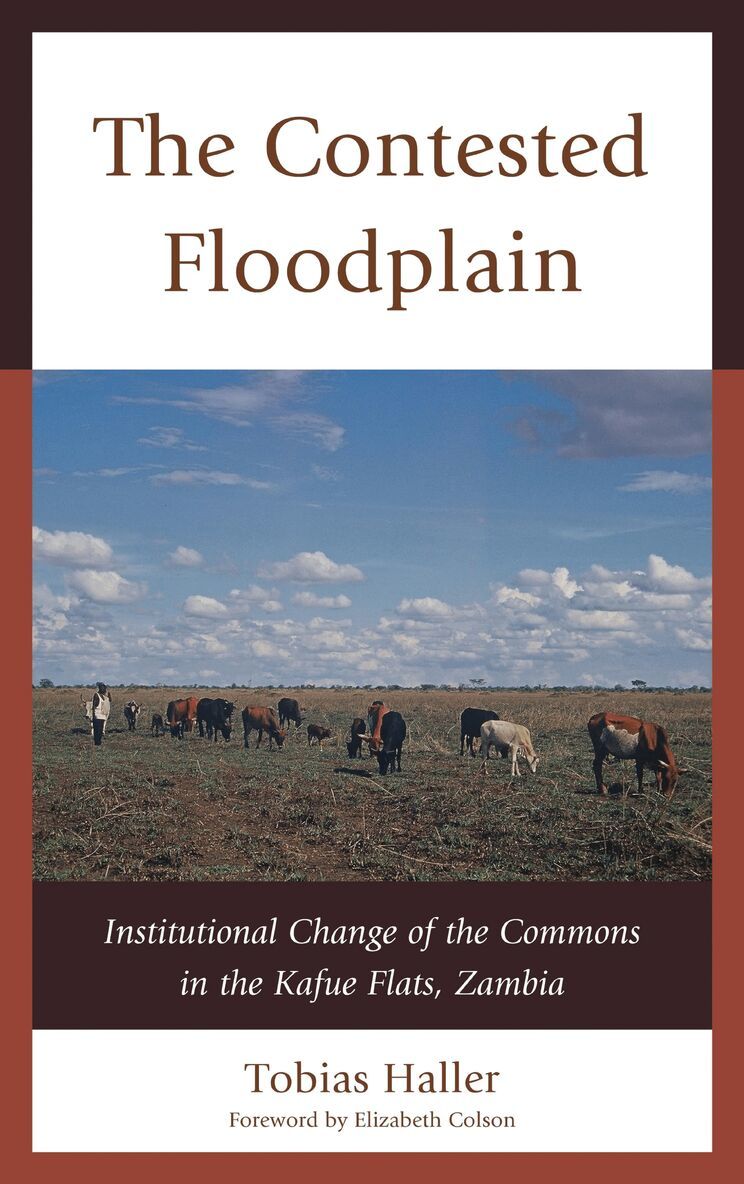
The Contested Floodplain tells the story of institutional changes in the management of common pool resources (pasture, wildlife, and fisheries) among Ila and Balundwe agro-pastoralists and Batwa fishermen in the Kafue Flats, in southern Zambia. It explains how and why a once rich floodplain area, managed under local common property regimes, becomes a poor man’s place and a degraded resource area. Based on social anthropological field research, the book explains how well working institutions in the past, regulating communal access to resources, have turned into state property and open access or privatization. As a basis for analysis, the author uses Elinor Ostrom’s design principles for well working institutions and the approach of the New Institutionalism by Jean Ensminger. The latter approach focuses on external factors and change in relative prices. It explains how local actors face changing bargaining power and use different ideologies to legitimize and shape resource use regulations. The study focuses on the historic developments taking place since pre-colonial and colonial times up to today. Haller shows how the commons had been well regulated by local institutions in the past, often embedded in religious belief systems. He then explains the transformation from common property to state property since colonial times. When the state is unable to provide well functioning institutions due to a lack in financial income, it contributes to de facto open access and degradation of the commons. The Zambian copper-based economy has faced crisis since 1975, and many Zambians have to look for economic alternatives and find ways to profit from the lack of state control (a paradox of the present-absent state). And while the state is absent, external actors use the ideology of citizenship to justify free use of resources during conflicts with local people. Also within Zambian communities, floodplain resources are highly contested, which is illustrated through conflicts over a proposed irrigation scheme in the area. The different actors and interest groups use ideologies such as citizenship vs. being indigenous, ethnic identity vs. class conflict, and modernity vs traditional way of life to legitimize land claims.
Inbunden, Engelska, 2022
1 931 kr
Skickas inom 10-15 vardagar
This edited volume examines the changes that arise from the entanglement of global interests and narratives with the local struggles that have always existed in the drylands of Africa, the Middle East, and Central Asia/Inner Asia.Changes in drylands are happening in an overwhelming manner. Climate change, growing political instability, and increasing enclosures of large expanses of often common land are some of the changes with far-reaching consequences for those who make their living in the drylands. At the same time, powerful narratives about the drylands as ‘wastelands’ and their ‘backward’ inhabitants continue to hold sway, legitimizing interventions for development, security, and conservation, informing re-emerging frontiers of investment (for agriculture, extraction, infrastructure), and shaping new dryland identities. The chapters in this volume discuss the politics of change triggered by forces as diverse as the global land and resource rush, the expansion of new Information and Communication Technologies, urbanization, the COVID-19 pandemic, and the spread of violent extremism. While recognizing that changes are co-produced by differently positioned actors from within and outside the drylands, this volume presents the dryland’s point of view. It therefore takes the views, experiences, and agencies of dryland dwellers as the point of departure to not only understand the changes that are transforming their lives, livelihoods, and future aspirations, but also to highlight the unexpected spaces of contestation and innovation that have hitherto remained understudied.This edited volume will be of much interest to students, researchers, and scholars of natural resource management, land and resource grabbing, political ecology, sustainable development, and drylands in general.The Open Access version of this book, available at www.taylorfrancis.com, has been made available under a Creative Commons Attribution-Non Commercial-No Derivatives 4.0 license.
Häftad, Engelska, 2024
588 kr
Skickas inom 10-15 vardagar
This edited volume examines the changes that arise from the entanglement of global interests and narratives with the local struggles that have always existed in the drylands of Africa, the Middle East, and Central Asia/Inner Asia.Changes in drylands are happening in an overwhelming manner. Climate change, growing political instability, and increasing enclosures of large expanses of often common land are some of the changes with far-reaching consequences for those who make their living in the drylands. At the same time, powerful narratives about the drylands as ‘wastelands’ and their ‘backward’ inhabitants continue to hold sway, legitimizing interventions for development, security, and conservation, informing re-emerging frontiers of investment (for agriculture, extraction, infrastructure), and shaping new dryland identities. The chapters in this volume discuss the politics of change triggered by forces as diverse as the global land and resource rush, the expansion of new Information and Communication Technologies, urbanization, the COVID-19 pandemic, and the spread of violent extremism. While recognizing that changes are co-produced by differently positioned actors from within and outside the drylands, this volume presents the dryland’s point of view. It therefore takes the views, experiences, and agencies of dryland dwellers as the point of departure to not only understand the changes that are transforming their lives, livelihoods, and future aspirations, but also to highlight the unexpected spaces of contestation and innovation that have hitherto remained understudied.This edited volume will be of much interest to students, researchers, and scholars of natural resource management, land and resource grabbing, political ecology, sustainable development, and drylands in general.The Open Access version of this book, available at www.taylorfrancis.com, has been made available under a Creative Commons Attribution-Non Commercial-No Derivatives 4.0 license.
Inbunden, Engelska, 2019
2 170 kr
Skickas inom 10-15 vardagar
This volume focuses on how, in Europe, the debate on the commons is discussed in regard to historical and contemporary dimensions, critically referencing the work of Elinor Ostrom. It also explores from the perspective of new institutional political ecology (NIPE) how Europe directly and indirectly affected and affects the commons globally.Most of the research on the management of commons pool resources is limited to dealing with one of two topics: either the interaction between local participatory governance and development of institutions for commons management, or a political- economy approach that focuses on global change as it is related to the increasingly globalised expansion of capitalist modes of production, consumption and societal reproduction. This volume bridges the two, addressing how global players affect the commons worldwide and how they relate to responses emerging from within the commons in a global- local (glocal) world. Authors from a range of academic disciplines present research findings on recent developments on the commons, including: historical insights; new innovations for participatory institutions building in Europe or several types of commons grabbing, especially in Africa related to European investments; and restrictions on the management of commons at the international level. European case studies are included, providing interesting examples of local participation in commons resource management, while simultaneously showing Europe as a centre for globalized capitalism and its norms and values, affecting the rest of the world, particularly developing countries.This book will be of interest to students and researchers from a wide range of disciplines including natural resource management, environmental governance, political geography and environmental history.
Häftad, Engelska, 2023
782 kr
Skickas inom 11-20 vardagar
Häftad, Tyska, 2013
352 kr
Skickas inom 3-6 vardagar
Häftad, Engelska, 2021
791 kr
Skickas inom 3-6 vardagar
Intercultural, interdisciplinary, and transdisciplinary research interfaces confront researchers with considerable challenges. Towards Shared Research portrays how scholars from different disciplinary and geographical origins and at various academic career stages strive for a more inclusive and better understanding of knowledge about African environments.The book is addressed to researchers, facilitators, and policy-makers to make a case for participatory and integrative approaches resulting in systemic and co-created analyses.
Del 22 - African Social Studies Series
Disputing the Floodplains
Institutional Change and the Politics of Resource Management in African Wetlands
Häftad, Engelska, 2010
1 176 kr
Skickas inom 5-8 vardagar
This book has received the Environmental Research Award 2011 of the University of Bern, Switzerland.African Floodplains in semi-arid areas are important for local livelihoods as they harbor many common-pool resources such as fisheries, pasture, wildlife, veldt products, water and land for irrigation. However, in many of these areas resources are under pressure. This book is presenting seven case studies from Mali, Cameroon, Tanzania, Zambia and Botswana based on anthropological fieldwork (2002-08) and explores how these common-pool resources have been managed in pre-colonial, colonial and postcolonial times. The major focus of the study is how institutional change has contributed to resource management problems and offers a comparative analysis based on the New Institutionalist approach (Jean Ensminger, Elinor Ostrom), which is combined with a special focus on ideology, discourse and narratives while focusing on conflict and power issues.With a foreword by Elinor Ostrom.