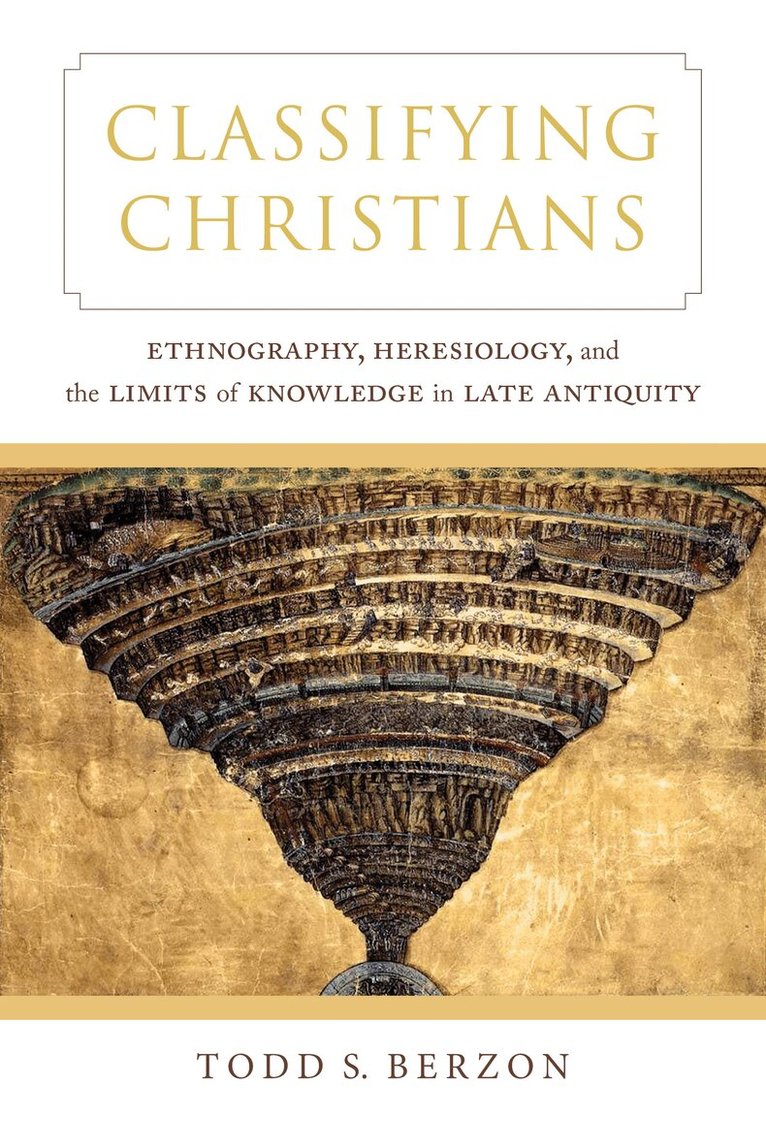
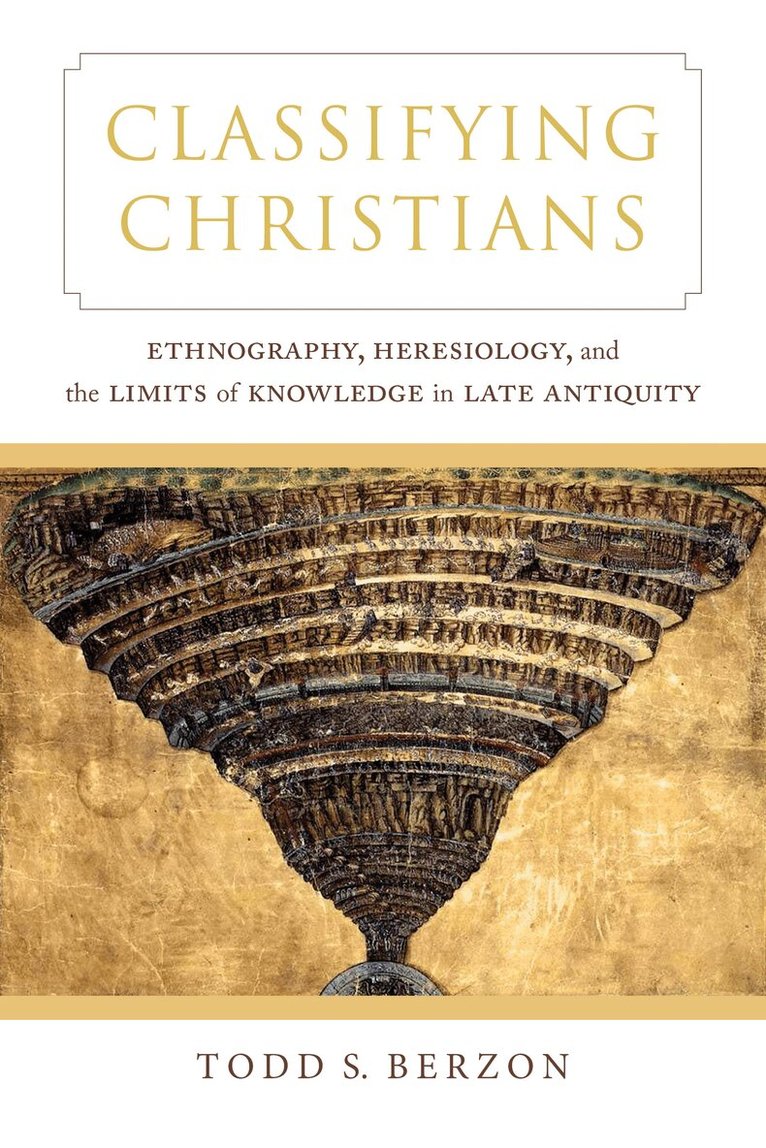
Classifying Christians investigates late antique Christian heresiologies as ethnographies that catalogued and detailed the origins, rituals, doctrines, and customs of the heretics in explicitly polemical and theological terms. Oscillating between ancient ethnographic evidence and contemporary ethnographic writing, Todd S. Berzon argues that late antique heresiology shares an underlying logic with classical ethnography in the ancient Mediterranean world. By providing an account of heresiological writing from the second to fifth century, Classifying Christians embeds heresiology within the historical development of imperial forms of knowledge that have shaped western culture from antiquity to the present.
Investigates how discourse spills from language to action, generating, obfuscating, and perpetuating violence while also offering the words, principles, and practices that may interrupt it.We are continually catching up with and being caught by words, especially words that hurt. These collected essays probe the interaction of violence and words across time, place, and circumstance. Often cited as the core source of violence, religion’s capacity for coordinating ideas, symbols, and groups has made it a potent force in the production and deflection of violence. Yet the production of the category "religion" has also contributed to violence; employed to surveille and subjugate targeted populations, "religion" enabled and conveyed colonial domination on a global scale. The claim that religion causes violence has therefore missed a fundamental insight: as a word, "religion" also acts in and on the world. Contributors thus ask: How does persecution become weaponized in and through language? Whose stories are told and who is allowed to speak them? And how do language, symbols, art, activism, and performance find ways to speak back, push back, and offer critique? Theorizing, historicizing, and addressing the violence of words and words of violence, "religion" emerges as critical theory and embodies the very practice of critique.
Investigates how Jewish and Christian thinkers in Late Antiquity imbued speech with physical, emotional, and spiritual presence.Every auditory moment, from the routine to the spectacular, exposed listeners to a litany of sounds that had a profound impact upon their sense of the world. Ancient Jewish and Christian writers capitalized on that experiential baseline to render a temporal world overflowing with speech that could be at turns enlivening or deadly. Holy Tongues offers a detailed inquiry into how various Jewish and Christian authors conceptualized the presence of words: how words caught and released people in various religious contexts and environments. This book takes seriously the discourses attested in a wide range of late ancient sources that their world was brimming with highly charged, often conspicuous, often weighty speech. In contrast to the evanescent quality so reflexively assigned to speech in antiquity and our own day stands the claim that the living voice more deeply connects with and adheres to the listener. Oral words have substantial presence that is captured in various states of bodily and spiritual experience. Insofar as spoken words were treated by Jews and Christians in antiquity as both interactive and interacting, they were no different in kind from the contents of a reliquary, the books of a library, or the implements used to conduct a ritual. Utterances may have seemed more elusive than objects that were readily visible, but they stabilized a deep bond to the holy through their engagement with and manipulation of the senses. Speaking released a force into the world, which, with the aid of the ears, mouths, and minds, worked tirelessly to reproduce itself.