Todd S. Bridges – författare
Visar alla böcker från författaren Todd S. Bridges. Handla med fri frakt och snabb leverans.
5 produkter
5 produkter
E-bok
Engelska, 2008672 kr
Läs direkt efter köp
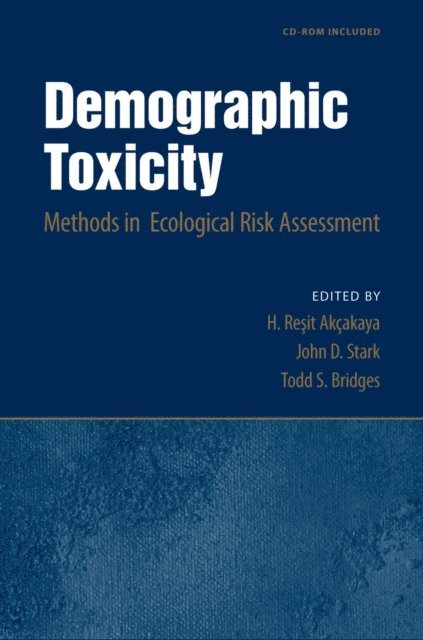
This edited volume collects population and metapopulation models for a wide variety of species, focusing on the use of models in population-level risk assessment for toxins. Each chapter of Demographic Toxicity describes the application of a population model to one species, with the aim of demonstrating how various life history characteristics of the species are incorporated into the model, how ecotoxicological impacts are modeled, and how the results of the model has been or can be used in risk assessment. The model in each chapter is implemented in RAMAS software, which uses matrix modeling of population dynamics. RAMAS software is believed to be the most powerful tool ever invented for this task.Demographic Toxicity includes a CD that contains a demo version of the program and the data files for each species. The book explains how to use these specific tools for modeling, analysis, and interpretation of data. Demographic Toxicity provides a major review of current knowledge on population dynamics in different species, representing both terrestrial and aquatic environments.
E-bok
PDF, Engelska, 2008672 kr
Läs direkt efter köp
This edited volume collects population and metapopulation models for a wide variety of species, focusing on the use of models in population-level risk assessment for toxins. Each chapter of Demographic Toxicity describes the application of a population model to one species, with the aim of demonstrating how various life history characteristics of the species are incorporated into the model, how ecotoxicological impacts are modeled, and how the results of the model has been or can be used in risk assessment. The model in each chapter is implemented in RAMAS software, which uses matrix modeling of population dynamics. RAMAS software is believed to be the most powerful tool ever invented for this task.Demographic Toxicity includes a CD that contains a demo version of the program and the data files for each species. The book explains how to use these specific tools for modeling, analysis, and interpretation of data. Demographic Toxicity provides a major review of current knowledge on population dynamics in different species, representing both terrestrial and aquatic environments.
Inbunden, Engelska, 2011
2 138 kr
Skickas inom 10-15 vardagar
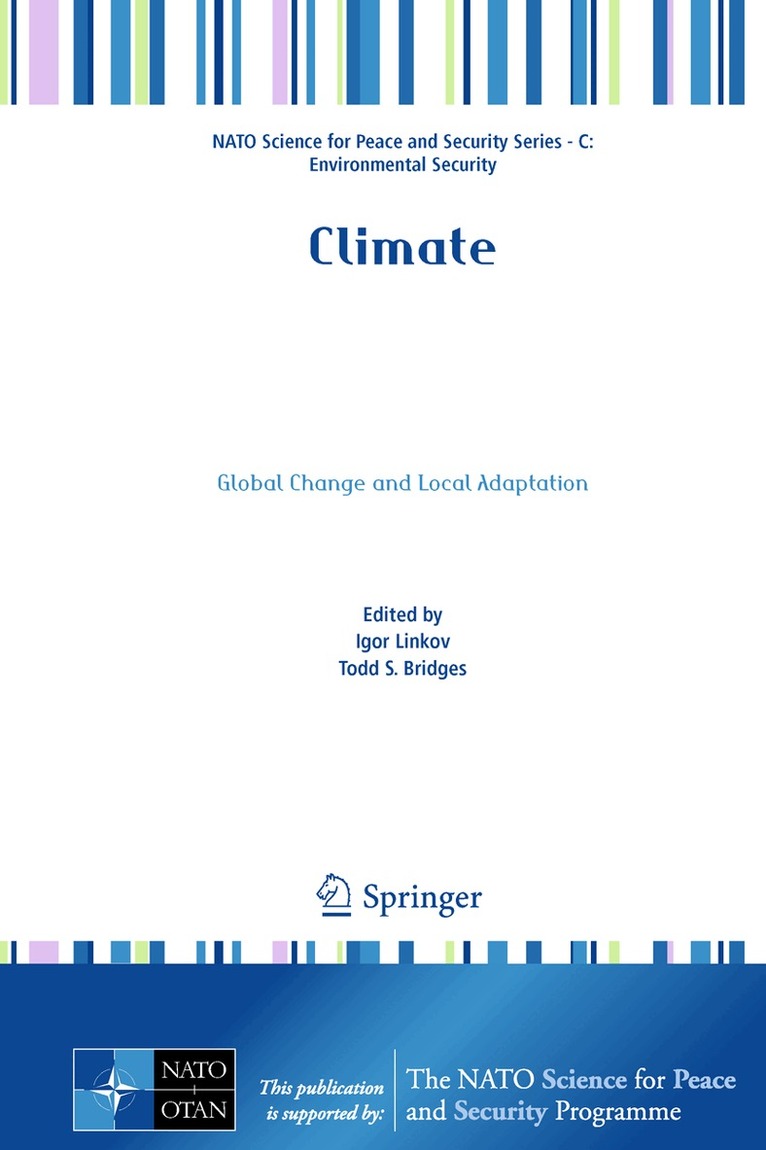
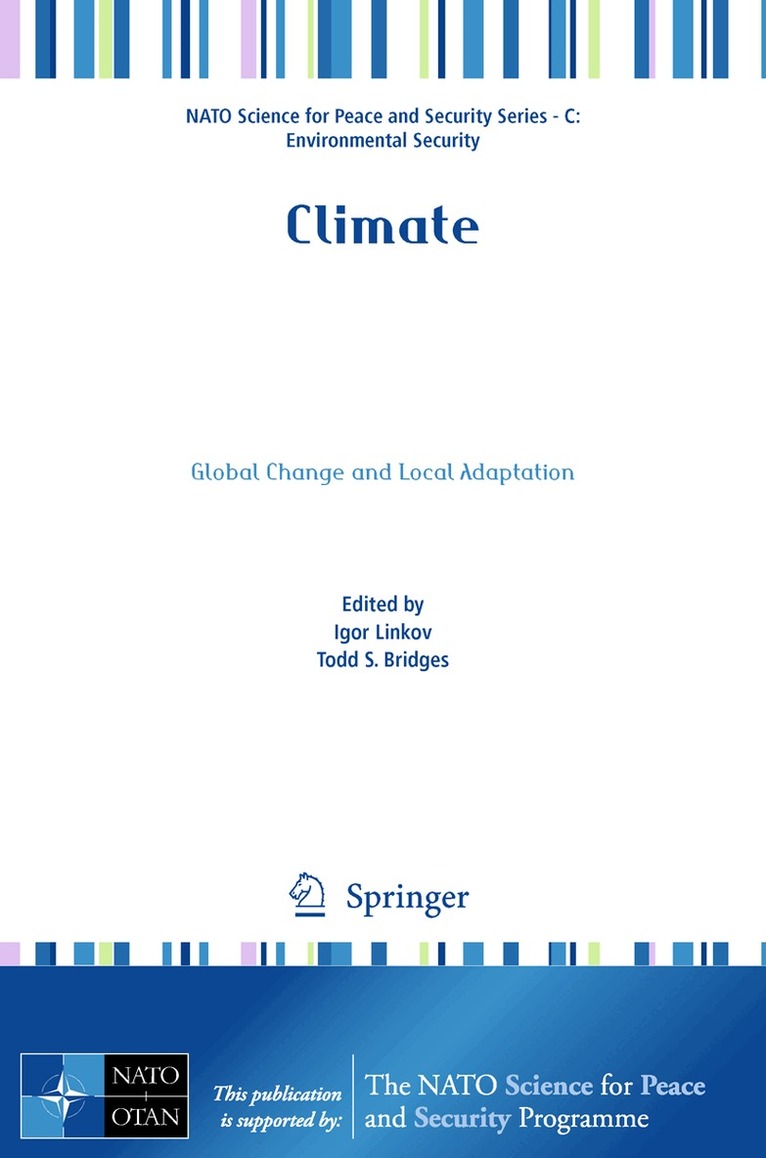
Rising sea levels and altered weather patterns are expected to significantly alter coastal and inland environments for humans, infrastructure and ecosystems. Potential land-use changes and population increases, coupled with uncertain predictions for sea level rise and storm frequency/intensity represent a significant planning challenge. While efforts to mitigate climate change continue, plans must be made to adapt to the risks that climate change poses to humans, infrastructure, and ecosystems alike. This book addresses integrated environmental assessment and management as part of the nexus of climate change adaptation. Risk analysis has emerged as a useful approach to guide assessment, communication and management of security risks. However, with respect to climate change, an integrated, multi-criteria, multi-hazard, risk-informed decision framework is desirable for evaluating adaptation strategies. The papers in Part 1 summarize societal and political needs for climate change adaptation. Part 2 includes papers summarizing the state of the art in climate change adaptation. Three further parts cover: the process of change in coastal regions, in inland regions, and, finally, the potential challenges to homeland security for national governments. Each of these parts reviews achievements, identifies gaps in current knowledge, and suggests research priorities.
E-bok
PDF, Engelska, 20112 741 kr
Läs direkt efter köp
Rising sea levels and altered weather patterns are expected to significantly alter coastal and inland environments for humans, infrastructure and ecosystems. Potential land-use changes and population increases, coupled with uncertain predictions for sea level rise and storm frequency/intensity represent a significant planning challenge. While efforts to mitigate climate change continue, plans must be made to adapt to the risks that climate change poses to humans, infrastructure, and ecosystems alike. This book addresses integrated environmental assessment and management as part of the nexus of climate change adaptation. Risk analysis has emerged as a useful approach to guide assessment, communication and management of security risks. However, with respect to climate change, an integrated, multi-criteria, multi-hazard, risk-informed decision framework is desirable for evaluating adaptation strategies. The papers in Part 1 summarize societal and political needs for climate change adaptation. Part 2 includes papers summarizing the state of the art in climate change adaptation. Three further parts cover: the process of change in coastal regions, in inland regions, and, finally, the potential challenges to homeland security for national governments. Each of these parts reviews achievements, identifies gaps in current knowledge, and suggests research priorities.
Häftad, Engelska, 2011
1 725 kr
Skickas inom 5-8 vardagar
Rising sea levels and altered weather patterns are expected to significantly alter coastal and inland environments for humans, infrastructure and ecosystems. Potential land-use changes and population increases, coupled with uncertain predictions for sea level rise and storm frequency/intensity represent a significant planning challenge. While efforts to mitigate climate change continue, plans must be made to adapt to the risks that climate change poses to humans, infrastructure, and ecosystems alike. This book addresses integrated environmental assessment and management as part of the nexus of climate change adaptation. Risk analysis has emerged as a useful approach to guide assessment, communication and management of security risks. However, with respect to climate change, an integrated, multi-criteria, multi-hazard, risk-informed decision framework is desirable for evaluating adaptation strategies. The papers in Part 1 summarize societal and political needs for climate change adaptation. Part 2 includes papers summarizing the state of the art in climate change adaptation. Three further parts cover: the process of change in coastal regions, in inland regions, and, finally, the potential challenges to homeland security for national governments. Each of these parts reviews achievements, identifies gaps in current knowledge, and suggests research priorities.