Tom Standage – författare
Visar alla böcker från författaren Tom Standage. Handla med fri frakt och snabb leverans.
22 produkter
22 produkter
Häftad, Engelska, 2025
127 kr
Skickas
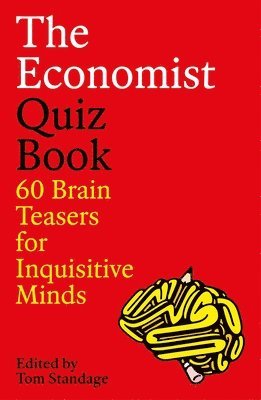
Calling all problem-solvers drawn to the smart, quirky and counter-intuitive.Challenge yourself to join the dots, get your facts straight and sort the genuine from the fake in this puzzle book inspired by the sharpest brains at The Economist.Do stocks with catchy names outperform the market? Is Bohemian Rhapsody really longer than Hey Jude? And can geopolitics affect the popularity of dog breeds? Packed with hidden connections and mind-bending facts, The Economist Quiz Book is guaranteed to stretch your mind to its very limits.
Häftad, Engelska, 1999
147 kr
Skickas inom 5-8 vardagar
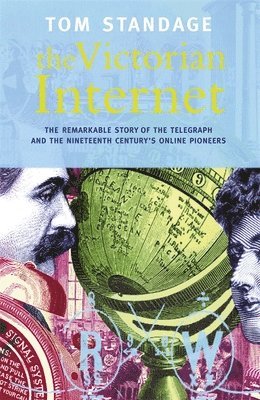
The history of the telegraph - the men and women who made it - and its relevance to the current Internet debateBeginning with the Abbe Nollet's famous experiment of 1746, when he successfully demonstrated that electricity could pass from one end to the other of a chain of two hundred monks, Tom Standage tells the story of the spread of the telegraph and its transformation of the Victorian world. The telegraph was greeted by all the same concerns, hype, social panic and excitement that now surround the Internet, and Standage provides both a fascinating insight into the past and a context in which to think rather differently of today's concerns.Standage has a wonderful prose style and an excellent eye for the telling and engaging story. Popular history at its best.
E-bok
Engelska, 2009180 kr
Läs direkt efter köp
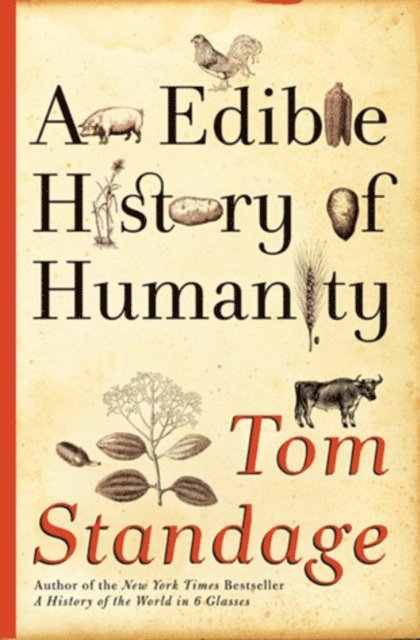
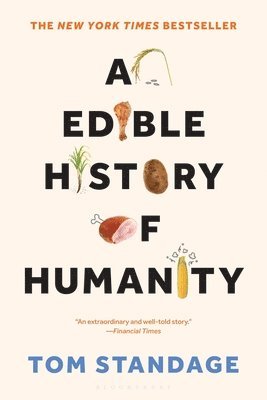
The bestselling author of A History of the World in 6 Glasses charts an enlightening history of humanity through the foods we eat.Throughout history, food has done more than simply provide sustenance. It has acted as a tool of social transformation, political organization, geopolitical competition, industrial development, military conflict and economic expansion. An Edible History of Humanity is an account of how food has helped to shape and transform societies around the world, from the emergence of farming in China by 7,500 BCE to today''s use of sugar cane and corn to make ethanol. Food has been a kind of technology, a tool that has changed the course of human progress. It helped to found, structure, and connect together civilizations worldwide, and to build empires and bring about a surge in economic development through industrialization. Food has been employed as a military and ideological weapon. And today, in the culmination of a process that has been going on for thousands of years, the foods we choose in the supermarket connect us to global debates about trade, development and the adoption of new technologies. Drawing from many fields including genetics, archaeology, anthropology, ethno-botany and economics, the story of these food-driven transformations is a fully satisfying account of the whole of human history.
E-bok
Engelska, 2013195 kr
Läs direkt efter köp
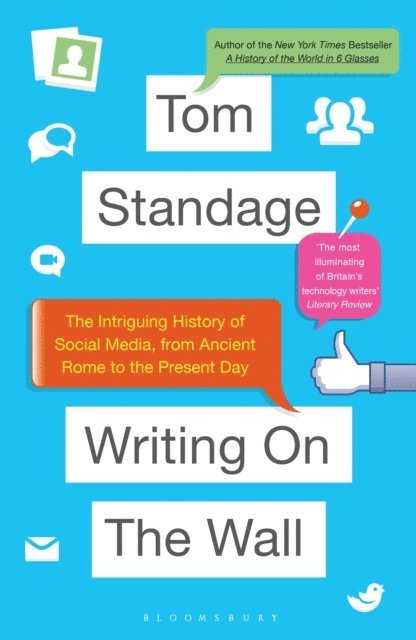
Today we are endlessly connected: constantly tweeting, texting or e-mailing. This may seem unprecedented, yet it is not. Throughout history, information has been spread through social networks, with far-reaching social and political effects. Writing on the Wall reveals how an elaborate network of letter exchanges forewarned of power shifts in Cicero''s Rome, while the torrent of tracts circulating in sixteenth-century Germany triggered the Reformation. Standage traces the story of the rise, fall and rebirth of social media over the past 2,000 years offering an illuminating perspective on the history of media, and revealing that social networks do not merely connect us today – they also link us to the past.
Häftad, Engelska, 2014
182 kr
Skickas inom 10-15 vardagar
Today we are endlessly connected: constantly tweeting, texting or e-mailing. This may seem unprecedented, yet it is not. Throughout history, information has been spread through social networks, with far-reaching social and political effects. Writing on the Wall reveals how an elaborate network of letter exchanges forewarned of power shifts in Cicero’s Rome, while the torrent of tracts circulating in sixteenth-century Germany triggered the Reformation. Standage traces the story of the rise, fall and rebirth of social media over the past 2,000 years offering an illuminating perspective on the history of media, and revealing that social networks do not merely connect us today – they also link us to the past.
Häftad, Engelska, 2022
118 kr
Skickas
'Speckled with anecdotes, insights and surprises. It is great fun - and utterly timely' Sunday Times'Standage writes with a masterly clarity' New York Times'The product of deep research, great intelligence and burnished prose . . . It is rare that I encounter a non-fiction author whose prose is so elegant that it is worth reading for itself. Standage is a writer of this class' Wall Street Journal Beginning around 3,500 BC with the wheel, and moving through the eras of horsepower, trains and bicycles, Tom Standage puts the rise of the car – and the future of urban transport – into a broader historical context.Our society has been shaped by the car in innumerable ways, many of which are so familiar that we no longer notice them. Why does red mean stop and green mean go? Why do some countries drive on the left, and some on the right? How did cars, introduced only a little over a century ago, change the way the world was administered, laid out and policed, along with experiences like eating and shopping? And what might travel in a post-car world look like?As social transformations from ride-sharing to the global pandemic force us to critically re-examine our relationship with personal transportation, A Brief History of Motion is an essential contribution to our understanding of how the modern world came to be.
E-bok
Engelska, 2021137 kr
Läs direkt efter köp
''Speckled with anecdotes, insights and surprises. It is great fun - and utterly timely'' Sunday Times''Standage writes with a masterly clarity'' New York Times''The product of deep research, great intelligence and burnished prose . . . It is rare that I encounter a non-fiction author whose prose is so elegant that it is worth reading for itself. Standage is a writer of this class'' Wall Street Journal Beginning around 3,500 BC with the wheel, and moving through the eras of horsepower, trains and bicycles, Tom Standage puts the rise of the car – and the future of urban transport – into a broader historical context.Our society has been shaped by the car in innumerable ways, many of which are so familiar that we no longer notice them. Why does red mean stop and green mean go? Why do some countries drive on the left, and some on the right? How did cars, introduced only a little over a century ago, change the way the world was administered, laid out and policed, along with experiences like eating and shopping? And what might travel in a post-car world look like?As social transformations from ride-sharing to the global pandemic force us to critically re-examine our relationship with personal transportation, A Brief History of Motion is an essential contribution to our understanding of how the modern world came to be.
E-bok
PDF, Engelska, 2021137 kr
Läs direkt efter köp
''Speckled with anecdotes, insights and surprises. It is great fun - and utterly timely'' Sunday Times''Standage writes with a masterly clarity'' New York Times''The product of deep research, great intelligence and burnished prose . . . It is rare that I encounter a non-fiction author whose prose is so elegant that it is worth reading for itself. Standage is a writer of this class'' Wall Street Journal Beginning around 3,500 BC with the wheel, and moving through the eras of horsepower, trains and bicycles, Tom Standage puts the rise of the car – and the future of urban transport – into a broader historical context.Our society has been shaped by the car in innumerable ways, many of which are so familiar that we no longer notice them. Why does red mean stop and green mean go? Why do some countries drive on the left, and some on the right? How did cars, introduced only a little over a century ago, change the way the world was administered, laid out and policed, along with experiences like eating and shopping? And what might travel in a post-car world look like?As social transformations from ride-sharing to the global pandemic force us to critically re-examine our relationship with personal transportation, A Brief History of Motion is an essential contribution to our understanding of how the modern world came to be.
E-bok
Engelska, 2021157 kr
Läs direkt efter köp
From the bestselling author of A History of the World in 6 Glasses, an eye-opening road trip through 5,500 years of humans on the go, revealing how transportation inevitably shapes civilization. Hailed for their "colorful, smooth, and wonderfully engaging" writing (Smithsonian), Tom Standage''s fleet-footed and surprising global histories have delighted readers and cemented his reputation as one of our leading interpreters of technologies past and present. Now, he returns with a provocative account of a sometimes-overlooked form of technology-personal transportation-and explores how it has shaped societies and cultures over millennia.Beginning around 3,500 BCE with the wheel--a device that didn''t catch on until a couple thousand years after its invention--Standage zips through the eras of horsepower, trains, and bicycles, revealing how each successive mode of transit embedded itself in the world we live in, from the geography of our cities to our experience of time to our notions of gender. Then, delving into the history of the automobile''s development, Standage explores the social resistance to cars and the upheaval that their widespread adoption required. Cars changed how the world was administered, laid out, and policed, how it looked, sounded, and smelled--and not always in the ways we might have preferred. Today--after the explosive growth of ride-sharing and years of breathless predictions about autonomous vehicles--the social transformations spurred by coronavirus and overshadowed by climate change create a unique opportunity to critically reexamine our relationship to the car. With A Brief History of Motion, Standage overturns myths and invites us to look at our past with fresh eyes so we can create the future we want to see.
E-bok
Engelska, 2016111 kr
Läs direkt efter köp
Which James Bond drinks the most martinis? What do Satanists really believe?How do hurricanes get their names?Why are bees disappearing?Is chocolate healthy?...Go Figure has the answers. Bringing together the very best from the clever people at The Economist, Go Figure explains the mind-boggling, the peculiar and the profound, things you might always have quietly wondered about and yet more you didn''t know you didn''t know.Figure out why so many Koreans are called Kim, how bitcoin mining works, why eating insects makes sense and how to get ahead under a dictator - a treat for the knowing, the uninitiated and the downright curious.
E-bok
Engelska, 2018118 kr
Läs direkt efter köp
Some questions you never think to ask. Others, you didn''t know you didn''t know. And some facts are so surprising they cry out for answers. What can a president actually do? Why do cities sink into the ground? Why is Australia seemingly invulnerable to recessions? Why do people in couples do more housework than singletons?The brilliant minds of the Economist collect these questions. Individually, they might seem bite-sized and inconsequential, but taken together they can reveal a whole new world.
E-bok
Engelska, 2019132 kr
Läs direkt efter köp
The world can be an amazing place if you know the right questions to ask:How did carrots become orange? What''s stopping us from having a four-day week? How can we remove all the broken bits of satellite from orbit? If everything is so terrible, why is the global suicide rate falling?The keen minds of the Economist love to look beyond everyday appearances to find out what really makes things tick. In this latest collection of The Economist Explains, they have gathered together the juiciest fruits of their never-ending quest for answers. For an uncommonly interesting read, take a peek at some Uncommon Knowledge - and pass it on! The world only gets more amazing when discoveries are shared.
E-bok
Engelska, 202097 kr
Läs direkt efter köp
The world can be an amazing place if you know the right questions to ask: How much does a ghost reduce a house''s value? How are winemakers responding to climate change? How much should you tip your Uber driver? Should your dog fear Easter more than fireworks? The keen minds of The Economist love to look beyond everyday appearances to find out what really makes things tick. In this latest collection of The Economist Explains, they have gathered the weirdest and most counter-intuitive answers they''ve found in their endless quest to explain our bizarre world. Take a peek at some Unconventional Wisdom - and pass it on! The world only gets more amazing when discoveries are shared.
E-bok
Engelska, 202196 kr
Läs direkt efter köp
Our extraordinary world makes more (and sometimes less) sense when you wonder:What''s driving the international turkey-meat boom?How does a cannonball determine a maritime boundary?Where can you wed your mobile phone?Why do septuagenarians have a better chance of summiting Mount Everest than ever?The ever-keen minds of The Economist Explains solve all these riddles and more in their latest encyclopaedic excursion around the globe. Baffle your friends and colleagues with unconventional headscratchers that shed surprising light on science, culture, world affairs and more. From the underground trade in hair to Hollywood''s role in the creation of the snow globe, Truly Peculiar takes a walk on the weird side.
Häftad, Engelska, 2018
120 kr
Skickas
Some questions you never think to ask. Others, you didn't know you didn't know. And some facts are so surprising they cry out for answers. What can a president actually do? Why do cities sink into the ground? Why is Australia seemingly invulnerable to recessions? Why do people in couples do more housework than singletons?The brilliant minds of the Economist collect these questions. Individually, they might seem bite-sized and inconsequential, but taken together they can reveal a whole new world.
Häftad, Engelska, 2019
130 kr
Skickas
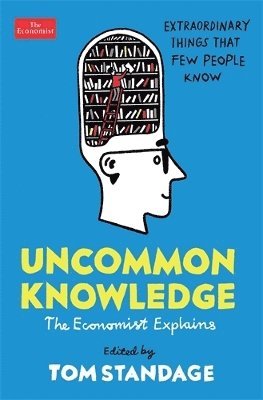
The world can be an amazing place if you know the right questions to ask:How did carrots become orange? What's stopping us from having a four-day week? How can we remove all the broken bits of satellite from orbit? If everything is so terrible, why is the global suicide rate falling?The keen minds of the Economist love to look beyond everyday appearances to find out what really makes things tick. In this latest collection of The Economist Explains, they have gathered together the juiciest fruits of their never-ending quest for answers. For an uncommonly interesting read, take a peek at some Uncommon Knowledge - and pass it on! The world only gets more amazing when discoveries are shared.
Häftad, Engelska, 2020
110 kr
Skickas inom 5-8 vardagar
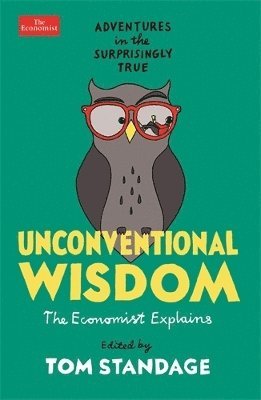
The world can be an amazing place if you know the right questions to ask:How much does a ghost reduce a house's value? How are winemakers responding to climate change? How much should you tip your Uber driver? Should your dog fear Easter more than fireworks?The keen minds of The Economist love to look beyond everyday appearances to find out what really makes things tick. In this latest collection of The Economist Explains, they have gathered the weirdest and most counter-intuitive answers they've found in their endless quest to explain our bizarre world. Take a peek at some Unconventional Wisdom - and pass it on! The world only gets more amazing when discoveries are shared.
Häftad, Engelska, 2021
107 kr
Skickas
Our extraordinary world makes more (and sometimes less) sense when you wonder:What's driving the international turkey-meat boom?How does a cannonball determine a maritime boundary?Where can you wed your mobile phone?Why do septuagenarians have a better chance of summiting Mount Everest than ever?The ever-keen minds of The Economist Explains solve all these riddles and more in their latest encyclopaedic excursion around the globe. Baffle your friends and colleagues with unconventional headscratchers that shed surprising light on science, culture, world affairs and more. From the underground trade in hair to Hollywood's role in the creation of the snow globe, Truly Peculiar takes a walk on the weird side.
Häftad, Engelska, 2022
125 kr
Skickas
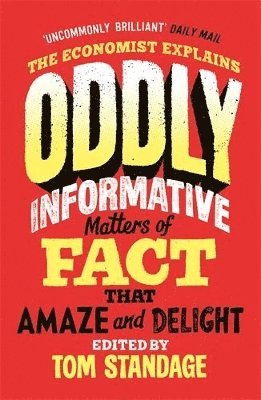
The more we ponder, the odder the world can seem.How do footballers get their shirt numbers? Why does having daughters make couples more likely to divorce? How do you move a horse from one country to another? What counts as a journey into space? The keen minds at The Economist contemplate all these questions and more in their quest for the globe's most extraordinary quandaries and conundrums, with bizarre facts and headscratchers that show the world is even stranger than we might have thought. From plant-based milk and supermoons to the next Dalai Lama and what really happened at the storming of the Bastille, this collection of the oddest and most mindboggling explanations will amaze and delight in equal measure.
E-bok
Engelska, 2022111 kr
Läs direkt efter köp
The more we ponder, the odder the world can seem. How do footballers get their shirt numbers? Why does having daughters make couples more likely to divorce? How do you move a horse from one country to another? What counts as a journey into space? The keen minds at The Economist contemplate all these questions and more in their quest for the globe''s most extraordinary quandaries and conundrums, with bizarre facts and headscratchers that show the world is even stranger than we might have thought. From plant-based milk and supermoons to the next Dalai Lama and what really happened at the storming of the Bastille, this collection of the oddest and most mindboggling explanations will amaze and delight in equal measure.
Häftad, Engelska, 2007
117 kr
Tillfälligt slut
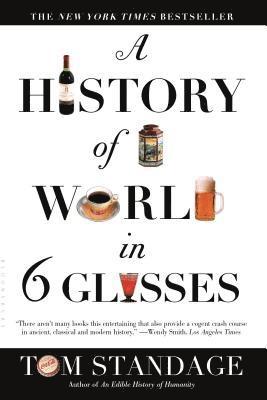
New York Times BestsellerFrom beer to Coca-Cola, the six drinks that have helped shape human history.Throughout human history, certain drinks have done much more than simply quench our thirst. As Tom Standage relates with easy authority and charm, six of them - beer, wine, spirits, coffee, tea and cola - have had a surprisingly pervasive influence on the course of history during pivotal epochs. From humankind's adoption of agriculture and the birth of cities to the advent of globalization, Standage reveals the intricate interplay of different civilizations by appreciating each drink as a kind of technology, a catalyst for advancing culture. After reading his clever and enlightened book, you may never look at your favourite drink in the same way again.
Häftad, Engelska, 2010
156 kr
Tillfälligt slut
Throughout history, food has done more than simply provide sustenance. It has acted as a tool of social transformation, political organization, geopolitical competition, industrial development, military conflict and economic expansion. In An Edible History of Humanity Tom Standage serves up a hugely satisfying account of ways in which food has, indirectly, helped to shape and transform societies around the world. It is a dazzling account of gastronomic revolutions from pre-history to the present.