Tomas Nonnenmacher – författare
Visar alla böcker från författaren Tomas Nonnenmacher. Handla med fri frakt och snabb leverans.
4 produkter
4 produkter
Inbunden, Engelska, 2018
1 197 kr
Skickas inom 7-10 vardagar
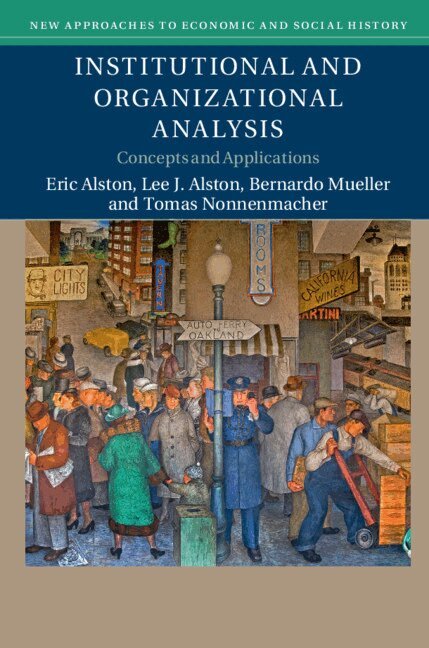
What explains the great variability in economic growth and political development across countries? Institutional and organizational analysis has developed since the 1970s into a powerful toolkit, which argues that institutions and norms rather than geography, culture, or technology are the primary causes of sustainable development. Institutions are rules that recognized authorities create and enforce. Norms are rules created by long-standing patterns of behavior, shared by people in a society or organization. They combine to play a role in all organizations, including governments, firms, churches, universities, gangs, and even families. This introduction to the concepts and applications of institutional and organizational analysis uses economic history, economics, law, and political science to inform its theoretical framework. Institutional and organizational analysis becomes the basis to show why the economic and political performance of countries worldwide have not converged, and reveals the lessons to be learned from it for business, law, and public policy.
Häftad, Engelska, 2018
420 kr
Skickas inom 7-10 vardagar
What explains the great variability in economic growth and political development across countries? Institutional and organizational analysis has developed since the 1970s into a powerful toolkit, which argues that institutions and norms rather than geography, culture, or technology are the primary causes of sustainable development. Institutions are rules that recognized authorities create and enforce. Norms are rules created by long-standing patterns of behavior, shared by people in a society or organization. They combine to play a role in all organizations, including governments, firms, churches, universities, gangs, and even families. This introduction to the concepts and applications of institutional and organizational analysis uses economic history, economics, law, and political science to inform its theoretical framework. Institutional and organizational analysis becomes the basis to show why the economic and political performance of countries worldwide have not converged, and reveals the lessons to be learned from it for business, law, and public policy.
E-bok
PDF, Engelska, 2018504 kr
Läs direkt efter köp
What explains the great variability in economic growth and political development across countries? Institutional and organizational analysis has developed since the 1970s into a powerful toolkit, which argues that institutions and norms rather than geography, culture, or technology are the primary causes of sustainable development. Institutions are rules that recognized authorities create and enforce. Norms are rules created by long-standing patterns of behavior, shared by people in a society or organization. They combine to play a role in all organizations, including governments, firms, churches, universities, gangs, and even families. This introduction to the concepts and applications of institutional and organizational analysis uses economic history, economics, law, and political science to inform its theoretical framework. Institutional and organizational analysis becomes the basis to show why the economic and political performance of countries worldwide have not converged, and reveals the lessons to be learned from it for business, law, and public policy.
E-bok
Engelska, 2018504 kr
Läs direkt efter köp
What explains the great variability in economic growth and political development across countries? Institutional and organizational analysis has developed since the 1970s into a powerful toolkit, which argues that institutions and norms rather than geography, culture, or technology are the primary causes of sustainable development. Institutions are rules that recognized authorities create and enforce. Norms are rules created by long-standing patterns of behavior, shared by people in a society or organization. They combine to play a role in all organizations, including governments, firms, churches, universities, gangs, and even families. This introduction to the concepts and applications of institutional and organizational analysis uses economic history, economics, law, and political science to inform its theoretical framework. Institutional and organizational analysis becomes the basis to show why the economic and political performance of countries worldwide have not converged, and reveals the lessons to be learned from it for business, law, and public policy.