Tomasz Kargol – författare
Visar alla böcker från författaren Tomasz Kargol. Handla med fri frakt och snabb leverans.
2 produkter
2 produkter
2 113 kr
Skickas inom 10-15 vardagar
Providing an in-depth exploration into the rivers of Habsburg Galicia (part of Austrian Poland) in the 19th century, this volume combines analysis of historical hydrographic data with modern GIS and remote sensing tools.Considering geographical and historical factors, this book draws on both natural processes and human activities to analyse how river valleys function and highlight contemporary challenges relating to water resource management in the context of climate change. This collection is divided into four sections: Rivers, Flow, Control and Economy. The first section consists of studies on rivers in Galicia from geographical, borderland, legislative and literary perspectives. The second section deals with the floods that regularly affected Galicia in the 19th and 20th centuries, causing significant economic and social damage, providing pertinent parallels with current issues in the context of climate change. The third section analyses the actions of the state and autonomous authorities, aimed at controlling rivers through regulation, the construction of flood embankments and the drainage of wetlands. The final section includes studies on the role of rivers in the economic life.This is a detailed and fascinating examination for scholars and students interested in Eastern European environmental history, hydrology, environmental management and water resource governance, and environmental economics.
455 kr
Skickas inom 7-10 vardagar
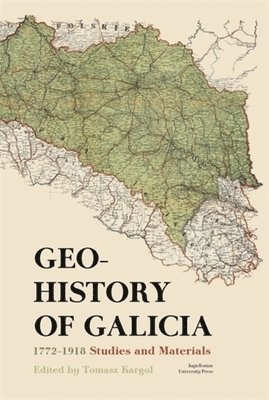
In Polish historiography, geohistory is not part of the research mainstream. This discipline is still on the periphery of interest for Polish historians, although there are signs of change. These include a peer-reviewed volume of studies edited by Tomasz Kargol. It is the result of the work of the ‘Seminar on the Geohistory of Galicia (1772–1918)’ Research Platform, an international and interdisciplinary research team established in at the Institute of History of the Jagiellonian University in cooperation with the Institute of Geography and Spatial Management of the Jagiellonian University and the Central State Historical Archive of Ukraine in Lviv. The team brought together not only seasoned researchers of many nationalities, but also representatives of various academic disciplines, to highlight the participation of representatives of the geographical sciences. In view of the research profile outlined, it could not be otherwise.Edited by T. Kargol, this collection of studies is an important and necessary publication. It fills an important gap in Polish historiography. The volume under review points to a multi-layered view of historical processes, which is its great strength. This is, after all, what geohistory proposes. The importance of geography has so far been emphasised extremely strongly in military history, the history of trade, and in works on geographical discoveries. This publication points to hitherto unexplored deposits of sources and opportunities that allow for new research on the grounds of Galicia.The work, therefore, not only presents examples of research areas where the methods used by geohistory can be used effectively, but will certainly inspire historians to engage in research in this subfield of historiography. Also as regards the other areas of the so-called Polish lands in the 19th century. Geographical space is, after all, fundamental to the existence of societies and individuals, and these are at the heart of research by historians.