Tomoko Shiroyama – författare
Visar alla böcker från författaren Tomoko Shiroyama. Handla med fri frakt och snabb leverans.
5 produkter
5 produkter
Del 294 - Harvard East Asian Monographs
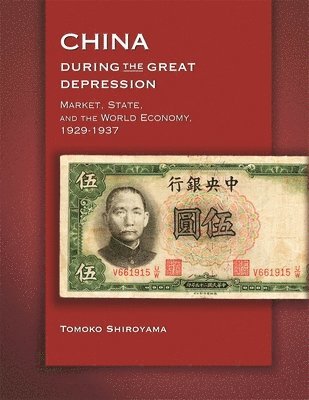
China during the Great Depression
Market, State, and the World Economy, 1929–1937
Häftad, Engelska, 2009
274 kr
Skickas inom 10-15 vardagar
The Great Depression was a global phenomenon: every economy linked to international financial and commodity markets suffered. The aim of this book is not merely to show that China could not escape the consequences of drastic declines in financial flows and trade but also to offer a new perspective for understanding modern Chinese history. The Great Depression was a watershed in modern China. China was the only country on the silver standard in an international monetary system dominated by the gold standard. Fluctuations in international silver prices undermined China’s monetary system and destabilized its economy. In response to severe deflation, the state shifted its position toward the market from laissez faire to committed intervention. Establishing a new monetary system, with a different foreign-exchange standard, required deliberate government management; ultimately the process of economic recovery and monetary change politicized the entire Chinese economy. By analyzing the impact of the slump and the process of recovery, this book examines the transformation of state-market relations in light of the linkages between the Chinese and the world economy.
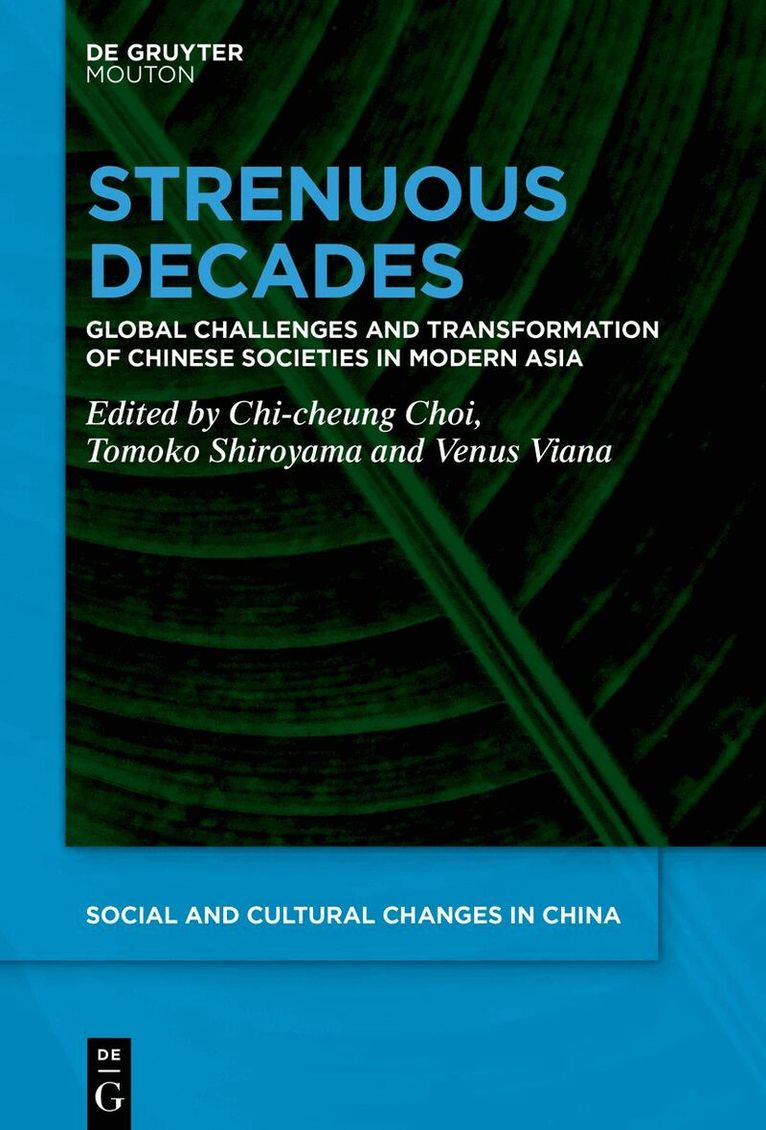
Strenuous Decades
Global Challenges and Transformation of Chinese Societies in Modern Asia
Inbunden, Engelska, 2022
1 993 kr
Skickas inom 5-8 vardagar
The movement of goods and passengers between port cities not only stimulates growth in coastal trading networks and centers but also inevitably changes the social and economic lives of people in these port cities and, subsequently, of their fellow compatriots farther inland. Studies of port cities have focused on the interactive political and economic relationship between trading centers. The center of attention in this book is socioeconomic life and cultural identity, which are shaped by the movement of goods, people, knowledge, and information, particularly when the community faces a crisis. Transnational studies focus on cross-border connections between people, institutions, commodities, and ideas, with an emphasis on their global presence. This book looks at the responses of different localities to the same global crisis. It gathers a selection of the fifty papers presented at the conference on "Coping with Transnational Crisis: Chinese Economic and Social Lives in East Asian Port Cities, 1850-1950," held in Hong Kong on June 7-11, 2016. The period from the 1850s to the outbreak of war in the Pacific in the late 1930s encompasses two major transnational crises with significant impacts on the Chinese population in Southeast Asian port cities in terms of their way of living and the construction of their identity: the emergence of bubonic plague in the 1880s and 1920s and the global economic crisis in the late 1920s and early 1930s. The authors discuss the social and economic lives in various South East Asian port cities where many residents had to cope with these transnational crises. They do so through examining institutional measurements, rituals and festivals, communication, knowledge and information exchange as well as identity (re)construction. In addition, they explore how local communities responded to knowledge and information between the port cities and cities as well as inland locations. The chapters in this book offer solid grounds for future comparisons, not only based on a specific time or event but also on how society reacted over time, space, and various types of crises.
Del 8 - Brill's Series on Modern East Asia in a Global Historical Perspective
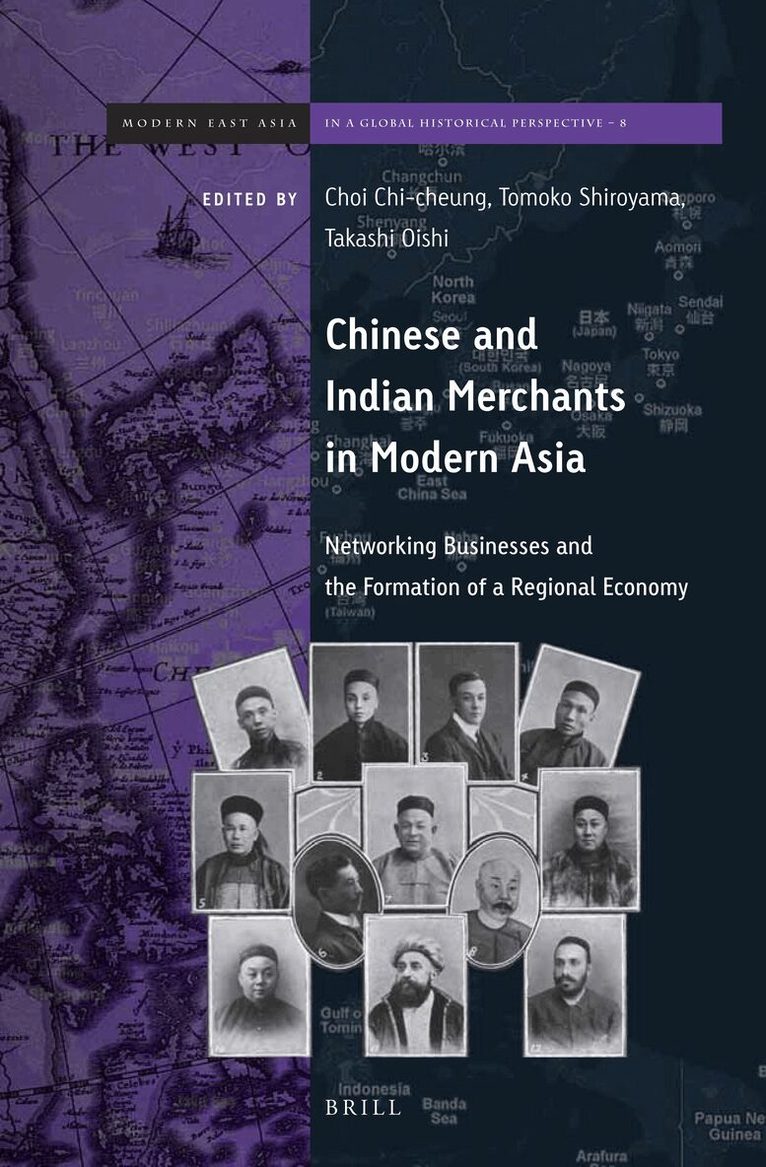
Chinese and Indian Merchants in Modern Asia
Networking Businesses and Formation of Regional Economy
Inbunden, Engelska, 2019
3 157 kr
Skickas inom 5-8 vardagar
In Chinese and Indian Merchants in Modern Asia, the contributors put together an important and lucid study of overseas Chinese and Indian merchants and their impacts on the emerging global economy from the nineteenth to twentieth centuries. In contrast to the conventional focus on the merchants’ networks per se, the chapters of this volume uncover their “networking,” the process in which they constructed and utilized linkages based on the shared concepts such as caste, kin alliances, and religion. By analyzing the interactions between the merchants and the European and Japanese empires, along with Asian states, this volume provides the critical insights into the configuration of the regional economic order in the past and at present.
1 094 kr
Skickas inom 10-15 vardagar
This volume undertakes the important task of envisioning a regional history of Asia based on its unique internal characteristics, going beyond the usual West/non-West dichotomy. The “regional trade zone of modern Asia” was debated in the 1980s. Since then, Japanese historians of the socioeconomic history of Asia have explored how the traditional trade relations that had developed over the centuries in Asia responded to the so-called Western impacts in the mid-nineteenth century, including the opening of ports and tariff reduction under free trade regimes and the advance in transportation technology. Against this academic background, the four chapters in this volume examine how overseas Chinese, some of the key actors in regional and local trade, dealt with their Western counterparts, and how Asian commodities penetrated other parts of the world through the newly created web of global commerce. The book reviews discuss theoretical issues to explore various connections among and comparisons of the economies in the region. This volume provides readers with critical insights into the Asian region in the past and present by investigating the long-term trajectory of its linkages to the global economy.
1 094 kr
Skickas inom 10-15 vardagar
This volume undertakes the important task of envisioning a regional history of Asia based on its unique internal characteristics, going beyond the usual West/non-West dichotomy. The “regional trade zone of modern Asia” was debated in the 1980s. Since then, Japanese historians of the socioeconomic history of Asia have explored how the traditional trade relations that had developed over the centuries in Asia responded to the so-called Western impacts in the mid-nineteenth century, including the opening of ports and tariff reduction under free trade regimes and the advance in transportation technology. Against this academic background, the four chapters in this volume examine how overseas Chinese, some of the key actors in regional and local trade, dealt with their Western counterparts, and how Asian commodities penetrated other parts of the world through the newly created web of global commerce. The book reviews discuss theoretical issues to explore various connections among and comparisons of the economies in the region. This volume provides readers with critical insights into the Asian region in the past and present by investigating the long-term trajectory of its linkages to the global economy.