Tony Burns – författare
Visar alla böcker från författaren Tony Burns. Handla med fri frakt och snabb leverans.
16 produkter
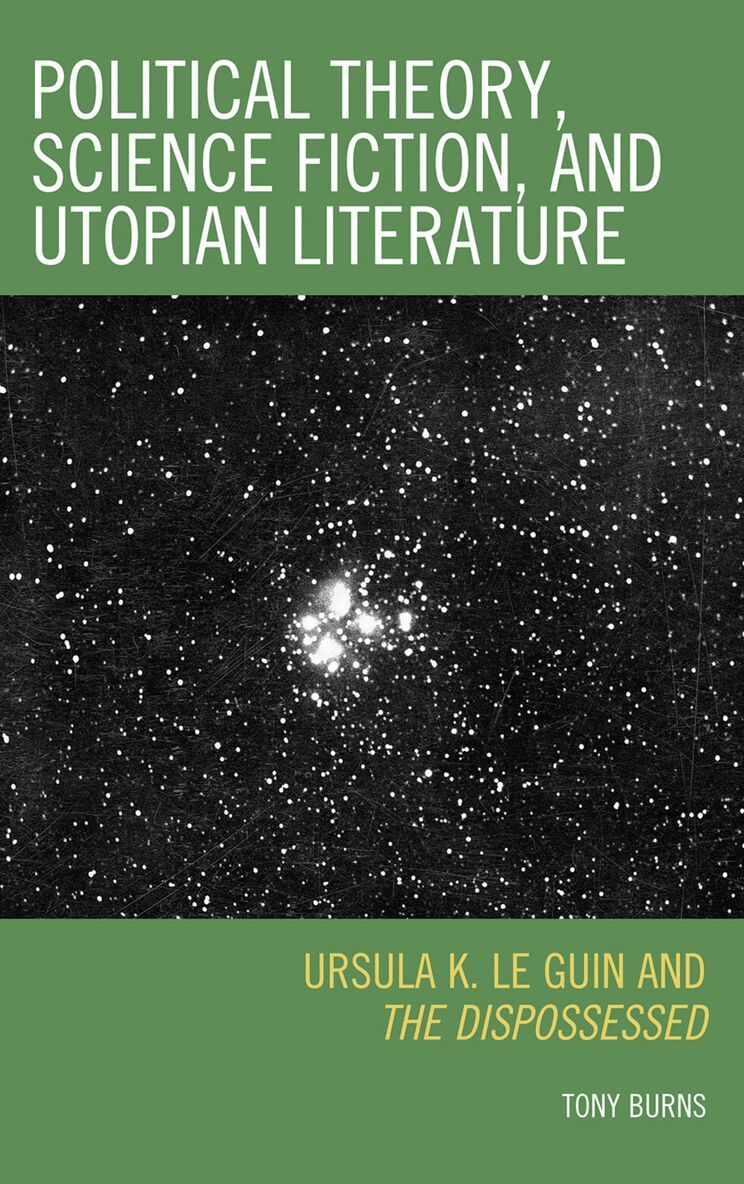
Political Theory, Science Fiction, and Utopian Literature
Ursula K. Le Guin and The Dispossessed
Av Tony Burns
Häftad, 2010
822 kr
Lägg i varukorg
Ursula K. Le Guin's The Dispossessed is of interest to political theorists partly because of its association with anarchism and partly because it is thought to represent a turning point in the history of utopian/dystopian political thought and literature and of science fiction. Published in 1974, …
Dermatology
Av Tony Burns, Robin Graham-Brown
E-bok, 2011
468 kr
Lägg i varukorg
Lecture Notes: Dermatology provides all the necessary information, within one short volume, to achieve a thorough understanding of skin structure and function, and the practical aspects of disease management. Presented in a user-friendly format, combining readability with high quality …
Dermatology
Av Tony Burns, Robin Graham-Brown
E-bok, 2011
468 kr
Lägg i varukorg
Lecture Notes: Dermatology provides all the necessary information, within one short volume, to achieve a thorough understanding of skin structure and function, and the practical aspects of disease management. Presented in a user-friendly format, combining readability with high quality …
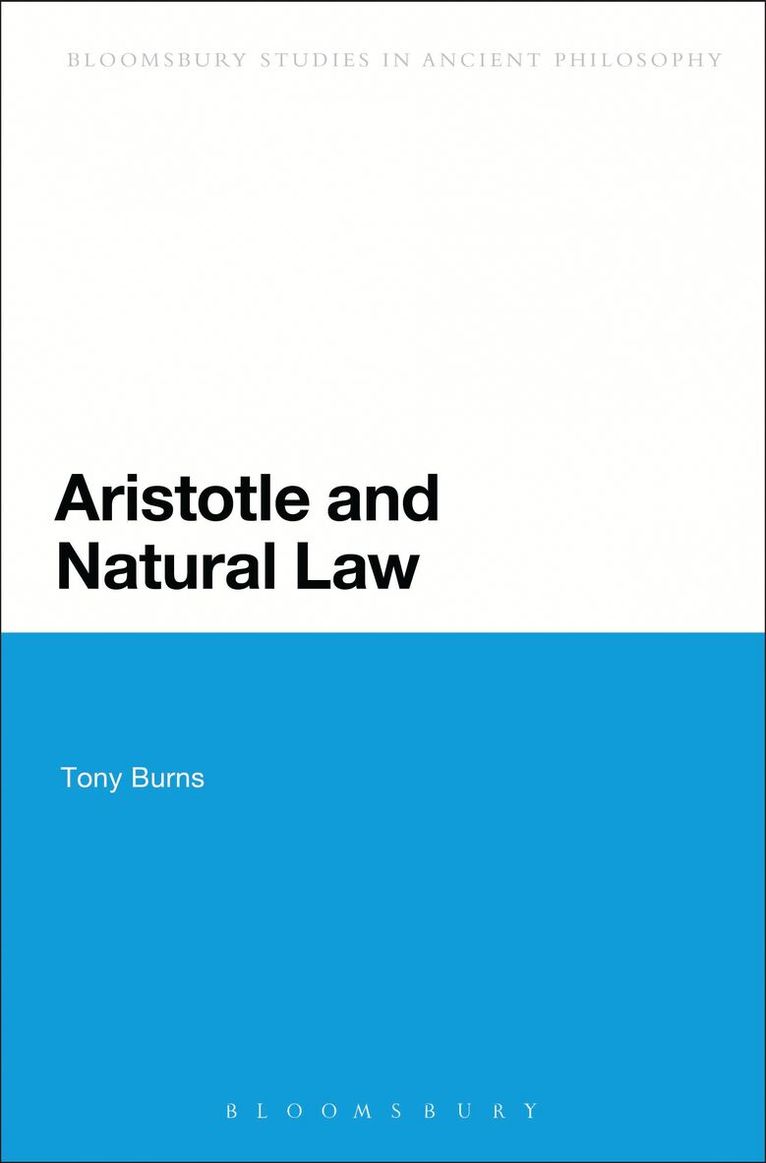
Aristotle and Natural Law
Av Tony Burns
E-bok, 2011
608 kr
Lägg i varukorg
Aristotle and Natural Law lays out a new theoretical approach which distinguishes between the notions of 'interpretation,' 'appropriation,' 'negotiation' and 'reconstruction' of the meaning of texts and their component concepts. These categories are then deployed in an examination of the role which …
Aristotle and Natural Law
Av Tony Burns
E-bok, 2011
608 kr
Lägg i varukorg
Aristotle and Natural Law lays out a new theoretical approach which distinguishes between the notions of ''interpretation,'' ''appropriation,'' ''negotiation'' and ''reconstruction'' of the meaning of texts and their component concepts. These categories are then deployed in an examination of the …
Aristotle and Natural Law
Av Tony Burns
Häftad, 2013
559 kr
Lägg i varukorg
Aristotle and Natural Law lays out a new theoretical approach which distinguishes between the notions of 'interpretation,' 'appropriation,' 'negotiation' and 'reconstruction' of the meaning of texts and their component concepts. These categories are then deployed in an examination of the role which …
Firethorn Garden
Av Tony Burns
E-bok, 2012
33 kr
Lägg i varukorg
How can Luster Dean, who is considered too rough and old-school to keep his football players from quitting, supposed to start up a girls basketball program?He's not?But, thanks to his wife, Rose, he will.The Deans put their careers on the line as they butt heads with an upstart superintendent, …
White Flight
Av Tony Burns
E-bok, 2012
33 kr
Lägg i varukorg
A young coach wakes up in the hospital with a nasty bump on his head. He has no idea how he got there but one thing is obvious, the list of potential suspects includes nearly everyone in this small, racially-charged town.Moses Preston finds himself caught in the middle in a town divided by race. …
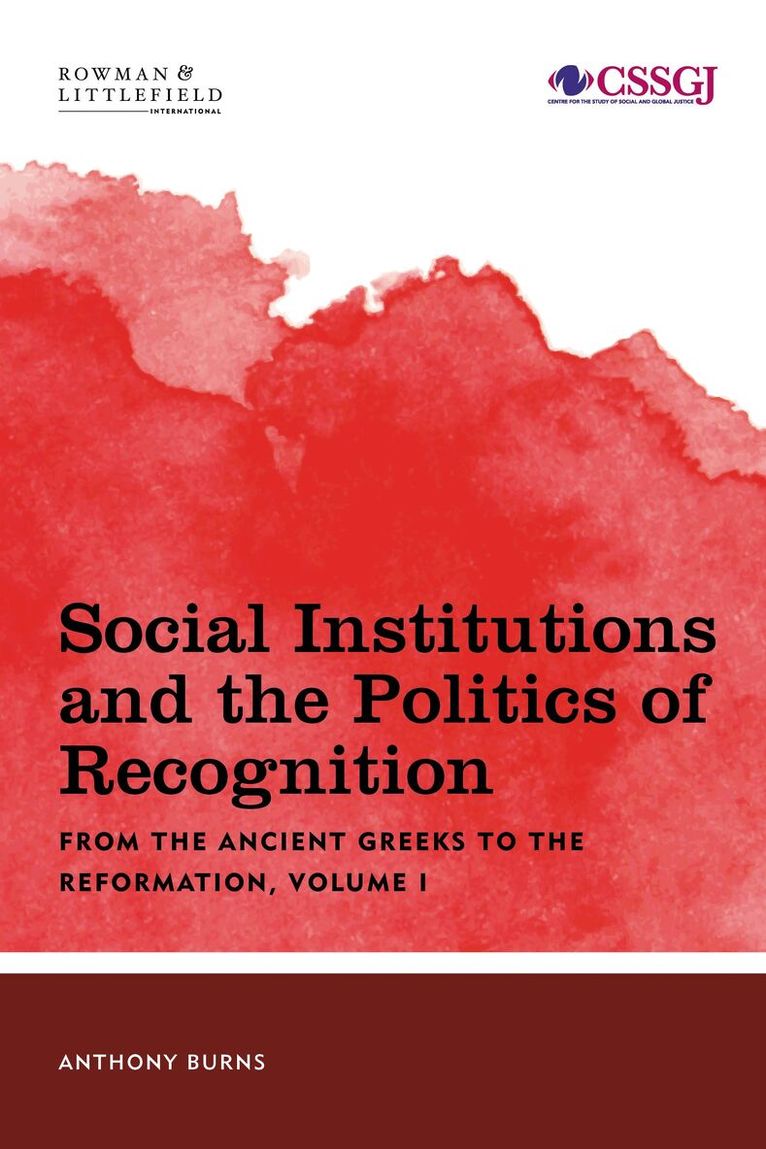
Social Institutions and the Politics of Recognition
From the Ancient Greeks to the Reformation
Av Tony Burns
Inbunden, 2020
1565 kr
Lägg i varukorg
The first of three volumes, this definitive study explores the politics of social institutions, from the time of the ancient Greeks to the Reformation in the sixteenth century. Tony Burns focuses on those civil-society institutions occupying the intermediate social space which exists between the …
Social Institutions and the Politics of Recognition
From the Ancient Greeks to the Reformation
Av Tony Burns
Häftad, 2020
545 kr
Lägg i varukorg
The first of three volumes, this definitive study explores the politics of social institutions, from the time of the ancient Greeks to the Reformation in the sixteenth century. Tony Burns focuses on those civil-society institutions occupying the intermediate social space which exists between the …
Social Institutions and the Politics of Recognition: From the Reformation to the French Revolution
Volume II
Av Tony Burns
Inbunden, 2020
1565 kr
Lägg i varukorg
This second volume continues the story told in the first by focusing on the writings of a selection of seminal thinkers in the seventeenth and eighteenth centuries, in England, the German speaking world and in France, ending with the debate around the French Revolution of 1789. Tony Burns discusses …
Social Institutions and the Politics of Recognition: From the Reformation to the French Revolution
Volume II
Av Tony Burns
Häftad, 2020
545 kr
Lägg i varukorg
This second volume continues the story told in the first by focusing on the writings of a selection of seminal thinkers in the seventeenth and eighteenth centuries, in England, the German speaking world and in France, ending with the debate around the French Revolution of 1789. Tony Burns discusses …
Aristotle and Natural Law
Av Tony Burns
Inbunden, 2011
2132 kr
Lägg i varukorg
A new approach to understanding the relationship between Aristotle's political philosophy and the natural law tradition. "Aristotle and Natural Law" offers an important new examination of Aristotle's political thought and its relationship to the natural law tradition. The book challenges recent …