Tony J. Pitcher - Böcker
Visar alla böcker från författaren Tony J. Pitcher. Handla med fri frakt och snabb leverans.
6 produkter
6 produkter
2 101 kr
Skickas inom 10-15 vardagar
In the past, the majority of work in animal behaviour has concentrated on birds and mammals. However, a growing body of information is now available concerning fish. In 1986 the first edition of this book was published and an ever growing demand, together with the availability of much new information, has prompted the production of this revised, rewritten and updated second edition. As well as there being an increasing interest in fish biology and fisheries for commercial reasons, fish behaviour is providing interesting data for workers in animal behaviour generally. Although constrained by the same general evolutionary and ecological rules as birds and mammals, the details of teleost behaviour intimately reflect unique and efficient adaptations to their three-dimensional aquatic environment. "Behaviour of Teleost Fishes" reviews major topics in the subject, ranging from genetic and motivational inputs to behaviour, through the main sensory modalities, to behavioural ecology and case studies. The book also includes important information relating the behaviour of fish to their commercial exploitation.The book is aimed at those with an interest in animal behaviour, as well as workers in fish biology and fisheries.
1 064 kr
Skickas inom 10-15 vardagar
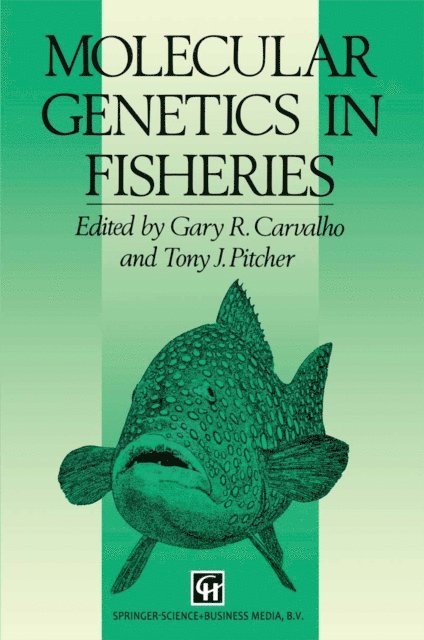
The basic principle of all molecular genetic methods is to employ inherited, discrete and stable markers to identify genotypes that characterize individuals, populations or species. Such genetic data can provide information ori the levels and distribution of genetic variability in relation to mating patterns, life history, population size, migration and environment. Although molecular tools have long been employed to address various questions in fisheries biology and management, their contributions to the field are sometimes unclear, and often controversial. Much of the initial impetus for the deployment of molecular markers arose from the desire to assess fish stock structure based on various interpretations of the stock concept. Although such studies have met with varying success, they continue to provide an impetus for the development of increasingly sensitive population discriminators, yielding information that can be valuable for both sustainable exploitation and the conservation of fish populations. In the last major synthesis of the subject, Ryman and Utter (1987) summarized progress and applications, though this was prior to the wide-scale adoption of DNA methodology. New sources of genetic markers and protocols are now available, in particular those that exploit the widely distributed and highly variable repeat sequences of DNA, and the amplification technique of the polymerase chain reaction.
Del 8 - Fish and Aquatic Resources
Recreational Fisheries
Ecological, Economic and Social Evaluation
Inbunden, Engelska, 2002
2 863 kr
Skickas inom 7-10 vardagar
Recreational or sport fishing is important for three major reasons: economic (it is a multi-billion dollar world industry); social (it is embedded in the cultures of many nations; ecological (it affects the environment and food webs in many ways). Recreational Fisheries covers a range of methods, case studies and perspectives on the multidisciplinary evaluation of the benefits and costs of sports fisheries. Tony Pitcher and Charles Hollingworth, the editors of this landmark publication, have drawn together chapters from more than 30 contributors from North America, Europe, Australia and South Africa, providing a truly international perspective on a global industry. Contents include detailed assessments, evaluations and survey mthods of sport fisheries in many countries. This book is an essential reference for anyone active in the management, assessment, policy making or development of sport and recreational fisheries worldwide. All fisheries scientists and managers will require a copy of this important publication. Environmental and aquatic scientists, ecologists and oceanographers will also find this book of great value in their work. Libraries in research establishments, laboratories and universities where fisheries and biological sciences are studied and taught should have multiple copies of this book. Covers a worldwide industry of great commercial importance. Internationally known editors and contributors from four continents. Uses case studies from around the globe to illustrate the subject. A core subject essential to fisheries scientists.
1 856 kr
Kommande
This important book examines seafood ethics, policy, and governance, with an integrated analysis of capture fisheries and aquaculture production methods, typically treated separately in previous works.Following an introductory chapter, innovative conceptual and methodological frameworks are presented by the book’s expert author team, together with a set of ethical and sustainability indicators for the evaluation of the impacts of seafood production, trade and consumption on global society and ecosystems. The book also contains international case studies and concludes with a discussion of the implications of the research findings on global food security and sustainability.Seafood Ethics, written by some of the world’s leaders in the subject, is a thorough review of the current situation, providing vitally-important information for all those involved in fisheries, aquaculture production and trade, those involved in governance and policy decisions and involved in the ethical issues surrounding these subjects. All libraries in universities and research establishments where fisheries, aquaculture, ethics environmental sciences, and economics are studied and taught should have copies of this very valuable publication.
Del 7 - Fish and Aquatic Resources
Seamounts
Ecology, Fisheries and Conservation
Inbunden, Engelska, 2007
940 kr
Skickas inom 7-10 vardagar
Seamounts are ubiquitous undersea mountains rising from the ocean seafloor that do not reach the surface. There are likely many hundreds of thousands of seamounts, they are usually formed from volcanoes in the deep sea and are defined by oceanographers as independent features that rise to at least 0.5 km above the seafloor, although smaller features may have the same origin.This book follows a logical progression from geological and physical processes, ecology, biology and biogeography, to exploitation, management and conservation concerns. In 21 Chapters written by 57 of the world’s leading seamount experts, the book reviews all aspects of their geology, ecology, biology, exploitation, conservation and management. In Section I of this book, several detection and estimation techniques for tallying seamounts are reviewed, along with a history of seamount research.This book represents a unique and fresh synthesis of knowledge of seamounts and their biota and is an essential reference work on the topic. It is an essential purchase for all fisheries scientists and managers, fish biologists, marine biologists and ecologists, environmental scientists, conservation biologists and oceanographers. It will also be of interest to members of fish and wildlife agencies and government departments covering conservation and management.Supplementary material is available at: www.seamountsbook.info
536 kr
Skickas inom 10-15 vardagar
This book is about the behaviour of teleosts, a well-defined, highly successful, taxonomic group of vertebrate animals sharing a common body plan and forming the vast majority of living bony fishes. There are weH over 22000 living species of teleosts, including nearly all those of importance in com mercial fisheries and aquaculture. Teleosts are represented injust about every conceivable aquatic environment from temporary desert pools to the deep ocean, from soda lakes to sub-zero Antarctic waters. Behaviour is the primary interface between these effective survival machines and their environment: behavioural plasticity is one of the keys to their success. The study of animal behaviour has undergone revolutionary changes in the past decade under the dual impact of behavioural ecology and sociobiology. The modern body of theory provides quantitatively testable and experi mentaHy accessible hypotheses. Much current work in animal behaviour has concentrated on birds and mammals, animals with ostensibly more complex structure, physiology and behavioural capacity, but there is a growing body of information about the behaviour of fishes. There is now increasing awareness that the same ecological and evolutionary rules govern teleost fish, and that their behaviour is not just a simplified version of that seen in birds and mammals. The details of fish behaviour intimately reflect unique and efficient adaptations to their three-dimensional aquatic environment.