Tony Trigilio – författare
Visar alla böcker från författaren . Handla med fri frakt och snabb leverans.
2 produkter
2 produkter
Häftad, Engelska, 2008
579 kr
Skickas inom 5-8 vardagar
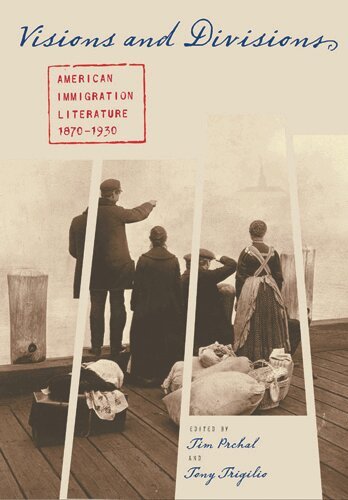
For many years, America cherished its image as a Golden Door for the world’s oppressed. But during the Progressive Era, mounting racial hostility along with new national legislation that imposed strict restrictions on immigration began to show the nation in a different light. The literature of this period reflects the controversy and uncertainty that abounded regarding the meaning of “American.” Literary output participated in debates about restriction, assimilation, and whether the idea of the “Melting Pot” was worth preserving. Writers advocated-and also challenged-what emerged as a radical new way of understanding the nation’s ethnic and racial identity: cultural pluralism. From these debates came such novels as Willa Cather’s My Ántonia and Upton Sinclair’s The Jungle. Henry James, Charlotte Perkins Gilman, and Carl Sandburg added to the diversity of viewpoints of native born Americans while equally divergent immigrant perspectives were represented by writers such as Anzia Yezierska, Kahlil Gibran, and Claude McKay. This anthology presents the writing of these authors, among others less well known, to show the many ways literature participated in shaping the face of immigration. The volume also includes an introduction, annotations, a timeline, and historical documents that contextualize the literature.
Inbunden, Engelska, 2023
2 020 kr
Skickas inom 5-8 vardagar
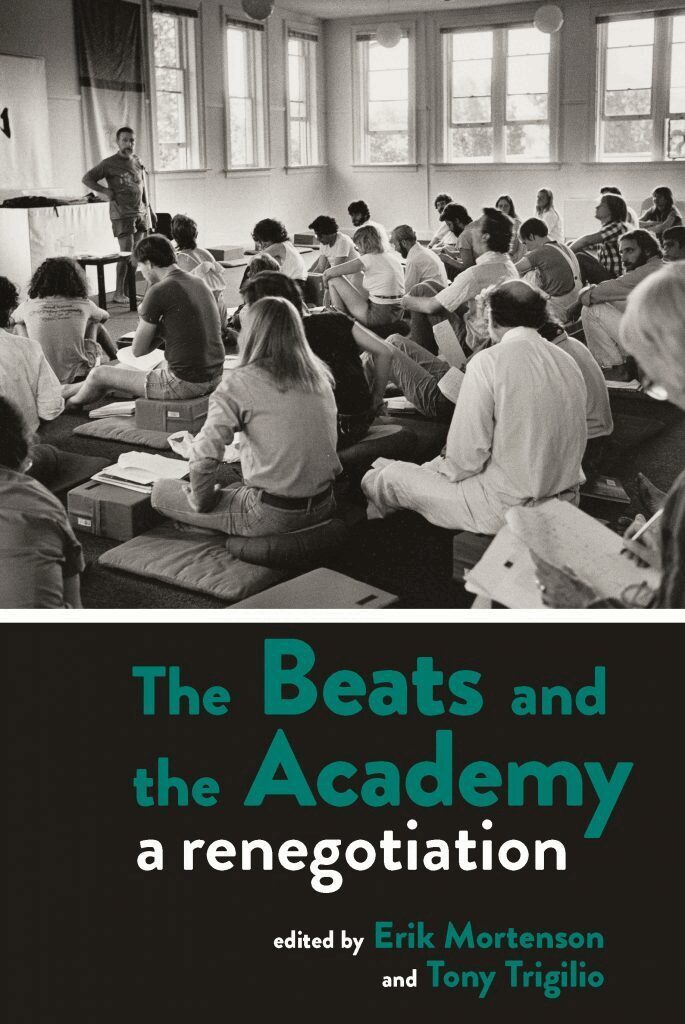
The Beats and the Academy marks the first sustained effort to train a scholarly eye on the dynamics of the relationship between Beat writers and the academic institutions in which they taught. Rather than assuming the relationship between Beat writers and institutions of higher education was only a hostile one, The Beats and the Academy begins with the premise that influence between the two flows in both directions. Beat writers' suspicion of established institutions was a significant aspect of their postwar countercultural allure. Their anti-establishment aesthetic and countercultural stance led Beat writers to be critical of postwar academic institutions that tended to dismiss them as a passing social phenomenon. Even today, Beat writing still meets resistance in an academy that questions the relevance of their writing and ideas. But this picture, like any generalization, is far too easy. The Beat relationship to the academy is one of negotiation, rather than negation. Many Beats strove for academic recognition, and quite a few received it. And despite hostility to their work both in the postwar era and today, Beat works have made it into syllabi, conference resentations, journal articles, and monographs. The Beats and the Academy deepens our understanding of this relationship by emphasizing how institutional friction between the Beats and institutions of higher education has shaped our understanding of Beat Generation literature and culture—and what this relationship between Beat writers and the academy might suggest about their legacy for future scholars.