Topping Peter Topping – författare
Visar alla böcker från författaren . Handla med fri frakt och snabb leverans.
7 produkter
7 produkter
E-bok
PDF, Engelska, 2002328 kr
Läs direkt efter köp
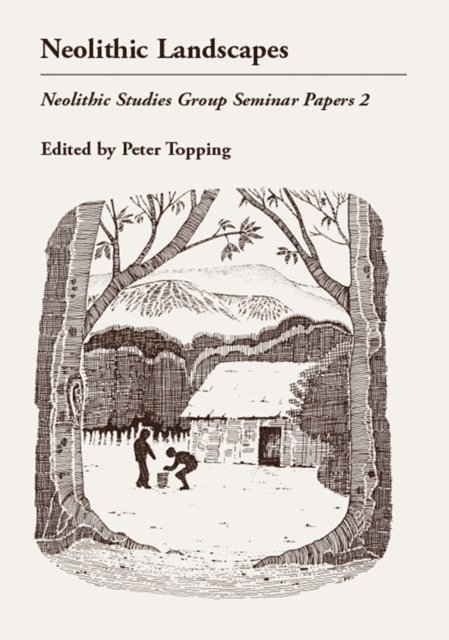
Reprint of another classic Neolithic Studies Group volume. ''It is a sign of the intellectual health of a specialist study group that its deliberations can generate collections of papers of general interest. The topical issue of landscape is addressed, although with the added complication of attempting to focus on the domestic as opposed to ceremonial aspects of Neolithic life''.
E-bok
PDF, Engelska, 2002313 kr
Läs direkt efter köp
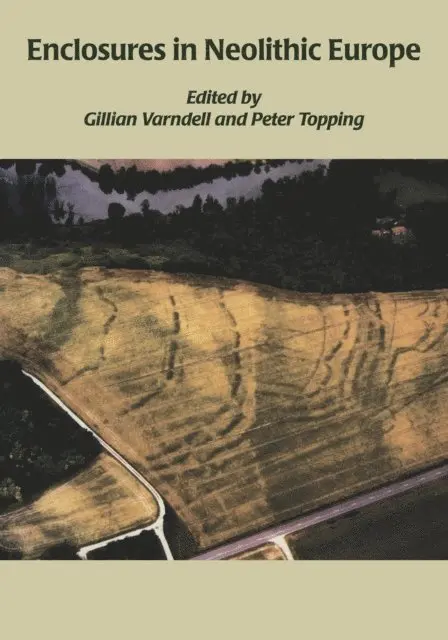
These papers come from a conference on Neolithic Causewayed Enclosures in Europe held in London in 1999. They present a series of snapshots of some of the sites and regions at the forefront of current research on causewayed enclosures in Europe, and as such are a complement to the Royal Commission on the Historical Monuments of England (RCHME) project which has systematically recorded all known Neolithic enclosures in England by both analytical topographic survey techniques and aerial transcription. The detailed regional data collected by the RCHME project has allowed a radical reinterpretation of these sites and the recognition that there are regional groups of enclosures. This series of papers serves to broaden the discussion about the structure and form of causewayed monuments beyond lowland England, looking at a wide geographical range of sites across central Europe, as well as considering some sites which do not conform to the traditional type but which have been proved by excavation to have a Neolithic context. This collection of papers provides a long-awaited and important addition to the debate on these enigmatic prehistoric sites.
E-bok
Engelska, 2019352 kr
Läs direkt efter köp
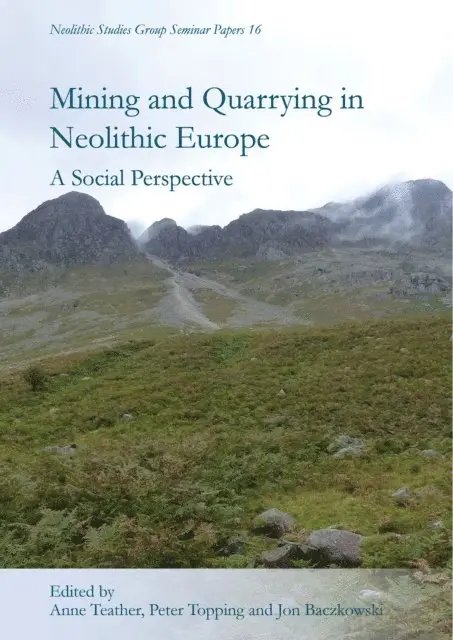
The social processes involved in acquiring flint and stone in the Neolithic began to be considered over thirty years ago, promoting a more dynamic view of past extraction processes. Whether by quarrying, mining or surface retrieval, the geographic source locations of raw materials and their resultant archaeological sites have been approached from different methodological and theoretical perspectives. In recent years this has included the exploration of previously undiscovered sites, refined radiocarbon dating, comparative ethnographic analysis and novel analytical approaches to stone tool manufacture and provenancing. The aim of this volume in the Neolithic Studies Group Papers is to explore these new findings on extraction sites and their products. How did the acquisition of raw materials fit into other aspects of Neolithic life and social networks? How did these activities merge in creating material items that underpinned cosmology, status and identity? What are the geographic similarities, constraints and variables between the various raw materials, and how does the practise of stone extraction in the UK relate to wider extractive traditions in northwestern Europe? Eight papers address these questions and act as a useful overview of the current state of research on the topic.
E-bok
PDF, Engelska, 2019352 kr
Läs direkt efter köp
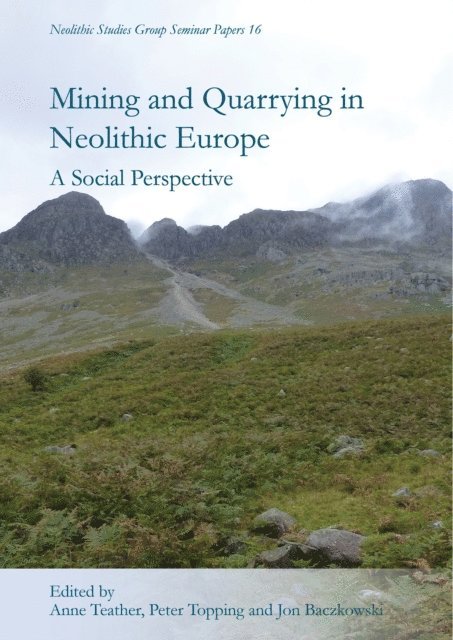
The social processes involved in acquiring flint and stone in the Neolithic began to be considered over thirty years ago, promoting a more dynamic view of past extraction processes. Whether by quarrying, mining or surface retrieval, the geographic source locations of raw materials and their resultant archaeological sites have been approached from different methodological and theoretical perspectives. In recent years this has included the exploration of previously undiscovered sites, refined radiocarbon dating, comparative ethnographic analysis and novel analytical approaches to stone tool manufacture and provenancing. The aim of this volume in the Neolithic Studies Group Papers is to explore these new findings on extraction sites and their products. How did the acquisition of raw materials fit into other aspects of Neolithic life and social networks? How did these activities merge in creating material items that underpinned cosmology, status and identity? What are the geographic similarities, constraints and variables between the various raw materials, and how does the practise of stone extraction in the UK relate to wider extractive traditions in northwestern Europe? Eight papers address these questions and act as a useful overview of the current state of research on the topic.
E-bok
Engelska, 2021320 kr
Läs direkt efter köp
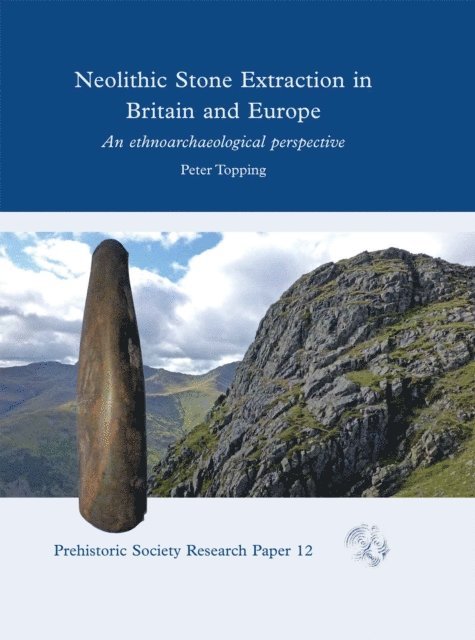
This book focuses on the introduction of Neolithic extraction practices across Europe through to the Atlantic periphery of Britain and Ireland. The key research questions are when and why were these practices adopted and what role did extraction sites play in Neolithic society.Neolithic mines and quarries have frequently been seen as fulfilling roles linked to the expansion of the Neolithic economy. However, this ignores the fact that many communities chose to selectively dig for certain types of stone in preference to others and why the products from these sites were generally deposited in special places such as wetlands. To address this question, 168 near-global ethnographic studies were analyzed to identify common trends in traditional extraction practices to produce robust statistics about their motivations and material signatures. Repeated associations emerged between storied locations, the organization of extraction practices, long-distance distribution of products, and the material evidence such activities left behind. This suggests that we can now probably identify mythologized/storied sites, seasonality, ritualized extraction, and the use-life of extraction site products.The ethnographic model was tested against data from 223 near-global archaeological extraction sites, which confirmed a similar patterning in both material records. It was used to analyze the social context of 79 Neolithic flint mine and 51 axe quarry excavations in Britain and Ireland and to review their European origins. The evidence that emerges confirms the pivotal role played by Neolithic extraction practices in European Neolithization and that the interaction of indigenous foragers with migrant miners/farmers was fundamental to the adoption of the new agropastoral lifestyle.
E-bok
PDF, Engelska, 2021320 kr
Läs direkt efter köp
This book focuses on the introduction of Neolithic extraction practices across Europe through to the Atlantic periphery of Britain and Ireland. The key research questions are when and why were these practices adopted and what role did extraction sites play in Neolithic society.Neolithic mines and quarries have frequently been seen as fulfilling roles linked to the expansion of the Neolithic economy. However, this ignores the fact that many communities chose to selectively dig for certain types of stone in preference to others and why the products from these sites were generally deposited in special places such as wetlands. To address this question, 168 near-global ethnographic studies were analyzed to identify common trends in traditional extraction practices to produce robust statistics about their motivations and material signatures. Repeated associations emerged between storied locations, the organization of extraction practices, long-distance distribution of products, and the material evidence such activities left behind. This suggests that we can now probably identify mythologized/storied sites, seasonality, ritualized extraction, and the use-life of extraction site products.The ethnographic model was tested against data from 223 near-global archaeological extraction sites, which confirmed a similar patterning in both material records. It was used to analyze the social context of 79 Neolithic flint mine and 51 axe quarry excavations in Britain and Ireland and to review their European origins. The evidence that emerges confirms the pivotal role played by Neolithic extraction practices in European Neolithization and that the interaction of indigenous foragers with migrant miners/farmers was fundamental to the adoption of the new agropastoral lifestyle.
E-bok
Engelska, 2023413 kr
Läs direkt efter köp
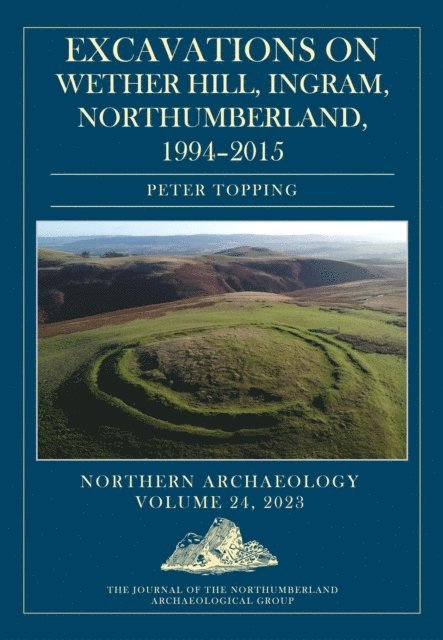
The Northumberland Archaeological Group’s (NAG) Wether Hill project spanned the years 1994–2015 and was located on the eponymous hilltop overlooking the mouth of the Breamish Valley in the Northumberland Cheviots. The project had been inspired by the RCHME’s ‘Southeast Cheviots Project’ that had discovered and recorded extensive prehistoric and later landscapes.The NAG project investigated several sites. Over the 11 seasons of excavation, NAG recorded evidence of residual Mesolithic activity (microliths), a burial cairn containing two Beakers in an oak coffin, which was superseded by a stone-built cist containing three Food Vessels, Iron Age cord rig cultivation and clearance cairns, a series of Middle/Late Iron Age timber-built palisaded enclosures, a cross-ridge dyke, which protected the southern approach to the Wether Hill fort, and sampled the multi-period bivallate hillfort.The hillfort sequence on Wether Hill began with a succession of palisaded enclosures, which were later replaced by bivallate earth and stone defenses; both phases appear to have been associated with timber-built houses. Eventually the fort was abandoned, and three stone-built roundhouses were constructed in the fort. The 18 radiocarbon dates obtained from various contexts in the hillfort makes this site one of the better dated forts in the Borders.The chronology of the Wether Hill fort spanned the Middle/Late Iron Age, which corresponded with dates from palisaded enclosures excavated elsewhere on the hilltop spur. Taken together, this evidence provides a snapshot of settlement hierarchies and agricultural practices during the later Iron Age in this part of the Northumberland Cheviots. The excavations also help contextualize some of the RCHME survey evidence, providing data to model chronology, potential prehistoric settlement density and land-use patterns at different time periods in the well-preserved archaeological landscapes of the Cheviots.