Tore Hagglund – författare
700 kr
Läs direkt efter köp
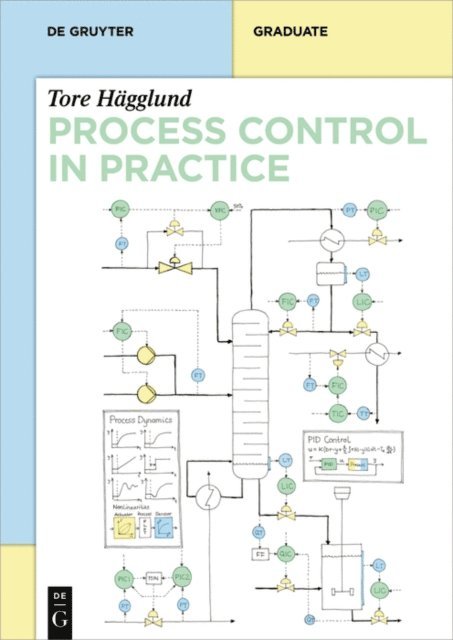
This book covers the most important topics that people working as process control engineers and plant operators will encounter. It focuses on PID control, explains when to use P-, PI-, PD- or PID control as well as PID tuning and includes difficult to control process nonlinearities such as valve stiction or sensor problems. The book also explains advanced control strategies that are necessary when single loop control gives insufficient results.
The key features of the text in front of you are:
This book is a result of teaching the material to industrial practitioners over three decades and four previous editions in Swedish, each of which was a refi nement of the previous one. A key contribution of this book is the careful selection of what is required when you are at a plant and have to make sense of what you see. The book is written in such a way that it does not assume mathematical knowledge above the compulsory school level. Process control sits between control engineering and process or chemical engineering and often there is a distinct gap between the two. By explaining both the fundamentals of control and the processes the book is written to appeal to control engineers and process engineers alike. The book includes exercises and solutions and thus lends itself for teaching in the classroom.622 kr
Läs direkt efter köp
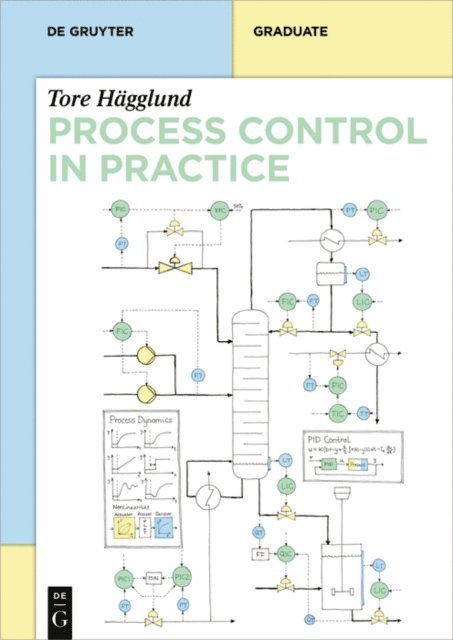
This book covers the most important topics that people working as process control engineers and plant operators will encounter. It focuses on PID control, explains when to use P-, PI-, PD- or PID control as well as PID tuning and includes difficult to control process nonlinearities such as valve stiction or sensor problems. The book also explains advanced control strategies that are necessary when single loop control gives insufficient results.
The key features of the text in front of you are:
This book is a result of teaching the material to industrial practitioners over three decades and four previous editions in Swedish, each of which was a refi nement of the previous one. A key contribution of this book is the careful selection of what is required when you are at a plant and have to make sense of what you see. The book is written in such a way that it does not assume mathematical knowledge above the compulsory school level. Process control sits between control engineering and process or chemical engineering and often there is a distinct gap between the two. By explaining both the fundamentals of control and the processes the book is written to appeal to control engineers and process engineers alike. The book includes exercises and solutions and thus lends itself for teaching in the classroom.661 kr
Läs direkt efter köp
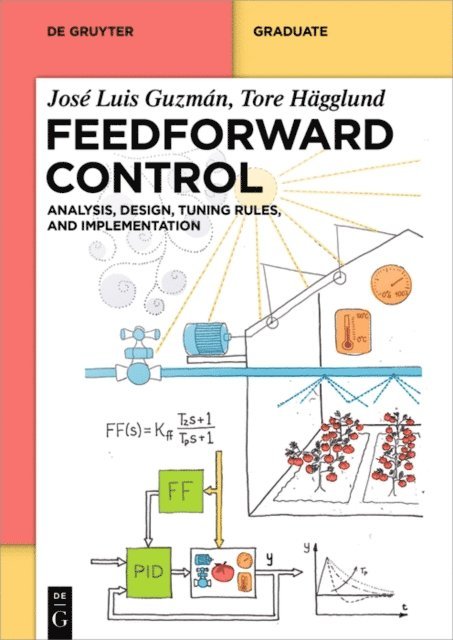
While there are thousands of books written about feedback control, it is surprising that this is the very first book about feedforward control. Feedforward control is a very powerful technique to compensate for measurable load disturbances in regulation control problems, and the use of feedforward control to assist the traditional feedback controllers is rapidly increasing in industry. The main goal of this book is to describe the power of feedforward control and to present different tuning rules for these controllers. To achieve this goal, theoretical and practical contributions are presented throughout the book to make the technique understandable and easy to implement. The book contains many practical aspects, both in terms of tuning and implementation of the feedforward controller. Many simulation examples are also provided, as well as a presentation of industrial experiences obtained from feedforward control applied to temperature control in greenhouses. For these reasons, we believe that the book will be useful not only at various levels in the teaching systems, but also for engineers working in industry.
655 kr
Läs direkt efter köp
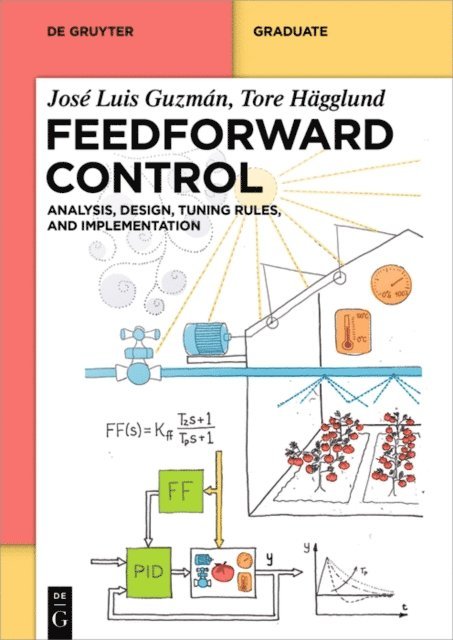
While there are thousands of books written about feedback control, it is surprising that this is the very first book about feedforward control. Feedforward control is a very powerful technique to compensate for measurable load disturbances in regulation control problems, and the use of feedforward control to assist the traditional feedback controllers is rapidly increasing in industry. The main goal of this book is to describe the power of feedforward control and to present different tuning rules for these controllers. To achieve this goal, theoretical and practical contributions are presented throughout the book to make the technique understandable and easy to implement. The book contains many practical aspects, both in terms of tuning and implementation of the feedforward controller. Many simulation examples are also provided, as well as a presentation of industrial experiences obtained from feedforward control applied to temperature control in greenhouses. For these reasons, we believe that the book will be useful not only at various levels in the teaching systems, but also for engineers working in industry.