Toshi H. Arimura – författare
Visar alla böcker från författaren Toshi H. Arimura. Handla med fri frakt och snabb leverans.
7 produkter
7 produkter
Evaluation of Japanese Environmental Regulations
Quantitative Approaches from Environmental Economics
Inbunden, Engelska, 2015
550 kr
Skickas inom 10-15 vardagar
Focusing on air pollution, energy efficiency and climate change, this book provides an introduction to Japan’s environmental policies and regulations, and offers economic analyses and RIAs (Regulatory Impact Analysis) of environmental regulations implemented or planned by the national and local governments. The opening chapter reviews environmental economics and outlines the current status of RIAs in Japan. Chapter 2 analyzes the NOx-PM Act, which prohibits the use of old and polluting vehicles in metropolitan areas. Chapter 3 examines a Tokyo metropolitan government regulation which requires installation of pollution control equipment in older trucks that fail to meet emission standards. Chapter 4 traces the impact of the NOx-PM Act on the used car market and used vehicle exports. Chapter 5 presents an economic analysis of a highway toll reduction, revealing an unexpected negative social impact: it increased traffic congestion and associated environmental problems. The final three chapters address policies and regulations related to energy efficiency and climate change Chapter 6 evaluates the effectiveness of Japan’s Energy Conservation Act, originally introduced in 1979 and amended numerous times to address climate change. Chapter 7 anticipates the impact of a proposed economy-wide carbon tax, using input-output analysis to assess short-term economic impacts in each sector. Also presented here is an examination of the effectiveness of a reduced carbon tax for energy-intensive industries, with a discussion of the impact of the proposal on households. The final chapter discusses the role and limitations of economic models for evaluating Japan’s mid-term GHG (Greenhouse Gas) emission target during the post-Kyoto period. This is the first book to evaluate Japanese environmental policies from an economic perspective, using a variety of current quantitative approaches. Its findings and suggestions will benefit students, policy makers and government officialsin developing and developed countries where the public faces similar environmental problems.
Evaluation of Japanese Environmental Regulations
Quantitative Approaches from Environmental Economics
E-bok
PDF, Engelska, 2015687 kr
Läs direkt efter köp
Focusing on air pollution, energy efficiency and climate change, this book provides an introduction to Japan’s environmental policies and regulations, and offers economic analyses and RIAs (Regulatory Impact Analysis) of environmental regulations implemented or planned by the national and local governments. The opening chapter reviews environmental economics and outlines the current status of RIAs in Japan. Chapter 2 analyzes the NOx-PM Act, which prohibits the use of old and polluting vehicles in metropolitan areas. Chapter 3 examines a Tokyo metropolitan government regulation which requires installation of pollution control equipment in older trucks that fail to meet emission standards. Chapter 4 traces the impact of the NOx-PM Act on the used car market and used vehicle exports. Chapter 5 presents an economic analysis of a highway toll reduction, revealing an unexpected negative social impact: it increased traffic congestion and associated environmental problems. The final three chapters address policies and regulations related to energy efficiency and climate change Chapter 6 evaluates the effectiveness of Japan’s Energy Conservation Act, originally introduced in 1979 and amended numerous times to address climate change. Chapter 7 anticipates the impact of a proposed economy-wide carbon tax, using input-output analysis to assess short-term economic impacts in each sector. Also presented here is an examination of the effectiveness of a reduced carbon tax for energy-intensive industries, with a discussion of the impact of the proposal on households. The final chapter discusses the role and limitations of economic models for evaluating Japan’s mid-term GHG (Greenhouse Gas) emission target during the post-Kyoto period. This is the first book to evaluate Japanese environmental policies from an economic perspective, using a variety of current quantitative approaches. Its findings and suggestions will benefit students, policy makers and government officialsin developing and developed countries where the public faces similar environmental problems.
Evaluation of Japanese Environmental Regulations
Quantitative Approaches from Environmental Economics
Häftad, Engelska, 2016
549 kr
Skickas inom 10-15 vardagar
Focusing on air pollution, energy efficiency and climate change, this book provides an introduction to Japan’s environmental policies and regulations, and offers economic analyses and RIAs (Regulatory Impact Analysis) of environmental regulations implemented or planned by the national and local governments. The opening chapter reviews environmental economics and outlines the current status of RIAs in Japan. Chapter 2 analyzes the NOx-PM Act, which prohibits the use of old and polluting vehicles in metropolitan areas. Chapter 3 examines a Tokyo metropolitan government regulation which requires installation of pollution control equipment in older trucks that fail to meet emission standards. Chapter 4 traces the impact of the NOx-PM Act on the used car market and used vehicle exports. Chapter 5 presents an economic analysis of a highway toll reduction, revealing an unexpected negative social impact: it increased traffic congestion and associated environmental problems. The final three chapters address policies and regulations related to energy efficiency and climate change Chapter 6 evaluates the effectiveness of Japan’s Energy Conservation Act, originally introduced in 1979 and amended numerous times to address climate change. Chapter 7 anticipates the impact of a proposed economy-wide carbon tax, using input-output analysis to assess short-term economic impacts in each sector. Also presented here is an examination of the effectiveness of a reduced carbon tax for energy-intensive industries, with a discussion of the impact of the proposal on households. The final chapter discusses the role and limitations of economic models for evaluating Japan’s mid-term GHG (Greenhouse Gas) emission target during the post-Kyoto period. This is the first book to evaluate Japanese environmental policies from an economic perspective, using a variety of current quantitative approaches. Its findings and suggestions will benefit students, policy makers and government officialsin developing and developed countries where the public faces similar environmental problems.
Inbunden, Engelska, 2020
549 kr
Skickas inom 10-15 vardagar
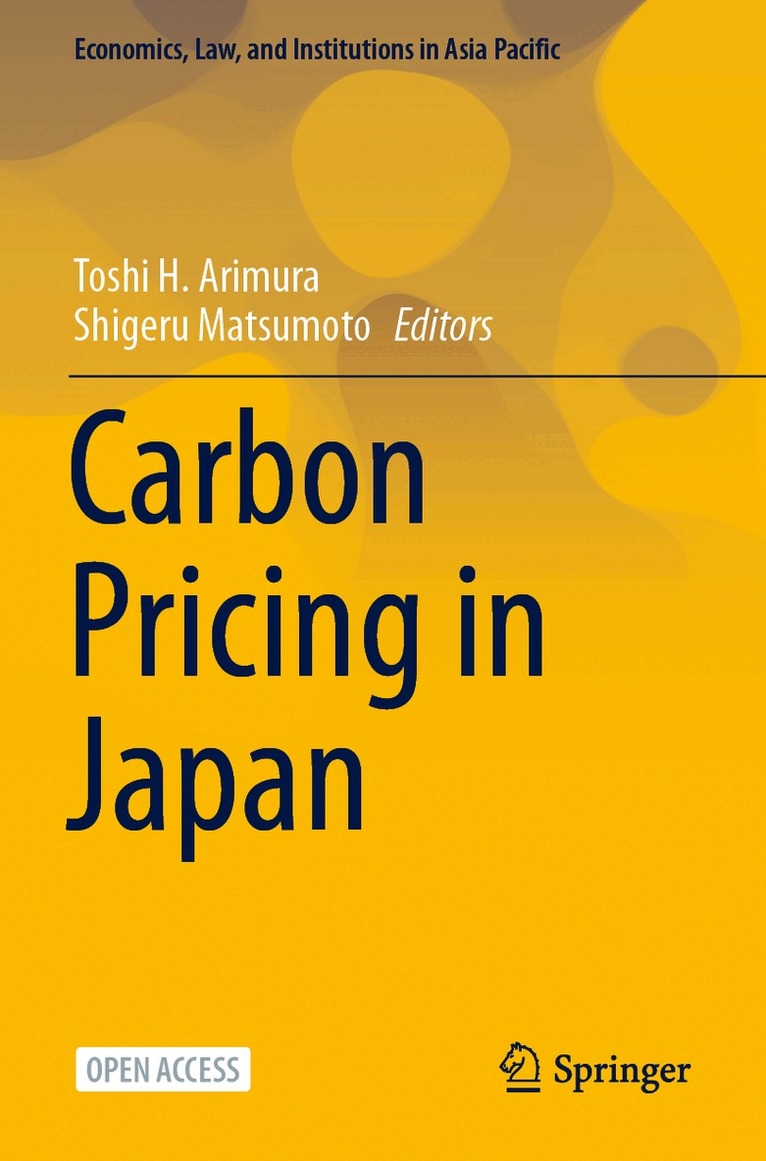
This open access book evaluates, from an economic perspective, various measures introduced in Japan to prevent climate change. Although various countries have implemented such policies in response to the pressing issue of climate change, the effectiveness of those programs has not been sufficiently compared. In particular, policy evaluations in the Asian region are far behind those in North America and Europe due to data limitations and political reasons.The first part of the book summarizes measures in different sectors in Japan to prevent climate change, such as emissions trading and carbon tax, and assesses their impact. The second part shows how those policies have changed the behavior of firms and households. In addition, it presents macro-economic simulations that consider the potential of renewable energy. Lastly, based on these comprehensive assessments, it compares the effectiveness of measures to prevent climate change in Japan and Western countries.Providing valuable insights, this book will appeal to both academic researchers and policymakers seeking cost-effective measures against climate change.
Häftad, Engelska, 2021
658 kr
Skickas inom 10-15 vardagar
This open access book evaluates, from an economic perspective, various measures introduced in Japan to prevent climate change. Although various countries have implemented such policies in response to the pressing issue of climate change, the effectiveness of those programs has not been sufficiently compared. In particular, policy evaluations in the Asian region are far behind those in North America and Europe due to data limitations and political reasons.The first part of the book summarizes measures in different sectors in Japan to prevent climate change, such as emissions trading and carbon tax, and assesses their impact. The second part shows how those policies have changed the behavior of firms and households. In addition, it presents macro-economic simulations that consider the potential of renewable energy. Lastly, based on these comprehensive assessments, it compares the effectiveness of measures to prevent climate change in Japan and Western countries.Providing valuable insights, this book will appeal to both academic researchers and policymakers seeking cost-effective measures against climate change.
Inbunden, Engelska, 2024
547 kr
Skickas inom 5-8 vardagar
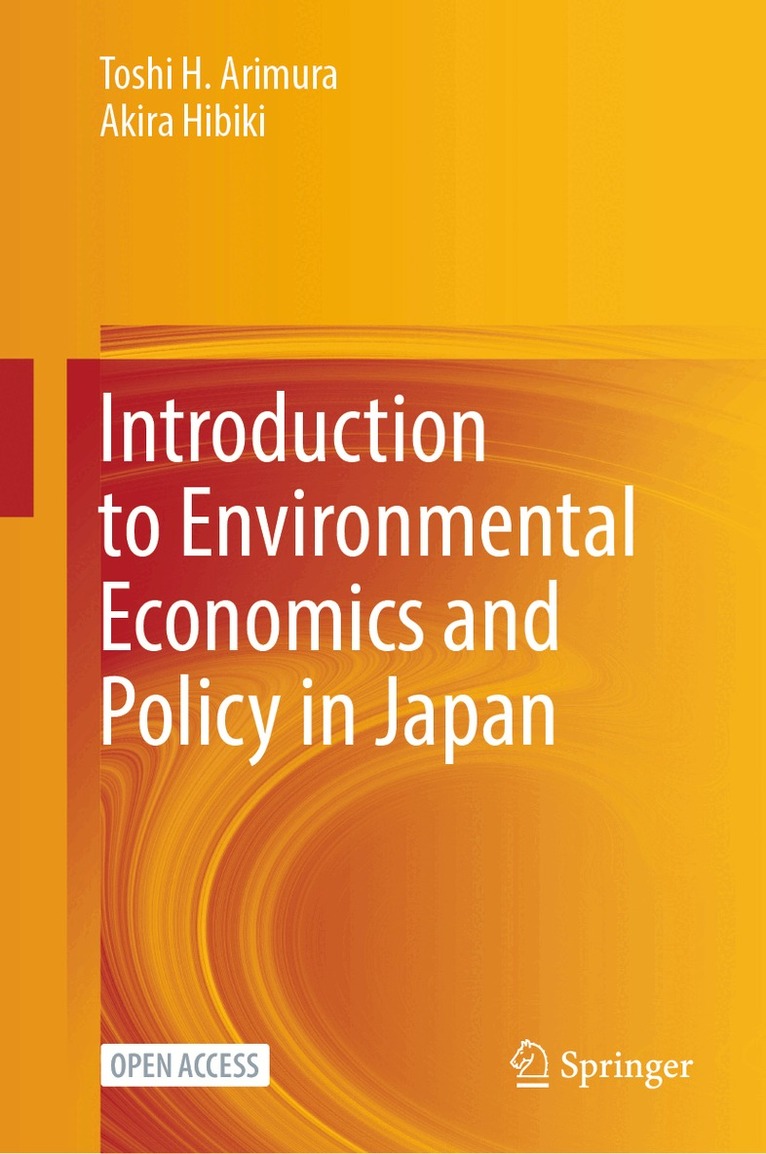
This textbook demonstrates how economic theories can be used for environmental policy evaluations. A notable feature of this book is that, unlike most textbooks in environmental economics written in English, it draws on examples from Japan’s policy on energy, resource, pollution, and carbon emissions. Policy measures discussed in this book include controls on motor vehicle emissions, pricing of waste disposal, deposit-refund scheme for recycling, carbon taxes and emissions trading schemes. With topics involving transboundary environmental concerns such as climate change, air pollution, and waste management and recycling, the book also integrates international perspectives and provides comparisons of policies across regions and countries. A major objective of this book is to present a concise and accessible introduction to environmental economics as applied to policy evaluations in and beyond Japan. The knowledge available from this book must be very useful for students, policymakers and practitioners who seek environmental policy solutions from an economic point of view.This is an open access book.
Häftad, Engelska, 2025
441 kr
Skickas inom 10-15 vardagar
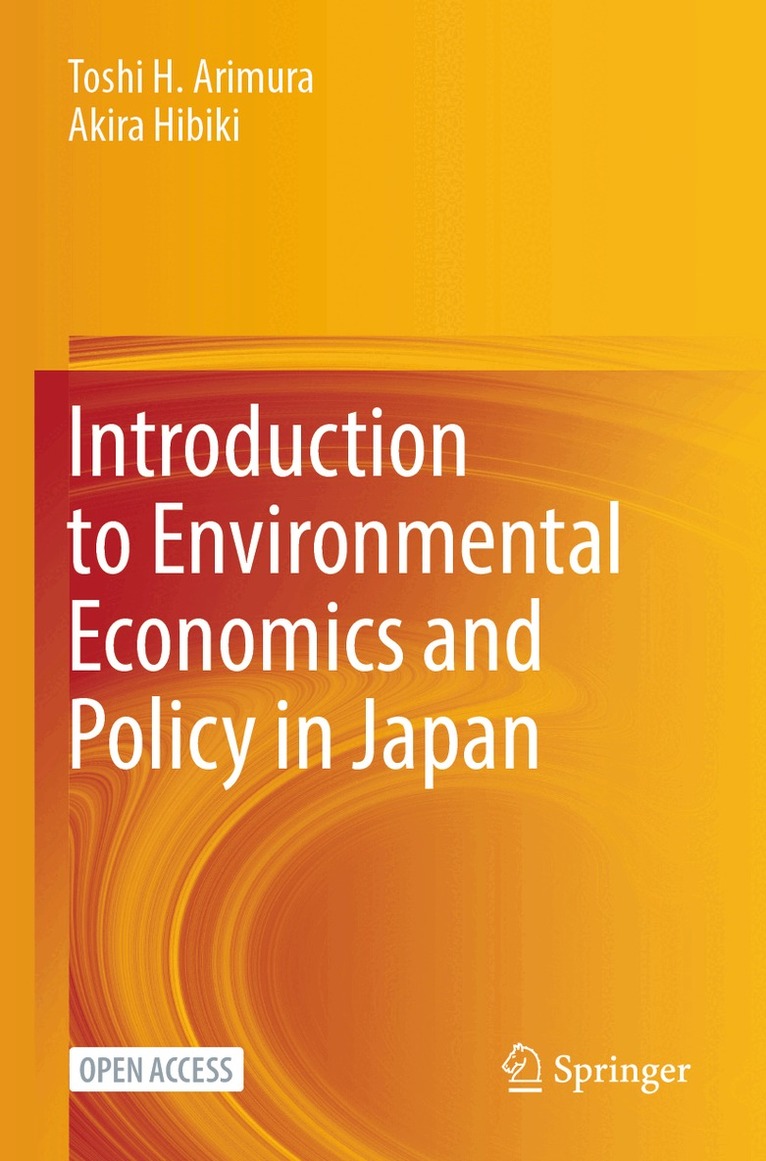
This textbook demonstrates how economic theories can be used for environmental policy evaluations. A notable feature of this book is that, unlike most textbooks in environmental economics written in English, it draws on examples from Japan’s policy on energy, resource, pollution, and carbon emissions. Policy measures discussed in this book include controls on motor vehicle emissions, pricing of waste disposal, deposit-refund scheme for recycling, carbon taxes and emissions trading schemes. With topics involving transboundary environmental concerns such as climate change, air pollution, and waste management and recycling, the book also integrates international perspectives and provides comparisons of policies across regions and countries. A major objective of this book is to present a concise and accessible introduction to environmental economics as applied to policy evaluations in and beyond Japan. The knowledge available from this book must be very useful for students, policymakers and practitioners who seek environmental policy solutions from an economic point of view.This is an open access book.