Touko Piiparinen – författare
Visar alla böcker från författaren Touko Piiparinen. Handla med fri frakt och snabb leverans.
6 produkter
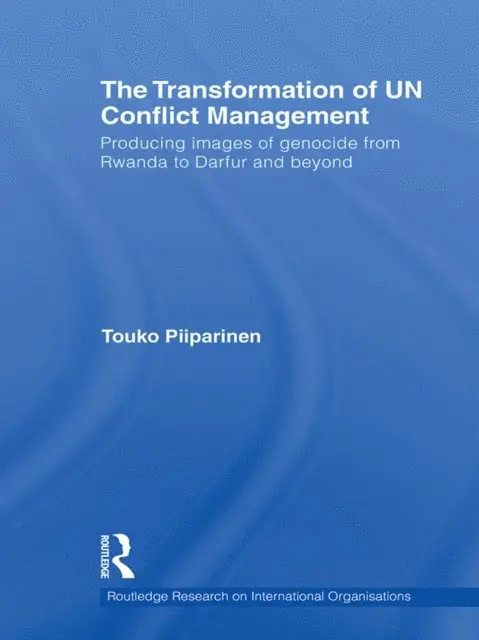
Transformation of UN Conflict Management
Producing images of genocide from Rwanda to Darfur and beyond
Inbunden, 2009
2506 kr
Lägg i varukorg
The world has vowed "Never again" in memory of the 800,000 Rwandans and other groups slaughtered by génocidaires. Yet, ever since the Holocaust, the international community has repeatedly betrayed its pledge, most notably in 1994 with regard to the Rwandan Tutsi, and again ten years later in …
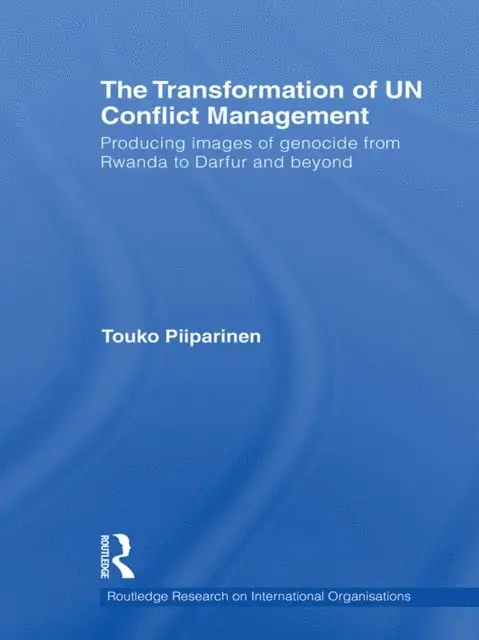
Transformation of UN Conflict Management
Producing images of genocide from Rwanda to Darfur and beyond
Häftad, 2013
845 kr
Lägg i varukorg
The world has vowed "Never again" in memory of the 800,000 Rwandans and other groups slaughtered by génocidaires. Yet, ever since the Holocaust, the international community has repeatedly betrayed its pledge, most notably in 1994 with regard to the Rwandan Tutsi, and again ten years later in …
Normative Pluralism and International Law
Exploring Global Governance
Av Jan Klabbers, Touko Piiparinen
Inbunden, 2013
988 kr
Lägg i varukorg
This book addresses conflicts involving different normative orders: what happens when international law prohibits behavior, but the same behavior is nonetheless morally justified or warranted? Can the actor concerned ignore international law under appeal to morality? Can soldiers escape legal …
Normative Pluralism and International Law
Exploring Global Governance
Av Jan Klabbers, Touko Piiparinen
Häftad, 2014
613 kr
Lägg i varukorg
This book addresses conflicts involving different normative orders: what happens when international law prohibits behavior, but the same behavior is nonetheless morally justified or warranted? Can the actor concerned ignore international law under appeal to morality? Can soldiers escape legal …
Transformation of UN Conflict Management
Producing images of genocide from Rwanda to Darfur and beyond
E-bok, 2009
970 kr
Lägg i varukorg
The world has vowed "Never again" in memory of the 800,000 Rwandans and other groups slaughtered by génocidaires . Yet, ever since the Holocaust, the international community has repeatedly betrayed its pledge, most notably in 1994 with regard to the Rwandan Tutsi, and again ten years later in …
Transformation of UN Conflict Management
Producing images of genocide from Rwanda to Darfur and beyond
E-bok, 2009
949 kr
Lägg i varukorg
The world has vowed "Never again" in memory of the 800,000 Rwandans and other groups slaughtered by génocidaires . Yet, ever since the Holocaust, the international community has repeatedly betrayed its pledge, most notably in 1994 with regard to the Rwandan Tutsi, and again ten years later in …