Toyoki Kunitake - Böcker
Visar alla böcker från författaren Toyoki Kunitake. Handla med fri frakt och snabb leverans.
2 produkter
2 produkter
536 kr
Skickas inom 10-15 vardagar
This book describes "supramolecular chemistry" from its basic concepts to the latest developments. It begins by treating molecular recognition chemistry including crown ethers, cyclodextrines, and calixarenes. Molecules with fascination shapes and functions such as fullerenes, carbon nanotubes, dendrimers, rotaxane, and catenane, and molecular assemblies such as bilayers and LB films are also explained. Thereafter applications of supermolecules to nanotechnology are introduced with many examples of molecular devices. The last part of the book describes biological supermolecules and their mimics, including ion channels, signal transduction, photosynthetic machines, natural and artificial enzymes, catalytic antibodies, and ribozymes.
2 557 kr
Skickas inom 7-10 vardagar
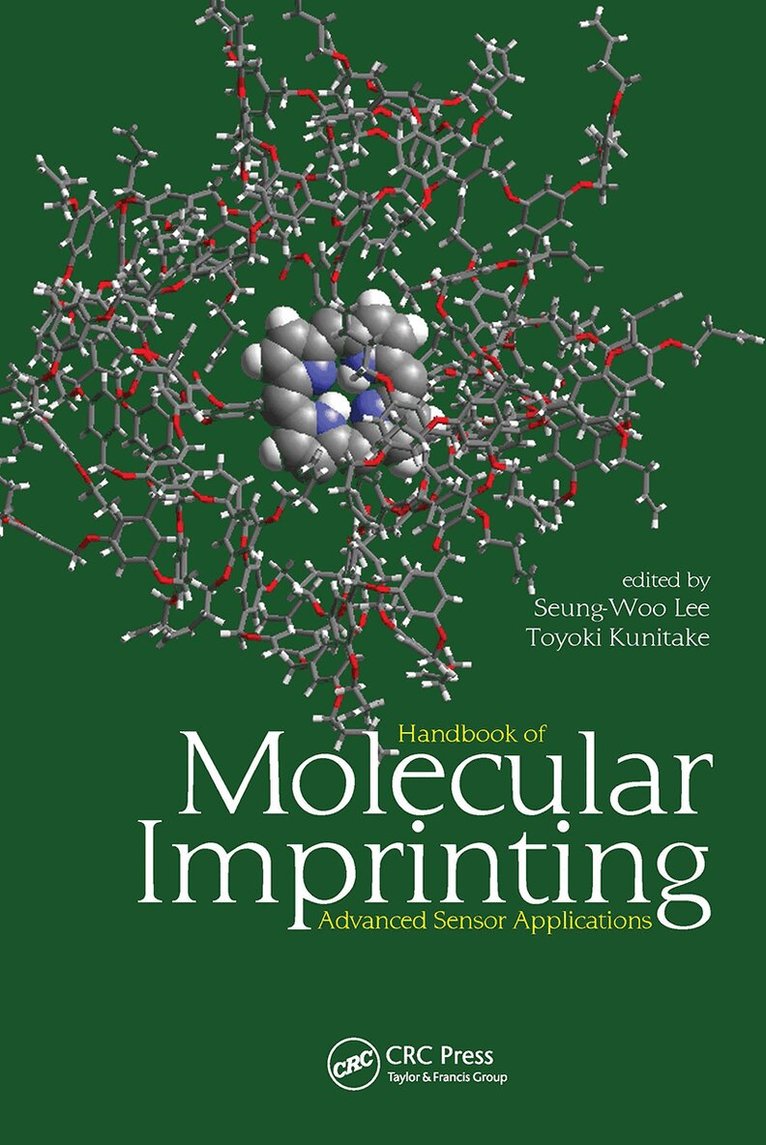
Molecular imprinting focuses on the fabrication of an artificial receptor with perfect molecular recognition abilities. It has attracted a great deal of scientific attention because of the enormous opportunities it opens in the fields of separation, catalysis, and analysis. The advantages of the molecular imprinting enable to target a wide class of substances ranging from small molecules to big conglomerates, such as proteins or even cells. In recent years, sensor applications based on molecular imprinting have started to attract greater attention because of the easy creation of robust receptor sites with high specificity and sensitivity toward a target compound.A collection of contributions from distinguised experts, Handbook of Molecular Imprinting: Advanced Sensor Applications provides a comprehensive overview on the specific challenges of molecular imprinting in sensor applications. It covers various molecular imprinting approaches. As a result, a perspective of future device ensembles for sensing is acquired. The text lays particular emphasis on fundamental aspects as well as novel ideas in the context of sensor applications. It also highlights the operation principles of various sensor transducers that are generally employed in combination with molecular imprinting recognition elements.