

Wild-untamed, hostile, remote. Yet, wild can be gentle, welcoming, and inspiring too. This is the wild that preoccupies biologist Shankar Raman as he writes about trees and bamboos, hornbills and elephants, leopards and myriad other species. Species found not just out there in far wildernesses-from the Thar desert to the Kalakad rainforests, from Narcondam Island to Namdapha-but amid us in gardens and cities, in farms, along roadsides. And he writes about the forces that gouge land and disfigure landscapes, rip trees and shred forests, pollute rivers and contaminate the air, slaughter animals along roads and rail tracks-impelling a motivation to care, and to conserve nature.Through this collection of essays, Shankar Raman attempts to blur, if not dispel, the sharp separation between humans and nature, to lead you to discover that the wild heart of India beats in your chest too.
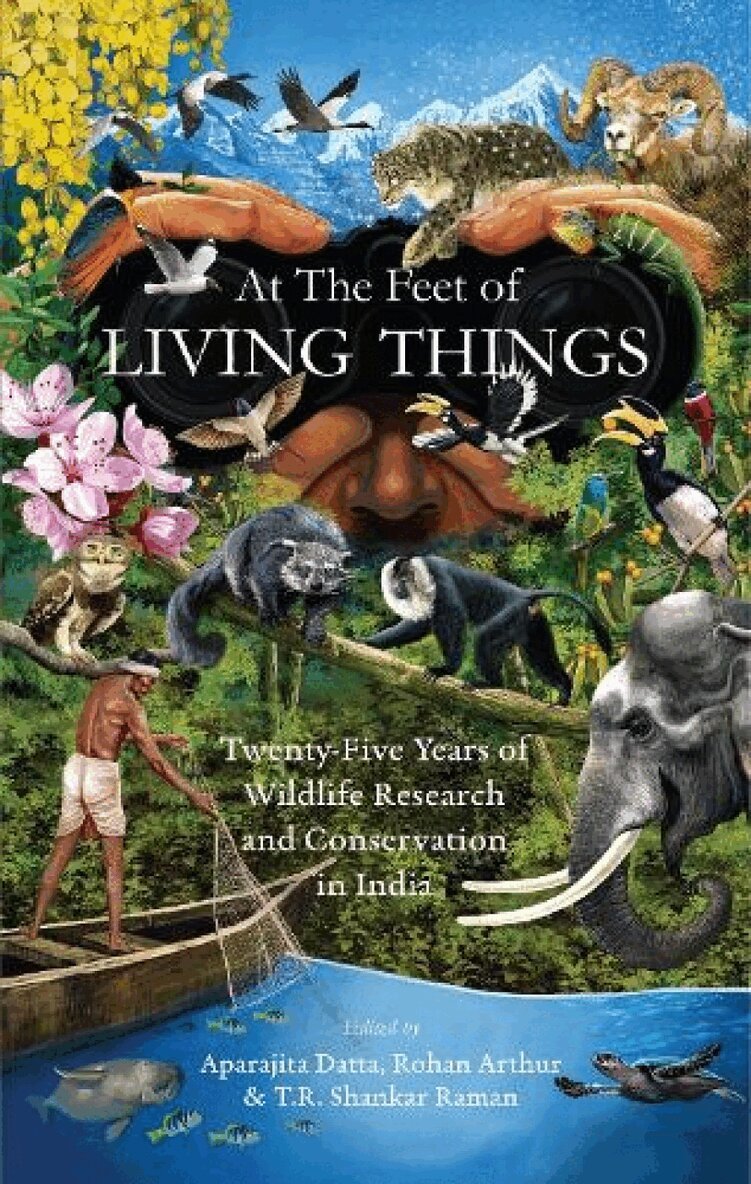
Have you wondered what it is like to follow hornbills in a dense rainforest? Or felt the pain of a mountain shepherd losing his sheep to a leopard? Or how it feels when a child discovers birdwatching is more exciting than being glued to a screen? The world of nature conservation is full of adventure, but it is also hard, fraught with challenges and setbacks, made worthwhile by the privilege of studying at the feet of living things. In this book, the scientists and researchers of the Nature Conservation Foundation describe how they grappled with conservation in India. Since 1996, they have wandered mountains, coral reefs, and forests to describe, document, protect and restore species and ecosystems. They have studied the lives of primates, snow leopards, hornbills, elephants, dugongs, fish, trees and other creatures. With local communities, they have experienced the sometimes-harsh reality of living with the wild side of nature. And they have strived to bring children and citizens to celebrate and learn about it. Each reflective and deeply personal narrative in this book goes behind the science to describe the challenges of conservation. At the Feet of Living Things will appeal to students, researchers, conservation practitioners, wildlife managers, nature enthusiasts and interested citizens.
Wild-untamed, hostile, remote. Yet, wild can be gentle, welcoming, and inspiring too. This is the wild that preoccupies biologist Shankar Raman as he writes about trees and bamboos, hornbills and elephants, leopards and myriad other species. Species found not just out there in far wildernesses-from the Thar desert to the Kalakad rainforests, from Narcondam Island to Namdapha-but amid us in gardens and cities, in farms, along roadsides. And he writes about the forces that gouge land and disfigure landscapes, rip trees and shred forests, pollute rivers and contaminate the air, slaughter animals along roads and rail tracks-impelling a motivation to care, and to conserve nature.Through this collection of essays, Shankar Raman attempts to blur, if not dispel, the sharp separation between humans and nature, to lead you to discover that the wild heart of India beats in your chest too.
Have you wondered what it is like to follow hornbills in a dense rainforest? Or felt the pain of a mountain shepherd losing his sheep to a leopard? Or how it feels when a child discovers birdwatching is more exciting than being glued to a screen? The world of nature conservation is full of adventure, but it is also hard, fraught with challenges and setbacks, made worthwhile by the privilege of studying at the feet of living things. In this book, the scientists and researchers of the Nature Conservation Foundation describe how they grappled with conservation in India. Since 1996, they have wandered mountains, coral reefs, and forests to describe, document, protect and restore species and ecosystems. They have studied the lives of primates, snow leopards, hornbills, elephants, dugongs, fish, trees and other creatures. With local communities, they have experienced the sometimes-harsh reality of living with the wild side of nature. And they have strived to bring children and citizens to celebrate and learn about it. Each reflective and deeply personal narrative in this book goes behind the science to describe the challenges of conservation. At the Feet of Living Things will appeal to students, researchers, conservation practitioners, wildlife managers, nature enthusiasts and interested citizens.