Translation – författare
Visar alla böcker från författaren Translation. Handla med fri frakt och snabb leverans.
5 produkter
5 produkter
Inbunden, Engelska, 2023
335 kr
Skickas inom 5-8 vardagar
Häftad, Engelska, 2023
175 kr
Skickas inom 5-8 vardagar
E-bok
Kinesiska, 2020328 kr
Läs direkt efter köp
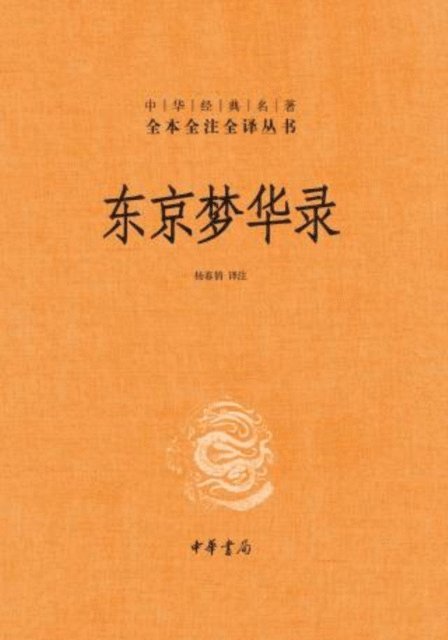
Under the surface narrative of "e;Menghua Style"e; in Tokyo Menghua Record, there are hidden historical events of Huizong Dynasty witnessed by Meng Yuan for more than 20 years. For example, the description of Tokyo's tall and majestic city walls implies that Huizong adopted Cai Jing's advice to rebuild the outer city. The winding walls of Taizu were changed to be straight on all sides, which greatly reduced its defensive function. During the Jingkang period, when the Jinbing attacked the city, because of its straightness, the entire city wall was crumbling under one shot. Others, for example, in the imperial court ceremonies describing the Zhengdan dynasty, the Nanjiao Jitian, etc., implied the Huizong reformed ritual music, the new Dasheng Music, the reconstruction of a new three-story Jitianqiu (Qingchengzhai Palace), and the promulgation of the New Ceremony of Politics and Five Etiquetteare quite convincing as a saint. It is precisely this combination of surface and bottom narrative that Tokyo Menghua Record explores the reason why the prosperity of the Northern Song Dynasty once became a dream.
E-bok
Kinesiska, 2020335 kr
Läs direkt efter köp
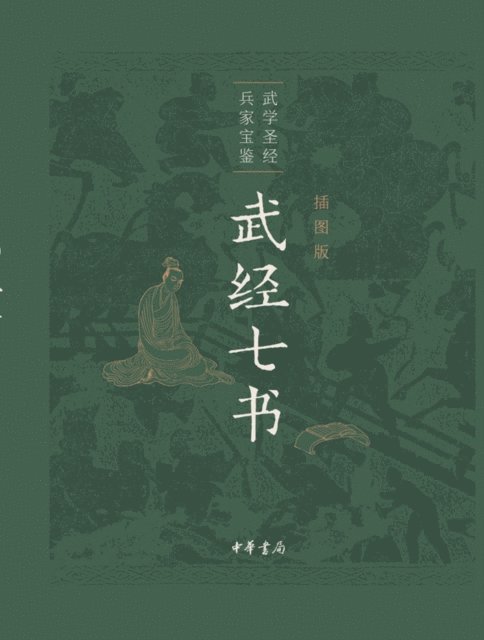
Zuo Zhuan says: "e; The important matters of the country lie in the sacrifice and the army."e; War and army building have been valued by the rulers of successive dynasties. In order to meet the needs of military struggle, teaching, and martial arts examinations at that time, in the third year of Yuanfeng (1080), Song Shenzong ordered Guozi Supervisor Si Ye Zhu Fu and martial arts doctor He Qufei to select and compile military books. They selected seven military books with 25 volumes from more than 340 ancient Chinese military books that were popular at the time, including Sun Tzu's Art of War, Wu Zi's Art of War, Sima Method, Sanlue of Huang Shigong, Wei Liaozi, Six Taoist, Tang Taizong Questions Li Weigong. As martial arts classics, they are designated as must-read textbooks in martial arts. This is the famous Seven Books of Martial Arts. The revision and promulgation of the Seven Books of Martial Arts was a contribution of the Northern Song Dynasty court to the construction of military theory. It expounded a series of military strategic thinking and tactical principles, and condensed the insights of the ancient Chinese people on the understanding of war. No matter in military theory or in war practice, it has had a profound impact on later generations and even the world. In the Southern Song Dynasty, Emperor Gaozong also designated the Seven Books of Martial Arts as the content of the general selection examination. Ming Taizu Zhu Yuanzhang advocated "e;the descendants of military officers, teach and read martial arts"e;. For the urgent need of military struggle and teaching, he ordered the Ministry of War to engrave the Seven Books of Martial Arts and distribute them to relevant officials and senior generals and their descendants for learning. Since the 17th century, many reprints, translations and annotations have appeared in Japan. Sun Tzu's Art of War and Wu Zi's Art of War were more widely spread in Europe, Asia, and the United States. It is not only the spiritual wealth of the Chinese nation, but also the common spiritual wealth of the people of the world. In this publication, scholars and experts in ancient literature are invited to comment and translate the entire book of the Seven Books of Martial Arts, with abbreviated annotations and simplified translations, to assist in reading the original text. I hope that more readers can read and understand the Seven Books of Martial Arts and grasp the ideological connotation and value of Chinese Military Books.
E-bok
Kinesiska, 2020147 kr
Läs direkt efter köp
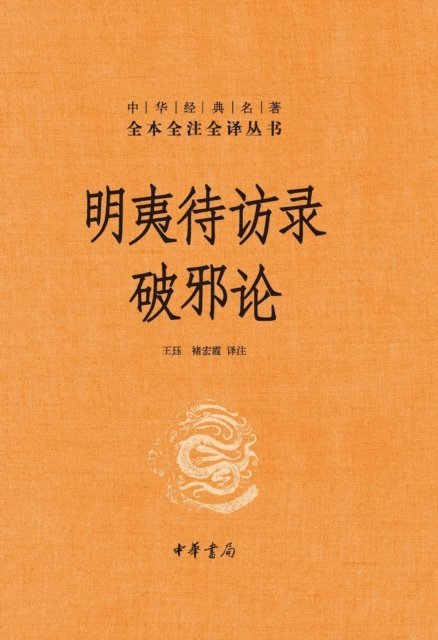
Both Mingyi Waiting to be Interviewed and the Theory of Breaking Evil are both political monographs of Huang Zongxi. This time, the "e;Three Complete Editions"e; included these two books into one, which reflects Huang Zongxi's thoughts more clearly and deeply from their inherited relationship. Mingyi Waiting to be Interviewed includes: The Original Ruler, The Original Minister, The Original Law, The Position, The School, The Upper and Lower Scholars, The Capital, The Square Town, Field System One, Field System Two, Field System Three, Army System One, Army System Two, Army System Three, Financial Calculation One, Financial Calculation Two, Subordinate Staff, Eunuch Upper, Eunuch Lower, 21 pieces in total, which covers various fields such as politics, legal system, education, economy, military, talent selection, etc. Each article or several articles are conducted in-depth analysis on a problem, discussing the past and present, and puting forward corresponding reform suggestions at the end. Huang Zongxi was living in the overall situation of social changes in the late Ming and early Qing. He deeply felt the pain of the demise of the Ming Dynasty. He wanted to find the root cause of the Ming Dynasty's death under the autocratic monarchy. Therefore, through the analysis of the emperor, the minister, the equal status and the relationship between him, he explained his emperor's and minister's path, redefining the relationship between the emperor, the people, and the minister, and proposed that "e;the world is the master, the emperor is the guest"e; ( The Original Ruler), and bluntly stated that the world is not the world of one surname, "e;the world governs chaos without the rise and fall of one surname"e; ( The Original Ruler), etc. These arguments actually surpassed the traditional views of monarchs and ministers. At the time, they were actually "e;extremely bold creations"e; (Liang Qichao's Introduction to Qing Dynasty Academics), which strongly stimulated the world's eyes and ears and have extraordinary practical significance. There is one volume of The Theory of Breaking Evil, written 30 years after the completion of Mingyi Waiting to be Interviewed, divided into nine chapters: Congsi, God, Soul, Hell, Division, Book of Tang, Taxation, Imperial Examination and Crimination of Sages. Each article discusses different content. The nine essays are diverse in content and do not have a unified theme. Generally speaking, they can be regarded as a re-examination and supplement of Mingyi Waiting to be Interviewed. These two books have had a great influence since the day they were published, and Mingyi Waiting to be Interviewed was even more serious. By the end of the Qing Dynasty, Liang Qichao and Tan Si equally advocated the republic of civil rights. "e;They printed tens of thousands of copies and distributed them secretly. They were extremely powerful in the sudden change of thought in the late Qing Dynasty"e; (Liang Qichao's Introduction to Qing Dynasty Academics).