Traugott Lawler – författare
Visar alla böcker från författaren Traugott Lawler. Handla med fri frakt och snabb leverans.
7 produkter
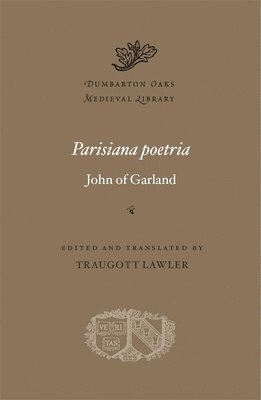
Parisiana poetria
Av John of Garland, Traugott Lawler
Inbunden, 2020
352 kr
Lägg i varukorg
The Parisiana poetria, first published around 1220, expounds the medieval theory of poetry (ars poetica) and summarizes early thirteenth-century thought about writing. While the text draws on predecessors such as the Rhetorica ad Herennium, Horace’s Ars poetica, and work by Geoffrey of Vinsauf, its …
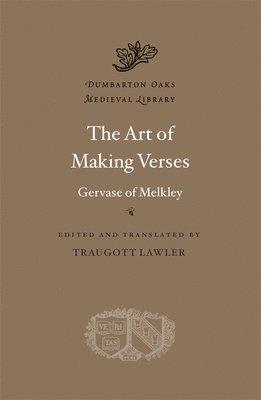
Art of Making Verses
Av Gervase of Melkley, Traugott Lawler
Inbunden, 2025
352 kr
Lägg i varukorg
An elegant medieval guide to verse composition and rhetoric, presented in a new authoritative edition and English translation.The Art of Making Verses, Ars versificatoria, was composed by the thirteenth-century English poet and teacher Gervase of Melkley, who studied under John de Hauville. He …
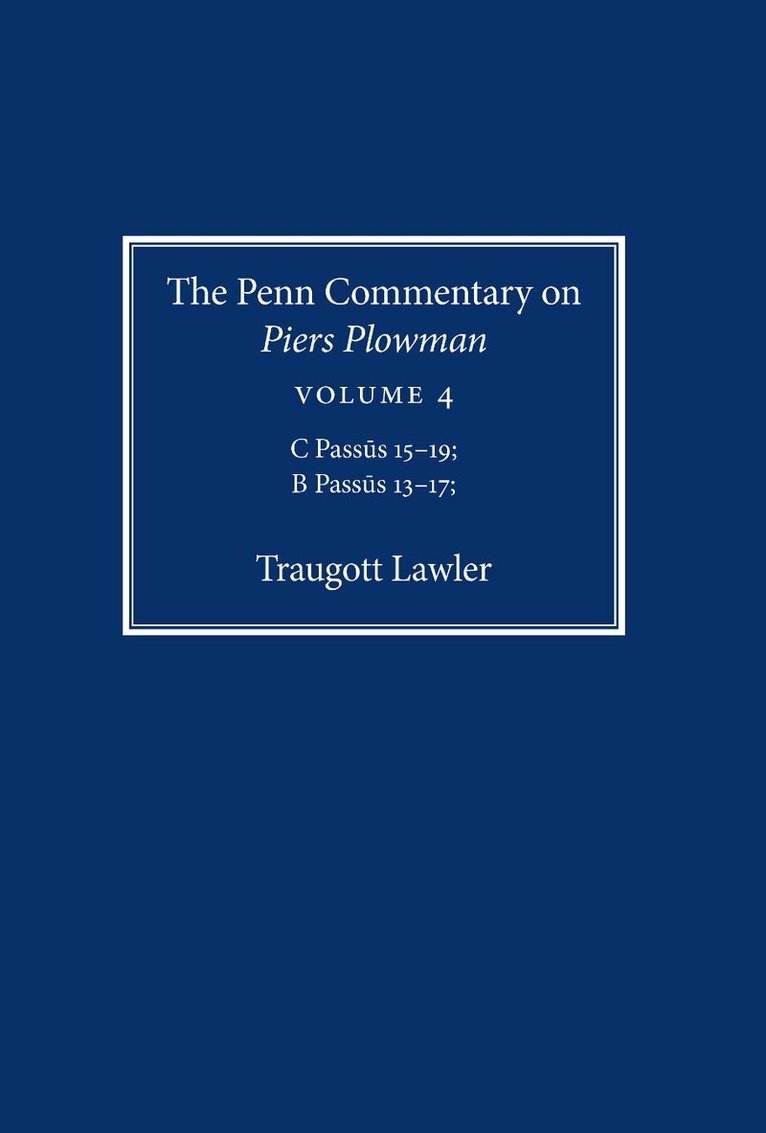
Penn Commentary on Piers Plowman, Volume 4
C Passūs 15-19; B Passūs 13-17
Inbunden, 2018
1420 kr
Lägg i varukorg
The detailed and wide-ranging Penn Commentary on "Piers Plowman" places the allegorical dream-vision of the poem within the literary, historical, social, and intellectual contexts of late medieval England, and within the long history of critical interpretation of the work, assessing past …
Penn Commentary on Piers Plowman, Volume 4
C Passūs 15-19; B Passūs 13-17
E-bok, 2018
1743 kr
Lägg i varukorg
The detailed and wide-ranging Penn Commentary on "Piers Plowman" places the allegorical dream-vision of the poem within the literary, historical, social, and intellectual contexts of late medieval England, and within the long history of critical interpretation of the work, assessing past …
Jankyn's Book of Wikked Wyves
Seven Commentaries on Walter Map's ""Dissuasio Valerii
Av Ralph Hanna III, Traugott Lawler
E-bok, 2014
2231 kr
Lägg i varukorg
In volume 1 of Jankyn’s Book of Wikked Wyves (Georgia, 1997), Ralph Hanna and Traugott Lawler presented authoritative versions of three medieval texts invoked by Jankyn (fifth husband of the Wife of Bath) in The Canterbury Tales . In Jankyn’s Book , volume 2, Lawler and Hanna revisit one of those …
Jankyn's Book of Wikked Wyves
The Primary Texts
Av Ralph Hanna III, Traugott Lawler
Inbunden, 1997
2692 kr
Tillfälligt slut
The three medieval texts that make up Jankyn's Book of Wikked Wyves have formed a vital part of Chaucerian research for more than half a century. Integrated here for the first time, these texts now form a cornerstone volume of the Chaucer Library series.Near the end of her prologue, Chaucer's Wife …
Jankyn's Book of Wikked Wyves
Seven Commentaries on Walter Map's "Dissuasio Valerii"
Av Ralph Hanna III, Traugott Lawler
Inbunden, 2014
2692 kr
Tillfälligt slut
In volume 1 of Jankyn’s Book of Wikked Wyves (Georgia, 1997), Ralph Hanna and Traugott Lawler presented authoritative versions of three medieval texts invoked by Jankyn (fifth husband of the Wife of Bath) in The Canterbury Tales. In Jankyn’s Book, volume 2, Lawler and Hanna revisit one of those …