Trazegnies Convent Portaïtissa – författare
285 kr
Skickas inom 5-8 vardagar
201 kr
Skickas inom 5-8 vardagar
147 kr
Skickas inom 5-8 vardagar
202 kr
Läs direkt efter köp
Publisher''s Foreword
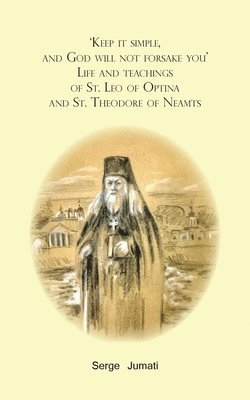
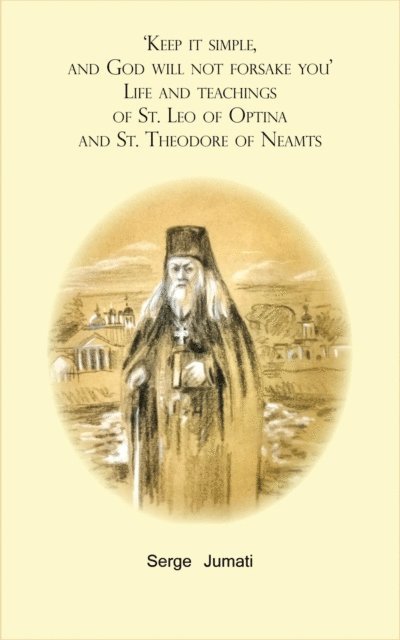
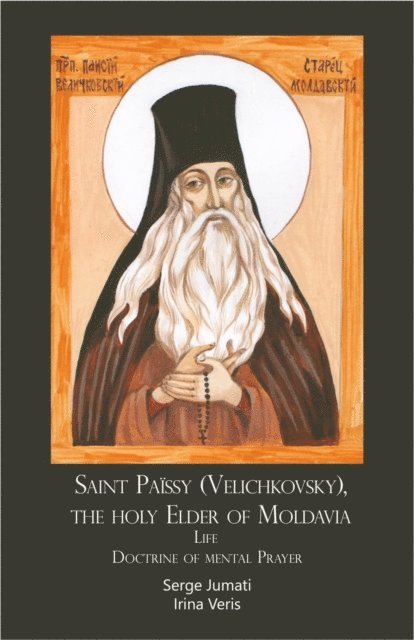
This is a life story of two spiritual mentors in the Eastern Christian Orthodox tradition, St. Leo of Optina (Nagolkin) and St. Theodore of Neamts (Polzikov). St Theodore was a disciple of St. Paisios (Velichkovsky). St Paisios re-established in several monasteries on Athos and in Romania, where he was father superior, the practice of incessant prayer to Jesus Christ. This practice is known as ''Jesus prayer'' and he had discovered this practice in the writings of ancient Christian ascetics.
St. Leo and St. Theodore established the schools of inner prayer and revelation of thoughts amongst the monks in Optina and several other monasteries at the end of the 18th - beginning of the 19th century. Inner prayer, revelation of thoughts and admonishing through acting, amongst other methods of purifying and elevating the soul for the sake of receiving the Holy Spirit, were almost forgotten by that time. In the life of the clergy the stress was put on the obedience to the superiors in the hierarchy, strict complying to the church rules and following church services and the work of penance. The inner core of the monks remained often untouched by this, they couldn''t open it to the light of the Gospel.
St. Leo and St. Theodore had to endure the hostility of some church hierarchs and monks, who didn''t understand the necessity of inner work on the way to God. They did it firmly but at the same time full of love for their fellowmen and revived the spiritual mentorship amongst the Eastern Orthodox Christian clergy as well as the laity.
Marijcke Tooneman
The Hague, september 2022
173 kr
Skickas inom 5-8 vardagar
190 kr
Läs direkt efter köp
From the Author
Epochs of relative spiritual poverty alternate with periods of spiritual prosperity. In each century however there can be found spiritual torch-bearers, who showed the path to their contemporaries, who revealed to them God''s will; through them and around them the Divine, sacred inner of the Church could continue to be built and the Church could continue its creative work.
The narrow monastic path of St. Païssy of Moldavia (Velichkovski) (1722 - 1794), a native of Ukraine, was for the 18th century a spiritual achievement with the same degree of influence as the ascetic practices of Saint Sergius of Radonezh in the 14th century. Being inspired by the works of the holy Fathers, they, by God''s mercy, accumulated the most elevated personal spiritual experiences and transmitted them to hundreds of disciples. In this way the great saints have changed the spiritual climate of their epochs, filling it with the warmth and fire of the Holy Spirit.
Archpriest Sergius Chetverikov wrote about St. Païssy: ''Even if the entire work of Elder Païssy consisted in just being an example of sanctity, creating a monastic communal brotherhood according to the rules of the holy Fathers and correcting the translations of the works of the holy Fathers, it still would be a great contribution to the Church, monasticism and society. However, Elder Païssy has accomplished much more than that: he created a school of spiritual life, he kindled the hearts of many with love for the spiritual life and he inspired the monks to pursue the inner, monastic, spiritual work. Owing to his influence there have been amongst the Orthodox monks many remarkable ascetics, who fully assimilated the admonitions and the instruction of Elder Païssy. The followers of Elder Païssy had much influence not only on their fellow-monks, but also on laymen from all the layers of society, including those highly educated in the cultural, scientific and theological areas. Having started in the second half of the 18th century, this particular spiritual tendency continued its development until the tragic events of the October revolution in Russia at the beginning of the 20th century.''
The present work is based on several biographies of Elder Païssy, including his autobiography. Most of all the work of Archpriest Sergius Chetverikov ''Moldavian Elder Païssy Velichkovski, his life, teaching and his influence on the Orthodox regular clergy'' has been used. The issues which are dealt with in the present book are still actual today.
Serge Jumati
274 kr
Skickas inom 5-8 vardagar
190 kr
Läs direkt efter köp
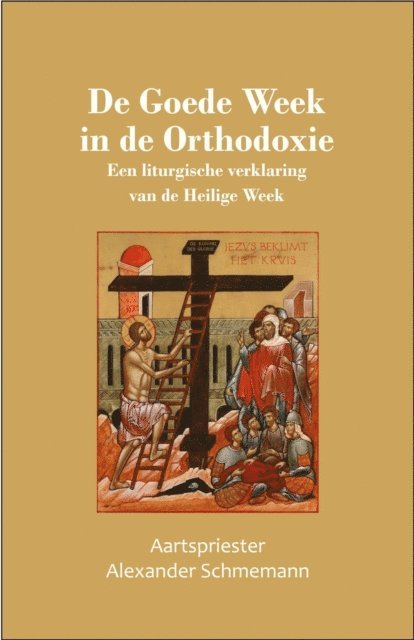
Vader Alexander Schmemann was in de vorige eeuw een Russisch Orthodox priester en theoloog. Na de Russische Revolutie is hij als emigrant in Parijs terecht gekomen, waar de Russische gemeenschap snel groeide. Van jongs af aan voelde hij zich tot het orthodoxe geloof en haar rijke Liturgie aangetrokken. Tijdens de Tweede Wereldoorlog ging hij studeren aan de universiteit van Parijs en het orthodoxe seminarie St.Sergius en hij trad in het huwelijk. Na de oorlog werd hij aan dit seminarie docent kerkgeschiedenis. Deze jaren halverwege de vorige eeuw waren in de Franse en Duitse Rooms-Katholieke Kerk de jaren van de Liturgische Beweging. In Parijs had de jonge orthodoxe priester een levendige interesse voor en nauwe banden met andere kerken in de stad. Hij voelde de noodzaak tot vernieuwing en erkende het verlangen van de rooms-katholieken om inspiratie te putten uit de traditie van de Kerkvaders, die in de Orthodoxe Kerk zo levend aanwezig is gebleven. Anderzijds voelde Vader Alexander ook steeds meer de noodzaak om in zijn eigen kerk allerlei in de loop der eeuwen ontstane tradities en rituelen eens tegen het licht te houden. Zo verschoof Vader Alexanders aanvankelijke interesse in de kerkgeschiedenis steeds meer naar een nadenken over het eigene van de Liturgie. Zijn proefschrift droeg de titel Introduction to Liturgical Theology, ter introductie van een theologie over de liturgie. De auteur wilde daarmee zeggen dat juist de Liturgie een bron is van en voor de theologie. In New York zette hij zijn docentschap voort en schreef een baanbrekend oeuvre dat zowel in zijn eigen kerk en in vele andere kerken als zeer inspirerend ervaren werd en wordt tot op vandaag. Voor Vader Alexander was het Paasfeest het belangrijkste christelijke feest, zoals dat ook al het geval was in de eerste eeuwen van het christendom. Heel het kerkelijk jaar is daaromheen gebouwd. Dit kleine en bescheiden werkje over de ''Heilige Week'' kan gezien worden als een bondige samenvatting van het gehele christelijke gedachtengoed. Na Vader Schmemanns overlijden heeft zijn vrouw Juliana zijn dagboek gevonden, vertaald en uitgegeven. In dit voorliggende boek over de Heilige Week zijn zijn theologie en zijn persoonlijke beleving van de Liturgie, zoals verwoord in zijn dagboek, dus naast elkaar te vinden. Vader Alexander Schmemann was bovendien bezorgd over de vervolgde Russisch-Orthodoxe gelovigen in de voormalige Sovjet-Unie. Hij gaf met veel passie in uitzendingen van Radio Liberty korte beschouwingen over het geloof, die de mensen in Rusland konden ontvangen. Zo leerde ook Alexander Solzjenitsyn, schrijver in gevangenschap, Vader Alexander kennen. De dagboeken doen hier verslag van. Als vanzelfsprekend is daarom het korte verhaal "De Paasprocessie" van Solzjenitsyn aan het eind van dit boek opgenomen. Daar is ook het een herdenkingsrede van Vader John Meyendorf, collega en vriend van Alexander Schmemann, te vinden.
Thomas van der Horst (vertaler) is theoloog en geestelijk verzorger in Heerlen. Hij heeft zijn opleiding gevolgd aan het Grootseminarie Rolduc te Kerkrade, studeerde af aan de Katholieke Theologische Universiteit Utrecht-Amsterdam, haalde vervolgens het diploma HBO-Ouderzorg (NCOI) en haalde aan de Christelijke Hogeschool Ede het certificaat Ouderenadviseur. Momenteel oriënteert hij zich op de Oud-Katholieke Kerk en zal daar aanvullende studies doen met het oog op de priesterwijding