Trevor Burke – författare
Visar alla böcker från författaren Trevor Burke. Handla med fri frakt och snabb leverans.
2 produkter
2 produkter
Häftad, Engelska, 2004
950 kr
Skickas inom 5-8 vardagar
This book prepares dental students and vocational dental practitioners for primary dental practice. It will also be helpful to general dental practitioners to enable them to undertake continuing professional development. The book provides a background to the holistic approach that dentists need to use when identifying treatment needs, and covers the integration of treatment and its planning, aspects of dental team building, practice selection and management matters.The first chapter examines issues in relation to career choices, the location of the practice together with the means by which access to dental care may be increased. Chapters 2 and 3 take the reader from outside to inside the dental practice to examine relationships within the practice. This includes those with the patient as well as the dental team. The fourth chapter describes clinical excellence in primary dental care by examining clinical decision-making, the need for referral as well as the place of prevention and restorative philosophies in treatment of patients. The last chapters examine the business of dental practice and suggest future pathways for the newly qualified dental practitioner.
E-bok
PDF, Engelska, 2003392 kr
Läs direkt efter köp
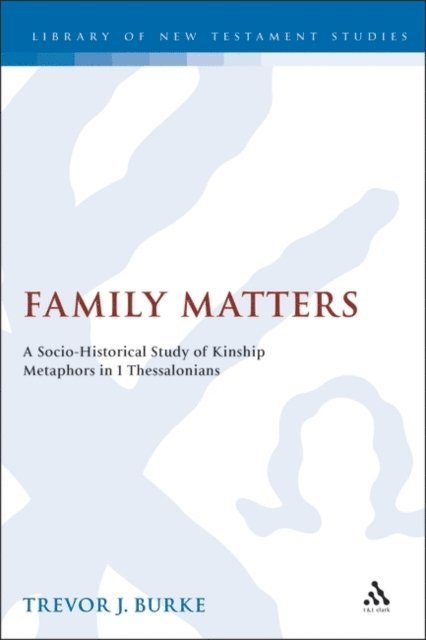
Paul''s first letter to the Thessalonians boasts a preponderance of fictive kinship terms (e.g. father, children, nursing mother, brother etc). In this book, Burke shows that Paul is drawing on the normal social expectations of family members in antiquity to regulate the affairs of the community. Family metaphors would have resonated immediately with Paul''s readers and the author surveys a broad range of ancient texts to identify stock meanings of the father-child and brother-brother relations. These stereotypical attitudes are explored to understand Paul''s paternal relations (2:10-12) with his Thessalonian children and in resolving sexual immorality (4:3-8) and the refusal by some brothers to work (4:9-12; 5:12-15). This study has implications for the structure of early Christian communities.