Trevor Findlay - Böcker
Visar alla böcker från författaren Trevor Findlay. Handla med fri frakt och snabb leverans.
5 produkter
5 produkter
545 kr
Skickas inom 7-10 vardagar
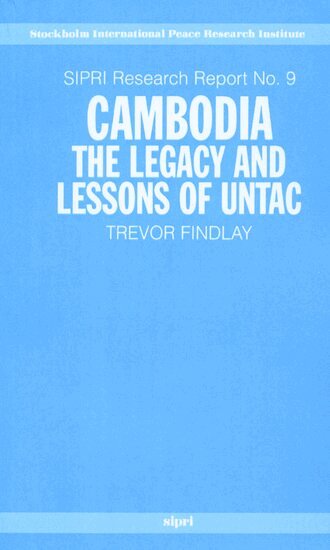
Trevor Findlay presents an account and analysis of the United Nations peacekeeping operation mounted in Cambodia between 1991 and 1993 in fulfillment of the 1991 Paris Peace Settlement. He reveals the successes and failures of UNTAC (the UN Transitional Authority in Cambodia) and draws lessons for future UN peacekeeping operations.
530 kr
Skickas inom 7-10 vardagar
SIPRI Research Reports is a series of reports on urgent arms control and security subjects. The reports are concise, timely, and authoritative sources of information. SIPRI researchers and commissioned experts present new findings as well as easily accessible collections of official documents and data.
2 454 kr
Skickas inom 5-8 vardagar
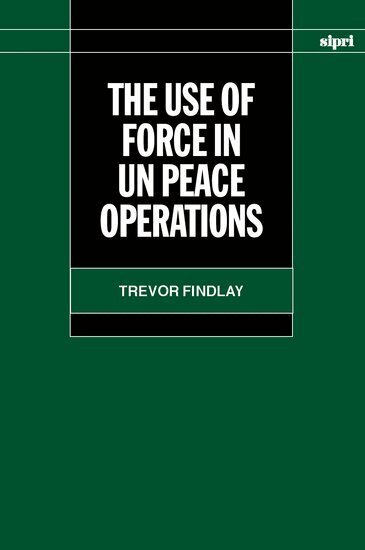
One of the most vexing issues that has faced the international community since the end of the Cold War has been the use of force by the United Nations peacekeeping forces. UN intervention in civil wars, as in Somalia, Bosnia and Herzegovina, and Rwanda, has thrown into stark relief the difficulty of peacekeepers operating in situations where consent to their presence and activities is fragile or incomplete and where there is little peace to keep. Complex questions arise in these circumstances. When and how should peacekeepers use force to protect themselves, to protect their mission, or, most troublingly, to ensure compliance by recalcitrant parties with peace accords? Is a peace enforcement role for peacekeepers possible or is this simply war by another name? Is there a grey zone between peacekeeping and peace enforcement? Trevor Findlay reveals the history of the use of force by UN peacekeepers from Sinai in the 1950s to Haiti in the 1990s. He untangles the arguments about the use of force in peace operations and sets these within the broader context of military doctrine and practice. Drawing on these insights the author examines proposals for future conduct of UN operations, including the formulation of UN peacekeeping doctrine and the establishment of a UN rapid reaction force.
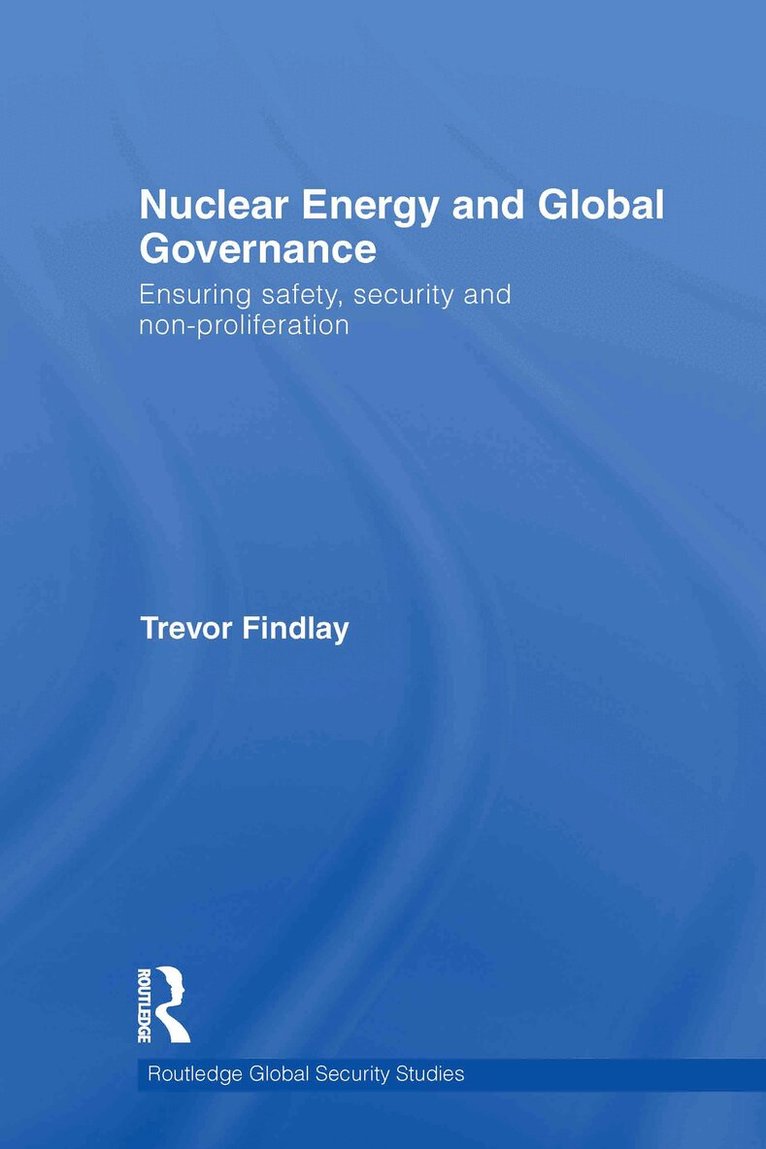
Nuclear Energy and Global Governance
Ensuring Safety, Security and Non-proliferation
Inbunden, Engelska, 2010
2 155 kr
Skickas inom 10-15 vardagar
The book considers the implications of the nuclear energy revival for global governance in the areas of safety, security and non-proliferation.Increased global warming, the energy demands of China, India and other emerging economic powerhouses and the problems facing traditional and alternative energy sources have lead many to suggest that there will soon be a nuclear energy ‘renaissance’. This book examines comprehensively the drivers of and constraints on the revival, its nature and scope and the possibility that nuclear power will spread significantly beyond the countries which currently rely on it. Of special interest are developing countries which aspire to have nuclear energy and which currently lack the infrastructure, experience and regulatory structures to successfully manage such a major industrial enterprise. Of even greater interest are countries that may see in a nuclear energy program a ‘hedging’ strategy for a future nuclear weapons option.Following on from this assessment, the author examines the likely impact of various revival scenarios on the current global governance of nuclear energy, notably the treaties, international organizations, arrangements and practices designed to ensure that nuclear power is safe, secure and does not contribute to the proliferation of nuclear weapons. The book concludes with recommendations to the international community on how to strengthen global governance in order to manage the nuclear energy revival prudently.This book will be of much interest to students of energy security, global governance, security studies and IR in general.
Nuclear Energy and Global Governance
Ensuring Safety, Security and Non-proliferation
Häftad, Engelska, 2012
807 kr
Skickas inom 10-15 vardagar
The book considers the implications of the nuclear energy revival for global governance in the areas of safety, security and non-proliferation.Increased global warming, the energy demands of China, India and other emerging economic powerhouses and the problems facing traditional and alternative energy sources have lead many to suggest that there will soon be a nuclear energy ‘renaissance’. This book examines comprehensively the drivers of and constraints on the revival, its nature and scope and the possibility that nuclear power will spread significantly beyond the countries which currently rely on it. Of special interest are developing countries which aspire to have nuclear energy and which currently lack the infrastructure, experience and regulatory structures to successfully manage such a major industrial enterprise. Of even greater interest are countries that may see in a nuclear energy program a ‘hedging’ strategy for a future nuclear weapons option.Following on from this assessment, the author examines the likely impact of various revival scenarios on the current global governance of nuclear energy, notably the treaties, international organizations, arrangements and practices designed to ensure that nuclear power is safe, secure and does not contribute to the proliferation of nuclear weapons. The book concludes with recommendations to the international community on how to strengthen global governance in order to manage the nuclear energy revival prudently.This book will be of much interest to students of energy security, global governance, security studies and IR in general.