Trevor Lewis – författare
Visar alla böcker från författaren Trevor Lewis. Handla med fri frakt och snabb leverans.
8 produkter
8 produkter
Inbunden, Engelska, 1995
2 174 kr
Skickas inom 10-15 vardagar
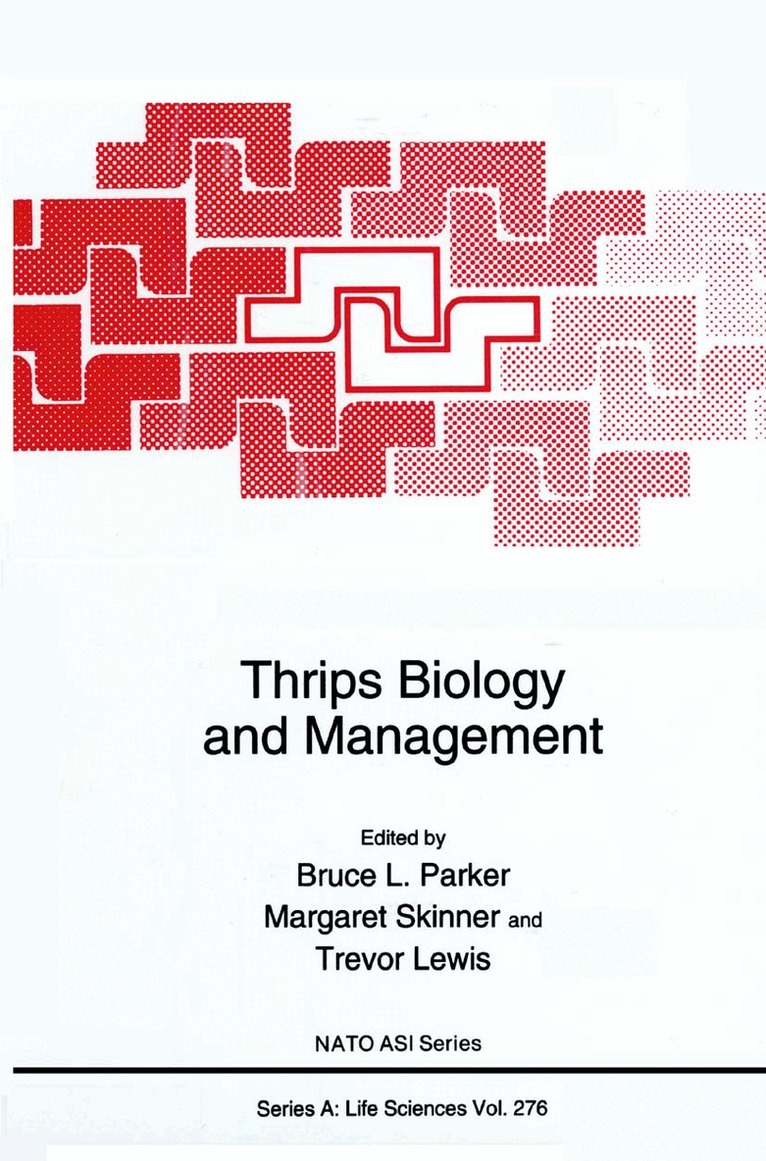
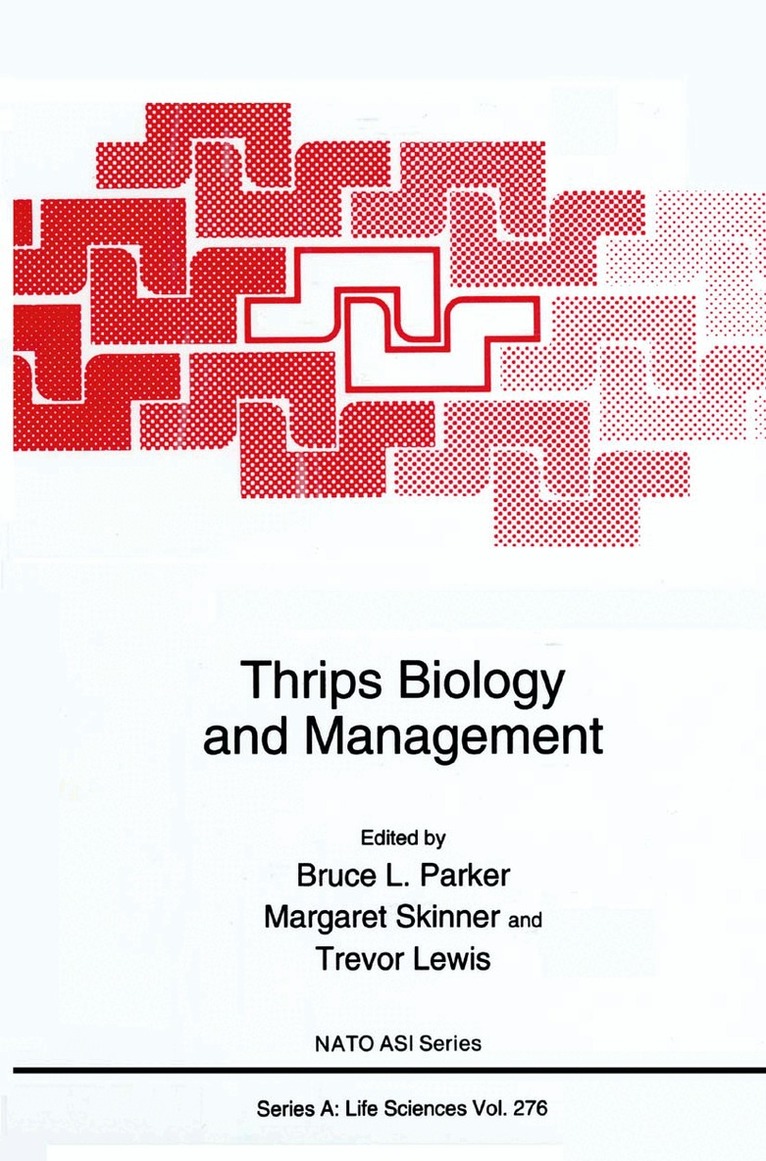
Thrips (fhysanoptera) are very small insects, widespread throughout the world with a preponderance of tropical species, many temperate ones, and even a few living in arctic regions. Of the approximately 5,000 species so far identified, only a few hundred are crop pests, causing serious damage or transmitting diseases to growing crops and harvestable produce in most countries. Their fringed wings confer a natural ability to disperse widely, blown by the wind. Their minute size and cryptic behavior make them difficult to detect either in the field or in fresh vegetation transported during international trade of vegetables, fruit and ornamental flowers. Many species have now spread from their original natural habitats and hosts to favorable new environments where they often reproduce rapidly to develop intense damaging infestations that are costly to control. Over the past decade there have been several spectacular examples of this. The western flower thrips has expanded its range from the North American continent to Europe, Australia and South Africa. Thrips palmi has spread from its presumed origin, the island of Sumatra, to the coast of Florida, and threatens to extend its distribution throughout North and South America. Pear thrips, a known orchard pest of Europe and the western United States and Canada has recently become a major defoliator of hardwood trees in Vermont and the neighboring states. Local outbreaks of other species are also becoming problems in field and glasshouse crops as the effectiveness of insecticides against them decline.
203 kr
Skickas inom 3-6 vardagar
254 kr
Skickas inom 3-6 vardagar
Inbunden, Engelska, 1997
2 834 kr
Skickas inom 5-8 vardagar
Thrips have recently surged to prominence as insect pests of field, plantation and glasshouse crops in many countries, associated with increased international trade in fresh vegetables, fruit, flowers and plant propagation material. They can cause direct feeding damage to the aerial parts of plants, resulting in yield loss and spoilage, and some are vectors of destructive plant viruses. Their minute size and secretive habits make them particularly difficult to detect and control. This book, containing contributions from several world authorities from Europe, the USA and Asia, is the most comprehensive treatise on thrips as crop pests ever to be published. It brings together a vast amount of modern work set against a wealth of background knowledge, covering basic biology, ecology, applied science and pest control. The result is a book indispensable for agricultural advisers and growers concerned with thrips pests, and a unique reference source and stimulus for research entomologists studying these intriguing insects.
E-bok
Engelska, 201431 kr
Läs direkt efter köp
DON''T WASTE TIME AND MONEY BUYING OTHER BOOKS or so-called potty training devices, when 1000''s of parents found that THE ''DIOR METHOD'' TOILET TRAINING BOOKLET WAS ALL THEY NEEDED!Hi, I am a New Zealand Behaviour Specialist, with many years of study and experience behind me, I wrote this toilet training booklet in frustration and despair by how many Parents I came across who had struggled for months, in some cases years, to toilet train their child.* Learn why you SHOULDN''T use potties!* Toilet training for NIGHTS as well as days* Wees and POOS in the loo!* Covers lots of "What ifs?"* Strategies suitable for almost any child and parent!I have designed the booklet to be helpful for Parents of typical children, and for those with a child with autism or an intellectual disability."Fantastic Booklet, I highly recommend every parent with toddlers buys one of these. I am highly impressed, and my little boys are onto day two of toilet training with no accidents! Thank you!"
E-bok
PDF, Engelska, 20132 741 kr
Läs direkt efter köp
Thrips (fhysanoptera) are very small insects, widespread throughout the world with a preponderance of tropical species, many temperate ones, and even a few living in arctic regions. Of the approximately 5,000 species so far identified, only a few hundred are crop pests, causing serious damage or transmitting diseases to growing crops and harvestable produce in most countries. Their fringed wings confer a natural ability to disperse widely, blown by the wind. Their minute size and cryptic behavior make them difficult to detect either in the field or in fresh vegetation transported during international trade of vegetables, fruit and ornamental flowers. Many species have now spread from their original natural habitats and hosts to favorable new environments where they often reproduce rapidly to develop intense damaging infestations that are costly to control. Over the past decade there have been several spectacular examples of this. The western flower thrips has expanded its range from the North American continent to Europe, Australia and South Africa. Thrips palmi has spread from its presumed origin, the island of Sumatra, to the coast of Florida, and threatens to extend its distribution throughout North and South America. Pear thrips, a known orchard pest of Europe and the western United States and Canada has recently become a major defoliator of hardwood trees in Vermont and the neighboring states. Local outbreaks of other species are also becoming problems in field and glasshouse crops as the effectiveness of insecticides against them decline.
Häftad, Engelska, 2013
2 174 kr
Skickas inom 10-15 vardagar
Thrips (fhysanoptera) are very small insects, widespread throughout the world with a preponderance of tropical species, many temperate ones, and even a few living in arctic regions. Of the approximately 5,000 species so far identified, only a few hundred are crop pests, causing serious damage or transmitting diseases to growing crops and harvestable produce in most countries. Their fringed wings confer a natural ability to disperse widely, blown by the wind. Their minute size and cryptic behavior make them difficult to detect either in the field or in fresh vegetation transported during international trade of vegetables, fruit and ornamental flowers. Many species have now spread from their original natural habitats and hosts to favorable new environments where they often reproduce rapidly to develop intense damaging infestations that are costly to control. Over the past decade there have been several spectacular examples of this. The western flower thrips has expanded its range from the North American continent to Europe, Australia and South Africa. Thrips palmi has spread from its presumed origin, the island of Sumatra, to the coast of Florida, and threatens to extend its distribution throughout North and South America. Pear thrips, a known orchard pest of Europe and the western United States and Canada has recently become a major defoliator of hardwood trees in Vermont and the neighboring states. Local outbreaks of other species are also becoming problems in field and glasshouse crops as the effectiveness of insecticides against them decline.
Häftad, Engelska, 2024
304 kr
Skickas inom 3-6 vardagar