Trine Brox – författare
Visar alla böcker från författaren Trine Brox. Handla med fri frakt och snabb leverans.
11 produkter
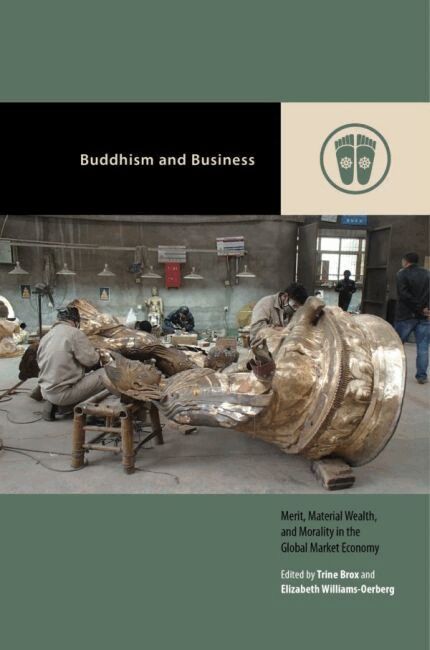
Buddhism and Business
Merit, Material Wealth, and Morality in the Global Market Economy
Av Trine Brox, Elizabeth Williams-Oerberg
Häftad, 2021
312 kr
Lägg i varukorg
Although Buddhism is known for emphasizing the importance of detachment from materiality and money, in the last few decades Buddhists have become increasingly ensconced in the global market economy. The contributors to this volume address how Buddhists have become active participants in market …
Buddhism and Waste
The Excess, Discard, and Afterlife of Buddhist Consumption
Av Trine Brox, Elizabeth Williams-Oerberg
Inbunden, 2022
1345 kr
Lägg i varukorg
In what ways do Buddhists recognize, define, and sort waste from non-waste? What happens to Buddhist-related waste? How do new practices of Buddhist consumption result in new forms of waste and consequently new ways of dealing with waste?This book explores these questions in a close examination of …
Buddhism and Waste
The Excess, Discard, and Afterlife of Buddhist Consumption
Av Trine Brox, Elizabeth Williams-Oerberg
E-bok, 2022
468 kr
Lägg i varukorg
In what ways do Buddhists recognize, define, and sort waste from non-waste? What happens to Buddhist-related waste? How do new practices of Buddhist consumption result in new forms of waste and consequently new ways of dealing with waste? This book explores these questions in a close examination of …
Buddhism and Waste
The Excess, Discard, and Afterlife of Buddhist Consumption
Av Trine Brox, Elizabeth Williams-Oerberg
E-bok, 2022
468 kr
Lägg i varukorg
In what ways do Buddhists recognize, define, and sort waste from non-waste? What happens to Buddhist-related waste? How do new practices of Buddhist consumption result in new forms of waste and consequently new ways of dealing with waste? This book explores these questions in a close examination of …
Buddhism and Waste
The Excess, Discard, and Afterlife of Buddhist Consumption
Av Trine Brox, Elizabeth Williams-Oerberg
Häftad, 2023
429 kr
Lägg i varukorg
In what ways do Buddhists recognize, define, and sort waste from non-waste? What happens to Buddhist-related waste? How do new practices of Buddhist consumption result in new forms of waste and consequently new ways of dealing with waste?This book explores these questions in a close examination of …
Tibetan Democracy
Governance, Leadership and Conflict in Exile
Av Trine Brox
Inbunden, 2016
1979 kr
Lägg i varukorg
How do you govern 130,000 people from exile? Tibet - and the struggles of diaspora Tibetans - are elements of an ongoing and highly debated issue. The Dalai Lama's democratisation process during his time in India from 1959-2011, and the subsequent election of Lobsang Sangay as prime …
Tibetan Democracy
Governance, Leadership and Conflict in Exile
Av Trine Brox
E-bok, 2016
2182 kr
Lägg i varukorg
How do you govern 130,000 people from exile? Tibet - and the struggles of diaspora Tibetans - are elements of an ongoing and highly debated issue. The Dalai Lama's democratisation process during his time in India from 1959-2011, and the subsequent election of Lobsang Sangay as prime …
Tibetan Democracy
Governance, Leadership and Conflict in Exile
Av Trine Brox
E-bok, 2016
2135 kr
Lägg i varukorg
How do you govern 130,000 people from exile? Tibet - and the struggles of diaspora Tibetans - are elements of an ongoing and highly debated issue. The Dalai Lama's democratisation process during his time in India from 1959-2011, and the subsequent election of Lobsang Sangay as prime …
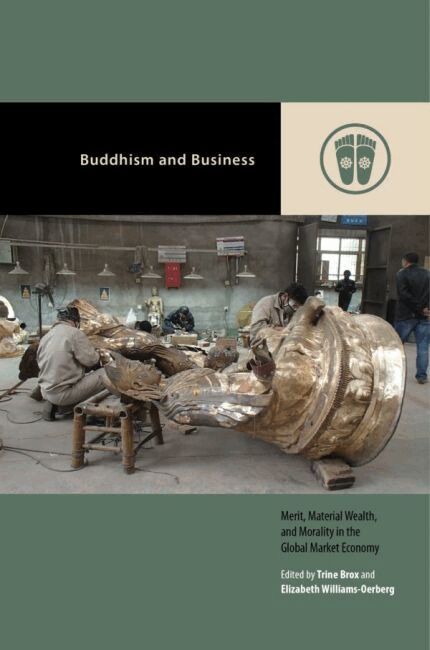
Buddhism and Business
Merit, Material Wealth, and Morality in the Global Market Economy
Av Trine Brox, Elizabeth Williams-Oerberg
Inbunden, 2020
900 kr
Tillfälligt slut
Although Buddhism is known for emphasizing the importance of detachment from materiality and money, in the last few decades Buddhists have become increasingly ensconced in the global market economy. The contributors to this volume address how Buddhists have become active participants in market …
On the Fringes of the Harmonious Society
Tibetans and Uyghurs in Socialist China
Av Trine Brox, Ildikó Bellér-Hann
Inbunden, 2013
900 kr
Tillfälligt slut
Since 1949, Tibetans and Uyghurs generally have been perceived as the two most problematic members of the PRC's great family of peoples and been the targets of 'carrot and stick' measures designed to facilitate their integration into the PRC. In recent years, a solution to the problem of Xinjiang …
On the Fringes of the Harmonious Society
Tibetans and Uyghurs in Socialist China
Av Trine Brox, Ildikó Bellér-Hann
Häftad, 2013
342 kr
Tillfälligt slut
Since 1949, Tibetans and Uyghurs generally have been perceived as the two most problematic members of the PRC's great family of peoples and been the targets of 'carrot and stick' measures designed to facilitate their integration into the PRC. In recent years, a solution to the problem of Xinjiang …