Tsong-kha-pa – författare
Visar alla böcker från författaren Tsong-kha-pa. Handla med fri frakt och snabb leverans.
4 produkter
4 produkter
Häftad, Engelska, 2005
471 kr
Skickas inom 3-6 vardagar
E-bok
Engelska, 2015332 kr
Läs direkt efter köp
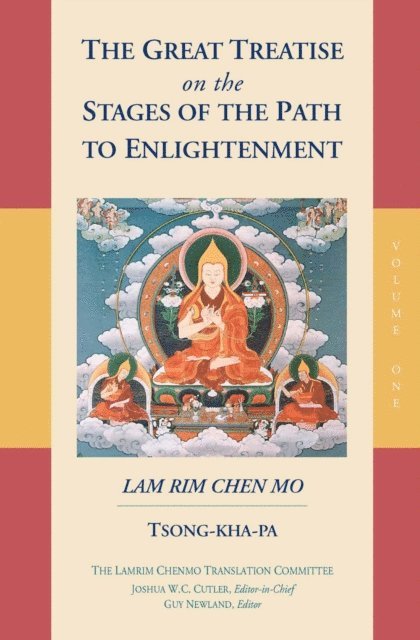
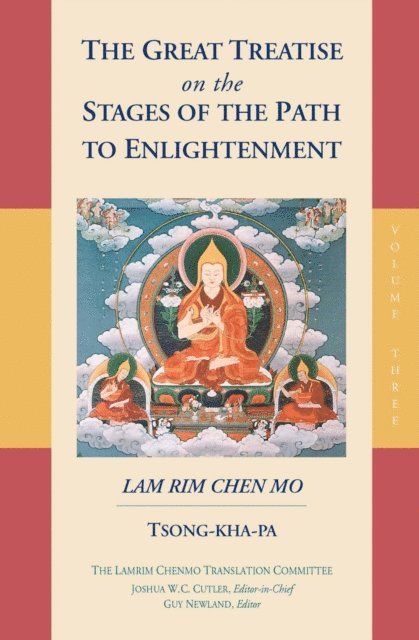
The Great Treatise on the Stages of the Path to Enlightenment (Tib. Lam rim chen mo) is one of the brightest jewels in the world’s treasury of sacred literature. The author, Tsong-kha-pa, completed it in 1402, and it soon became one of the most renowned works of spiritual practice and philosophy in the world of Tibetan Buddhism. Because it condenses all the exoteric s?tra scriptures into a meditation manual that is easy to understand, scholars and practitioners rely on its authoritative presentation as a gateway that leads to a full understanding of the Buddha’s teachings.Tsong-kha-pa took great pains to base his insights on classical Indian Buddhist literature, illustrating his points with classical citations as well as with sayings of the masters of the earlier Kadampa tradition. In this way the text demonstrates clearly how Tibetan Buddhism carefully preserved and developed the Indian Buddhist traditions. This first of three volumes covers all the practices that are prerequisite for developing the spirit of enlightenment (bodhicitta).
E-bok
Engelska, 2012381 kr
Läs direkt efter köp
E-bok
Engelska, 2015319 kr
Läs direkt efter köp
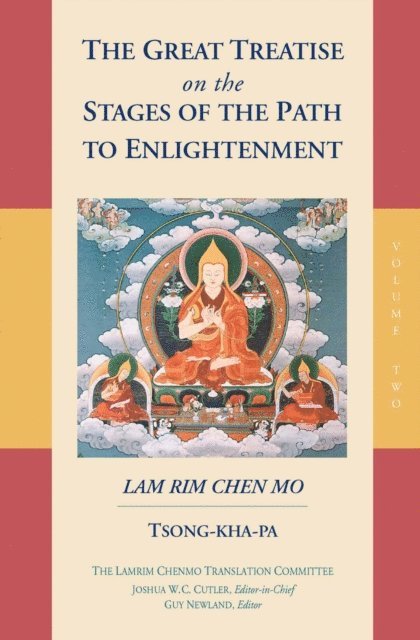
The Great Treatise on the Stages of the Path to Enlightenment (Tib. Lam rim chen mo) is one of the brightest jewels in the world’s treasury of sacred literature. The author, Tsong-kha-pa, completed it in 1402, and it soon became one of the most renowned works of spiritual practice and philosophy in the world of Tibetan Buddhism. Because it condenses all the exoteric s?tra scriptures into a meditation manual that is easy to understand, scholars and practitioners rely on its authoritative presentation as a gateway that leads to a full understanding of the Buddha’s teachings.Tsong-kha-pa took great pains to base his insights on classical Indian Buddhist literature, illustrating his points with classical citations as well as with sayings of the masters of the earlier Kadampa tradition. In this way the text demonstrates clearly how Tibetan Buddhism carefully preserved and developed the Indian Buddhist traditions. This second of three volumes covers the deeds of the bodhisattvas, as well as how to train in the six perfections.