U. Aswathanarayana - Böcker
Visar alla böcker från författaren U. Aswathanarayana. Handla med fri frakt och snabb leverans.
13 produkter
13 produkter
956 kr
Skickas inom 10-15 vardagar
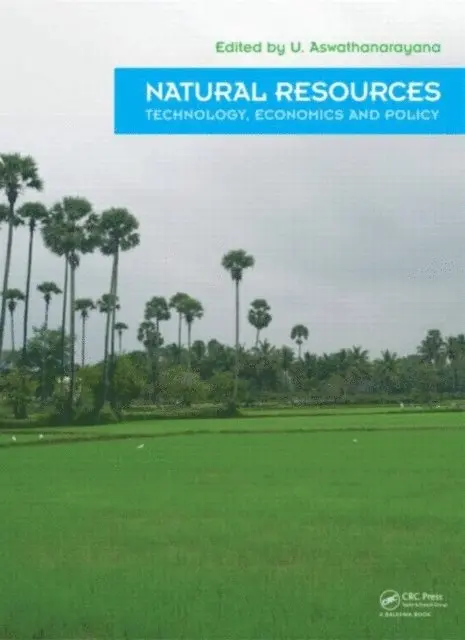
Natural resources management has two principal dimensions : Science-illuminated (earth, space, hydrological, pedological, information, etc. sciences) management of local resources (waters, soils, bioresources, minerals, rocks, sediments, etc.) in an ecologically-sustainable manner, and Value-addition through processing of natural products, through the application of technology is most marked in the case of some mineral products. The wellness of a community is dependent upon the security of food, water, environment and energy. Such a security is best realised through science-illuminated (earth, space, hydrological, pedological, information) management of local resources (waters, soils, bioresources, minerals, rocks, sediments, etc.) in an ecologically-sustainable and people-participatory manner, plus value-addition through processing of natural products. Moreover, the addition of value may increase a community’s wealth by advanced technologies, trading, exchange of knowledge, etc. Moreover, activities, employment and many other things come along with the availability of natural resources, which will require and affect policy. This volume provides guidelines for the implementation of technological, economical and policy advances in dealing with various aspects of natural resources. It is intended for researchers, professionals and students in environmental and earth sciences, mining, geography, sociology, economics and for policy makers and investors searching for potential in the natural resources industry. Ideal for consultation in combination with the editor's related publications Green Energy: Technology, Economics and Policy, Energy Portfolios and Food and Water Security.
956 kr
Skickas inom 10-15 vardagar
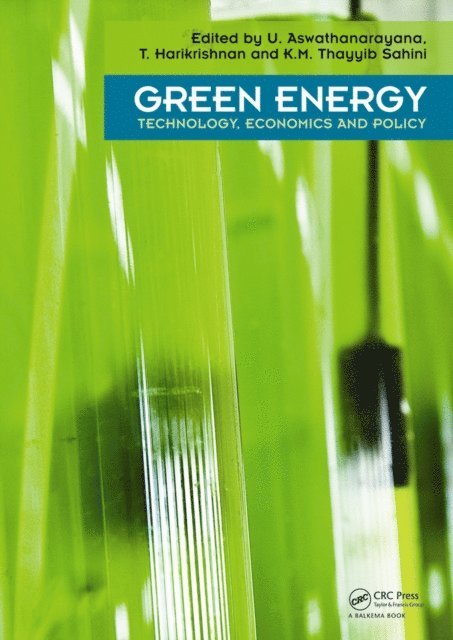
Renewable fuels, such as wind, solar, biomass, tides, and geothermal, are inexhaustible, indigenous, and often free. However, capturing them and transforming them into electricity, hydrogen, or clean transporation fuels often is not. Green Energy: Technology, Economics, and Policy addresses how to approach and apply technology, economics, and policy to bring down the costs involved with renewables, the most important challenge faced in the green era. Intended for students and professionals in resources, energy and environmental engineering and in economic fields focusing on green energy.It explores the ways and means of using technology, economics, and policy to address R & D issues, market penetration, improved efficiency, investment capital, policy changes, and more. It elucidates Green New Deal models in which the twin objectives of job generation and mitigation of climate change impacts are achieved through the harnessing of the transformative power of technology. The book links energy science and technology with energy economics, markets, policy, and planning. It describes how this can be accomplished through public – private partnership in the prosecution of Innovation Chain (Basic Research - Applied Research & Development - Demonstration - Deployment - Commercialization).
956 kr
Skickas inom 10-15 vardagar
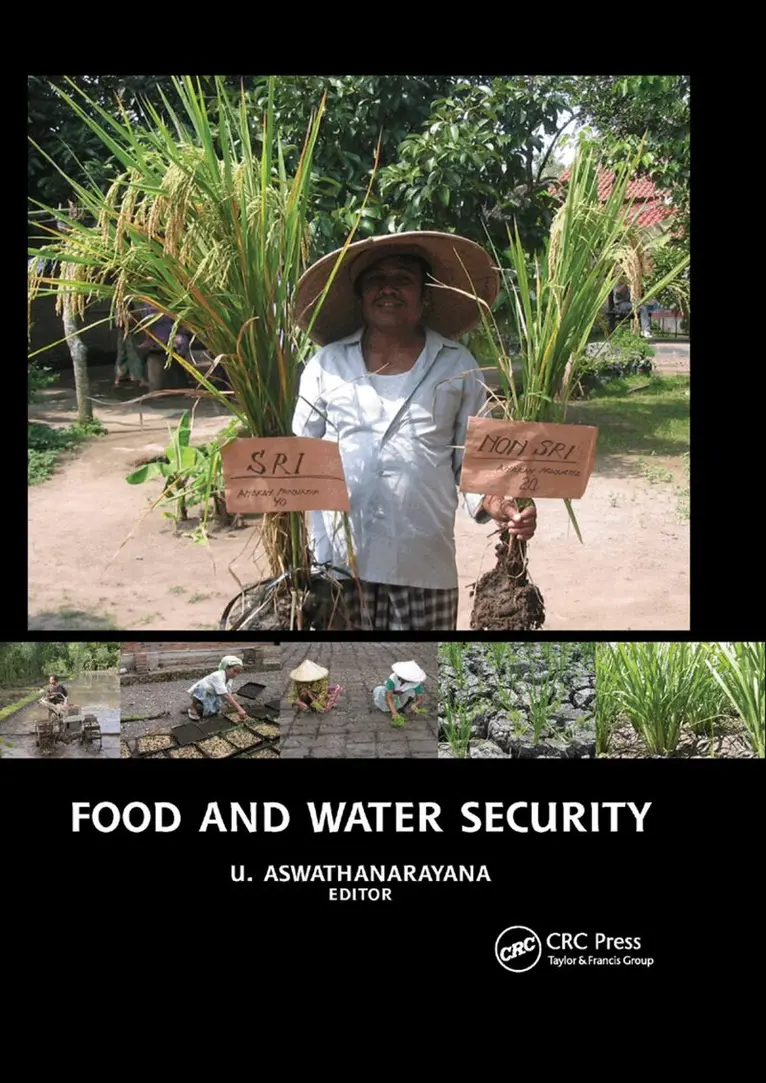
This book deals with ways and means of managing food and water security in various agroclimatic environments through the integration of R & D, training, people participation, agronomic practices, economic instruments, and administrative policies. It includes contributions by global experts in the field, who elaborate on the governance of food security, the biophysical dimensions of more food per drop, as well as on the socioeconomic dimensions of food security. Subjects are presented grouped in three sections: 1. Biophysical Dimensions of Food Security; 2. Socioeconomic Dimensions of Food Security and 3. Governance of Food Security in Different Agroclimatic and Socioeconomic settings. Recommended reading for professionals, water and agricultural scientists, engineers, planners and policy makers in the field of food and water security.
2 155 kr
Skickas inom 10-15 vardagar
This book is a useful guide to employing remote sensing data to explain and illustrate interactions between atmospheric, oceanic and hydrological processes, incorporating the latest developments in the field. A number of applications, such as water resources management, environmental monitoring, climate prediction, agriculture, and preparation for and mitigation of extreme weather events are characterised by widely varying requirements for the spatial, temporal and spectral resolutions of remotely sensed data. To reflect this diversity of needs, this book considers a range of available data assimilation methods and technology transfer practices to give the reader thorough coverage of the different aspects of the subject area and to identify potential growth areas of remote sensing applications. Ideal for both students and professionals, this book provides a fuller picture of the subject, with the inclusion of related subjects such as data management and geomorphology, and two case histories of water resource management, dealing with water harvesting and water pollution.
3 663 kr
Skickas inom 7-10 vardagar
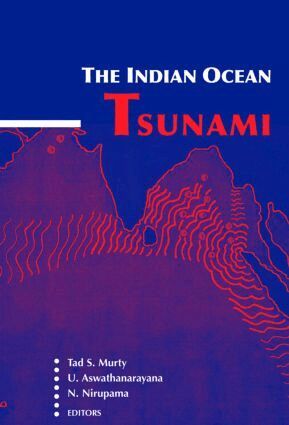
The Indian Ocean tsunami of December 2004 is considered to have been one of the worst natural disasters in history, affecting twelve countries, from Indonesia to Somalia. 175,000 people are believed to have lost their lives, almost 50,000 were registered as missing and 1.7 million people were displaced. As well as this horrendous toll on human life, the tsunami destroyed property worth billions of dollars and ruined many local economies. Based on their experience and analysis of this tsunami, the authors have developed methodologies for predicting and preparing for tsunamis. A basis is provided for a cost-effective warning and preparedness strategy, drawing on the example of existing systems used in earthquake disaster management and tidal wave warning, from genesis to impact. The book comprehensively addresses the fundamentals of tsunami science, identifying potential areas where tsunamis might be generated, predicting the anticipated course of tsunamis and considering how the geophysical, ecological and socioeconomic location of a community may determine the severity of tsunami damage. The authors suggest how precursors can be used to enhance the advance warning time, how tsunamis can be detected at the time of their occurrence, and the manner in which warnings should be communicated to the populations likely to be affected. Finally, improvement in eco-sociological resilience through the application of dual-use technologies is identified as a pivotal aid in allowing coastal communities to be better prepared. The book will be of interest to a global audience of professionals and academics active in seismology, ocean science, meteorology, coastal management, earthquake engineering and disaster management.
2 557 kr
Skickas inom 10-15 vardagar
This book deals with ways and means of managing food and water security in various agroclimatic environments through the integration of R & D, training, people participation, agronomic practices, economic instruments, and administrative policies. It includes contributions by global experts in the field, who elaborate on the governance of food security, the biophysical dimensions of more food per drop, as well as on the socioeconomic dimensions of food security. Subjects are presented grouped in three sections: 1. Biophysical Dimensions of Food Security; 2. Socioeconomic Dimensions of Food Security and 3. Governance of Food Security in Different Agroclimatic and Socioeconomic settings. Recommended reading for professionals, water and agricultural scientists, engineers, planners and policy makers in the field of food and water security.
1 591 kr
Tillfälligt slut
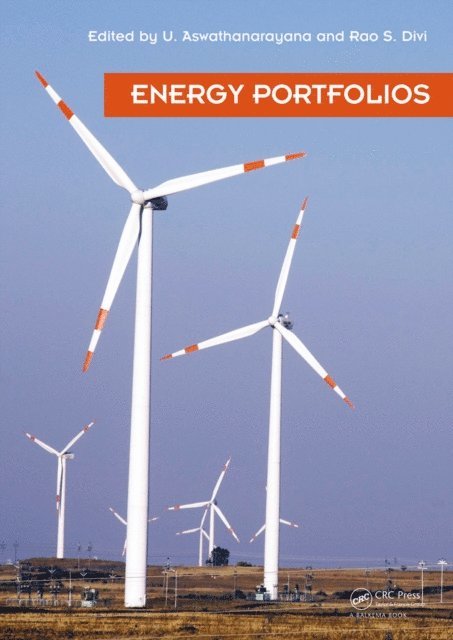
This book provides an overview of the globally ongoing research and development efforts to reduce carbon emissions and costs, and to improve the efficiency of emerging energy technologies. It covers current and future research and development of Coal, Oil, Natural Gas, Nuclear Power, and Renewable Energy Resources. The author provides optimal size, capital costs, powerplant operation costs and health consequences for each resource. The author delineates low-carbon emission alternatives and methods to mitigate environmental and health risks.
1 685 kr
Skickas inom 10-15 vardagar
Renewable fuels, such as wind, solar, biomass, tides, and geothermal, are inexhaustible, indigenous, and often free. However, capturing them and transforming them into electricity, hydrogen, or clean transporation fuels often is not. Green Energy: Technology, Economics, and Policy addresses how to approach and apply technology, economics, and policy to bring down the costs involved with renewables, the most important challenge faced in the green era. Intended for students and professionals in resources, energy and environmental engineering and in economic fields focusing on green energy.It explores the ways and means of using technology, economics, and policy to address R & D issues, market penetration, improved efficiency, investment capital, policy changes, and more. It elucidates Green New Deal models in which the twin objectives of job generation and mitigation of climate change impacts are achieved through the harnessing of the transformative power of technology. The book links energy science and technology with energy economics, markets, policy, and planning. It describes how this can be accomplished through public – private partnership in the prosecution of Innovation Chain (Basic Research - Applied Research & Development - Demonstration - Deployment - Commercialization).
2 289 kr
Skickas inom 10-15 vardagar
Natural resources management has two principal dimensions : Science-illuminated (earth, space, hydrological, pedological, information, etc. sciences) management of local resources (waters, soils, bioresources, minerals, rocks, sediments, etc.) in an ecologically-sustainable manner, and Value-addition through processing of natural products, through the application of technology is most marked in the case of some mineral products. The wellness of a community is dependent upon the security of food, water, environment and energy. Such a security is best realised through science-illuminated (earth, space, hydrological, pedological, information) management of local resources (waters, soils, bioresources, minerals, rocks, sediments, etc.) in an ecologically-sustainable and people-participatory manner, plus value-addition through processing of natural products. Moreover, the addition of value may increase a community’s wealth by advanced technologies, trading, exchange of knowledge, etc. Moreover, activities, employment and many other things come along with the availability of natural resources, which will require and affect policy. This volume provides guidelines for the implementation of technological, economical and policy advances in dealing with various aspects of natural resources. It is intended for researchers, professionals and students in environmental and earth sciences, mining, geography, sociology, economics and for policy makers and investors searching for potential in the natural resources industry. Ideal for consultation in combination with the editor's related publications Green Energy: Technology, Economics and Policy, Energy Portfolios and Food and Water Security.
1 551 kr
Skickas inom 10-15 vardagar
The Indian Ocean tsunami of December 2004 is considered to have been one of the worst natural disasters in history, affecting twelve countries, from Indonesia to Somalia. 175,000 people are believed to have lost their lives, almost 50,000 were registered as missing and 1.7 million people were displaced. As well as this horrendous toll on human life, the tsunami destroyed property worth billions of dollars and ruined many local economies. Based on their experience and analysis of this tsunami, the authors have developed methodologies for predicting and preparing for tsunamis. A basis is provided for a cost-effective warning and preparedness strategy, drawing on the example of existing systems used in earthquake disaster management and tidal wave warning, from genesis to impact. The book comprehensively addresses the fundamentals of tsunami science, identifying potential areas where tsunamis might be generated, predicting the anticipated course of tsunamis and considering how the geophysical, ecological and socioeconomic location of a community may determine the severity of tsunami damage. The authors suggest how precursors can be used to enhance the advance warning time, how tsunamis can be detected at the time of their occurrence, and the manner in which warnings should be communicated to the populations likely to be affected. Finally, improvement in eco-sociological resilience through the application of dual-use technologies is identified as a pivotal aid in allowing coastal communities to be better prepared. The book will be of interest to a global audience of professionals and academics active in seismology, ocean science, meteorology, coastal management, earthquake engineering and disaster management.
2 692 kr
Skickas inom 10-15 vardagar
Addressing the techno-socio-economic challenges involved in the protection, conservation, recycling and equitable utilization of water as an economic good, this text explores the linkages and dynamics of interactions involving water, and includes the following key topic areas: dynamics of interactions involving water; water quality; augmentation and conservation of water resources; wastewater reuse systems; use of water in agriculture; industrial and municipal uses of water; water pollution; economics and management of water supplies; etiology of water-related diseases; climate change impacts on water resources and paradigms of water resource management.
1 200 kr
Skickas inom 10-15 vardagar
Addressing the techno-socio-economic challenges involved in the protection, conservation, recycling and equitable utilization of water as an economic good, this text explores the linkages and dynamics of interactions involving water, and includes the following key topic areas: dynamics of interactions involving water; water quality; augmentation and conservation of water resources; wastewater reuse systems; use of water in agriculture; industrial and municipal uses of water; water pollution; economics and management of water supplies; etiology of water-related diseases; climate change impacts on water resources and paradigms of water resource management.
3 161 kr
Skickas inom 10-15 vardagar
Through an exploration of the links between geologic setting, mining and process technologies, economics, environment and stakeholder communities, this text addresses ways in which the mineral industry can be made safe, efficient and ecologically sustainable, focusing in particular upon the following key themes:· a review of the current status of the world mining industry, and the environmental challenges it faces.· links between the mode of occurrence of a mineral and the ways of mining it· the impact of mining on the environment in terms of industry and waste· health consequences arising from the various hazards of mining· the environmental impact of process technologies, and control technologies to make the mining industry ecologically sustainable· methods of rehabilitation of mined land, and reuse of mine wastes and mine water· socio-economic dimensions of the mining industry.