Ugo Perone – författare
Visar alla böcker från författaren Ugo Perone. Handla med fri frakt och snabb leverans.
3 produkter
3 produkter
Häftad, Engelska, 2012
353 kr
Skickas
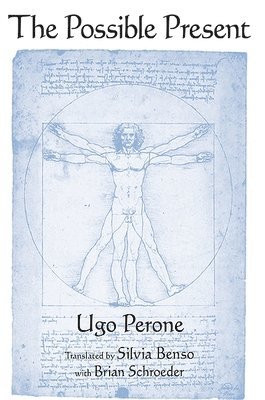
A practical hermeneutics of time.The Possible Present unfolds from within a freely reinterpreted hermeneutic perspective and provides an original theoretical proposal on the topic of time. In dialogue especially with the philosophies of Husserl and Heidegger, but resorting also to suggestions coming from a theological background (Barth and Bonhoeffer), the work proposes a personal and original theory of time centered on a conception of the present that does not reduce temporality to a succession of mere instants. When one claims that time is ungraspable, one refers neither to the past (which is rather irretrievable) nor to the future (which is rather uncertain) but to the present. The present in which we are is in fact what fades from our hands without break. The present is a decisive threshold for finite existence. It is the threshold where past and future meet and can give birth to a livable horizon of meaning. Dilating the present and giving it a meaningful chance to be is a task for philosophy. It is the attempt of giving time to time and also giving it shape, place, and space. To succeed at this task while rediscovering the sources of a narrative way of thinking that in truth it has never abandoned, philosophy must go back and turn time into the primary object of discourse, like in stories, which are precisely the attempt at disposing the temporal flow of events according to a meaning. Perone argues that in time, however, what passes is not simply decline, but rather something irreducible, an exteriority that must be said.
E-bok
PDF, Tyska, 20161 298 kr
Läs direkt efter köp
Der vorliegende Band geht jener Irritation der Religion nach, die stets ein elementares und konstituierendes Moment der Kultur geblieben ist, obwohl sie in der Moderne neue Formen angenommen hat. Das Bedürfnis nach einer "denkenden", der Philosophie gegenüber aufgeschlossenen Theologie und einer dem Glauben offenen Philosophie ist heutzutage aber nicht verschwunden. Ein Dialog und eine Auseinandersetzung tun wieder not. Das Buch enthält Beiträge von Fachleuten aus Philosophie und Theologie aus Deutschland und Italien, aus verschiedenen Konfessionen sowie aus konfessionsloser Perspektive. Im Spannungsverhältnis der Disziplinen ist somit eine nicht-uniforme Einheit enthalten, die vielversprechend für den Dialog bzw. die Auseinandersetzung ist. Die unterschiedlichen Lebensformen, die mit jeder theoretischen Grundhaltung verknüpft sind, werden in den verschiedenen Beiträgen berücksichtigt und diskutiert.
Inbunden, Engelska, 2011
1 079 kr
Tillfälligt slut
A practical hermeneutics of time.The Possible Present unfolds from within a freely reinterpreted hermeneutic perspective and provides an original theoretical proposal on the topic of time. In dialogue especially with the philosophies of Husserl and Heidegger, but resorting also to suggestions coming from a theological background (Barth and Bonhoeffer), the work proposes a personal and original theory of time centered on a conception of the present that does not reduce temporality to a succession of mere instants. When one claims that time is ungraspable, one refers neither to the past (which is rather irretrievable) nor to the future (which is rather uncertain) but to the present. The present in which we are is in fact what fades from our hands without break. The present is a decisive threshold for finite existence. It is the threshold where past and future meet and can give birth to a livable horizon of meaning. Dilating the present and giving it a meaningful chance to be is a task for philosophy. It is the attempt of giving time to time and also giving it shape, place, and space. To succeed at this task while rediscovering the sources of a narrative way of thinking that in truth it has never abandoned, philosophy must go back and turn time into the primary object of discourse, like in stories, which are precisely the attempt at disposing the temporal flow of events according to a meaning. Perone argues that in time, however, what passes is not simply decline, but rather something irreducible, an exteriority that must be said.