Ulf Hedetoft - Böcker
Visar alla böcker från författaren Ulf Hedetoft. Handla med fri frakt och snabb leverans.
6 produkter
6 produkter
270 kr
Skickas inom 7-10 vardagar
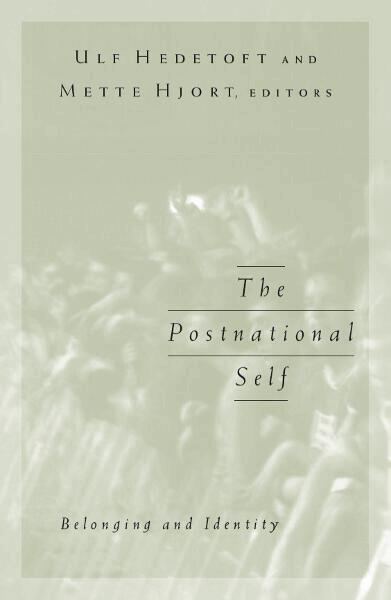
A timely look at how our globalized era has reconfigured experiences of belonging.What happens to a sense of belonging when national and regional governments, religious organizations, community groups, political parties, and corporations become unstable and incoherent, as they have in these nationalist and postnationalist times? From a richly interdisciplinary perspective, the authors examine notions of citizenship and cultural hybridization, migration and other forms of mobility, displacements and ethnic cleansing, and the nature of national belonging in a world turning ever more fluid, aided by transnational flows of capital, information, people, and ideas. Contributors: Seyla Benhabib, Yale; John A. Hall, McGill U; Ulf Hannerz, Stockholm U; Jeffrey Herf, U of Maryland; Michael Herzfeld, Harvard; Richard Jenkins, U of Sheffield, UK; Mark Juergensmeyer, U of California, Santa Barbara; Riva Kastoryano, Center for International Studies and Research (CERI), Paris; MichÈle Lamont, Princeton; Benjamin Lee, Rice U; Orvar LÖfgren, U of Lund, Sweden; Philip Schlesinger, U of Stirling, Scotland; Yasemin NuhÕglu Soysal, U of Essex, UK; Ray Taras, Tulane U; James Tully, U of Victoria, British Columbia.
1 254 kr
Skickas inom 5-8 vardagar
“Paradoxes of Populism” argues that populism, far-from-random similarities with ordinary manifestations of nationalism, should be approached not as a venture into the classical structures of nation-states and identities, but as a disruptive and destabilizing consequence of some of the constituent elements of sovereign nation-states becoming eroded and prised apart by contextual global processes and their agents. The book demonstrates that populism, in its many varieties, is riddled with even more paradoxes and inconsistencies than mainstream nationalism itself––confusing causes and appearances, realities and fantasies and turning the world inside out. This book definitively engages with real-world challenges that the age of populism, the Second Coming of Nationalism, poses in liberal democracies states as well as their political and cultural interpretations in the populist fantasia.
271 kr
Skickas
This book deals with the morality, self-conception and honour of states, something that goes well beyond the narrow, rationalist defence of national interests, which dominates most IR studies. The volume pursues this line of thinking by focussing on three different but interconnected thematics: political moralism, the honour of states and the peace/war-problematic. The moral self-conception of states – which comes most clearly to the fore in situations of war – rests on the ideal conception of ‘all of us’, which includes all citizens, all classes and all generations, set against their opposite numbers outside of ‘our’ immediate sphere of domination. This state-based image of itself and its existential teleology constitutes its very essence, notwithstanding that it is often seen as a deviation (‘exception’) from the normal state of affairs, where the state is ‘just ‘ there to serve and support the economy and its principal actors. All three chapters thus revolve around issues that relate to the interaction of war and democracy and the underlying morality that both legitimates and underpins the actions of politicians as well as citizens.
370 kr
Tillfälligt slut
370 kr
Tillfälligt slut
171 kr
Skickas inom 11-20 vardagar
Persistent rumour has it that globalisation is doing serious damage to the nation-state at the present historical juncture. Dramatic versions of the narrative even insist that the challenge of globalisation to the nation-state is so serious that this pivotal "unit" of the international "system" is in danger of disappearing. In this book, Ulf Hedetoft focuses attention on this global-national nexus in some of its many differing manifestations, offering both theoretical, historical and analytical thoughts and perspectives on a problem which increasingly dominates academic and public debates. He argues that it makes sense to talk about a "global turn" in international studies, a change which might be as profound and consequential as the well-known "linguistic turn" in the study of society and politics. This does not mean that globalisation, spearheaded by the USA, is ousting the nation-state from the global scene. In fact, the global order needs nation-states, although their position will be radically different and their sovereignty -- except for a few cases -- without much substance. Populist and romantic nationalism notwithstanding, there is no going back to an earlier and more virginal state of national political or cultural history. In this sense globalisation is not irreversible. Whether we like it or not, the global turn is here for good.